Iraq ranks 128 out of 189 on the Human Development Index (HDI). CARE reopened its programming in Iraq in 2014 and works with national partners to deliver humanitarian assistance and long-term recovery for at-risk communities.
Relief efforts in Iraq
CARE has worked in Iraq since 1991, providing essential assistance to millions of people. Our network of offices and national partners allows us to reach communities across the country.
In 2004, CARE suspended operations after a catastrophic event. We resumed programming in 2014, responding to a major displacement crisis in Ninewa that forced hundreds of thousands of people into the Kurdish Region of Iraq.
Today, CARE works across multiple Governates, including Dohuk, Ninewa, Salah Al-Din, Al-Anbar, and Diyala, delivering urgent support and helping people rebuild their lives.
What we do
Since 2021, CARE’s work in Iraq has shifted from emergency response to long-term development. Our programs have evolved to support lasting recovery and equal opportunities for women and girls while building resilient futures for the most at-risk communities.
We support small, local organisations, especially those led by women, as they promote peace, equality, and women’s participation in decisions that affect their lives and communities.
CARE Iraq also trains farmers in eco-friendly, climate-smart agricultural practices to strengthen resilience and reduce the effects of worsening environmental conditions. These programs include nursery training, hands-on support for climate-smart farming, and more.
Key programs:
- Equality for women and girls
- Resilient futures


Donate now
Support our ongoing work to create a more equal world.
Your donation can help end extreme poverty and give people the means to build a better future for themselves in countries like Iraq.
For those living in extreme poverty, your support brings education and training, healthcare and clean water, nutritious food, and new ways to earn an income. And in times of crisis, you help us deliver emergency relief. Please donate today.
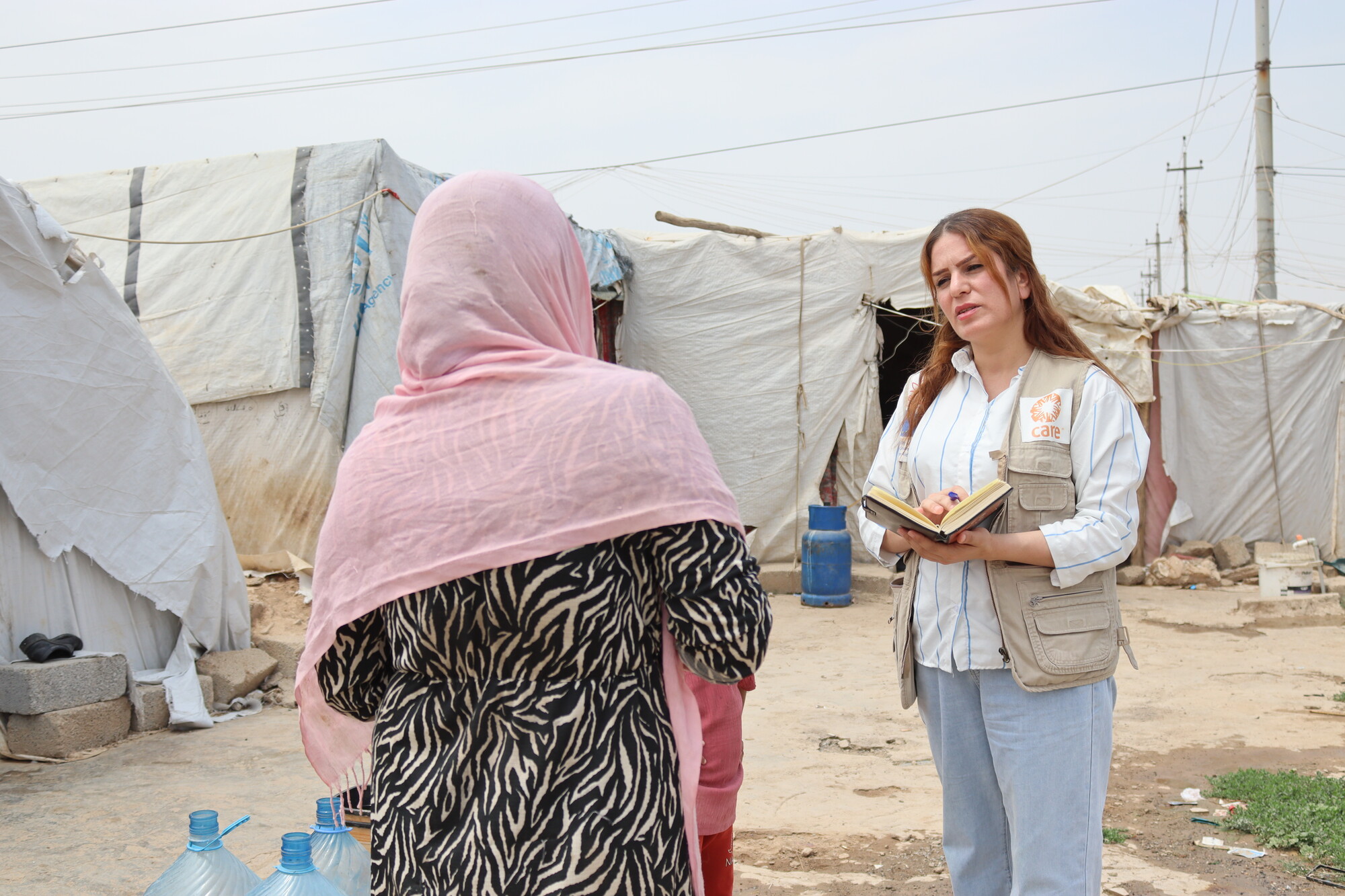
Photo: © Huda Ali/CARE.