The first time the missile hit her workplace, Yulia, a humanitarian social worker for CARE’s partner organization Avalist, came back the next morning and swept the glass from her desk.
The windows of the community center in Pokrovsk she worked in had shattered during the night when the missile hit the city square in February 2024.
I can clearly remember that day. When I came back to work the next morning, nothing was the way I left it the day before.” Yulia, 28, says. “There was glass everywhere, and my desk was damaged.
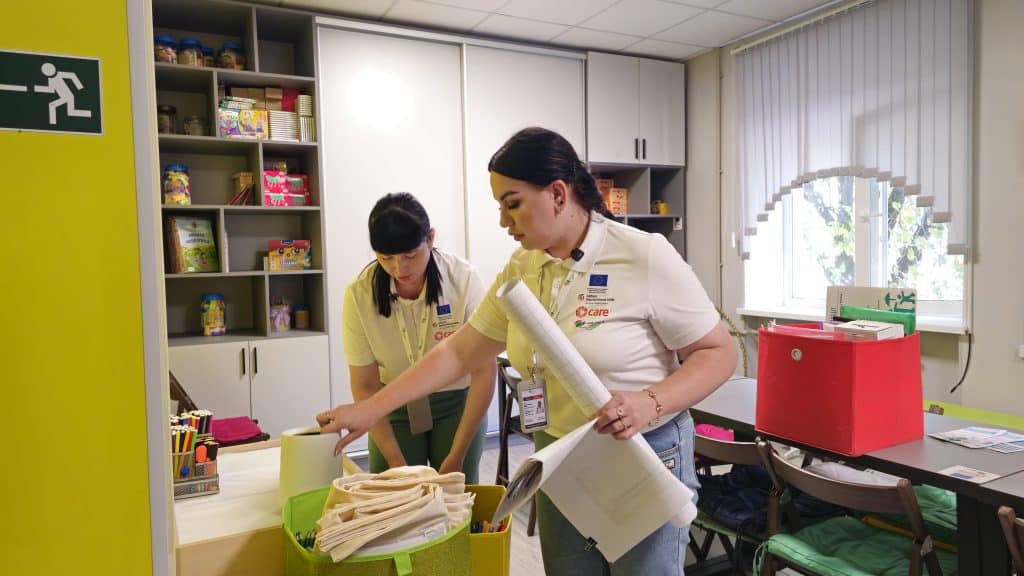
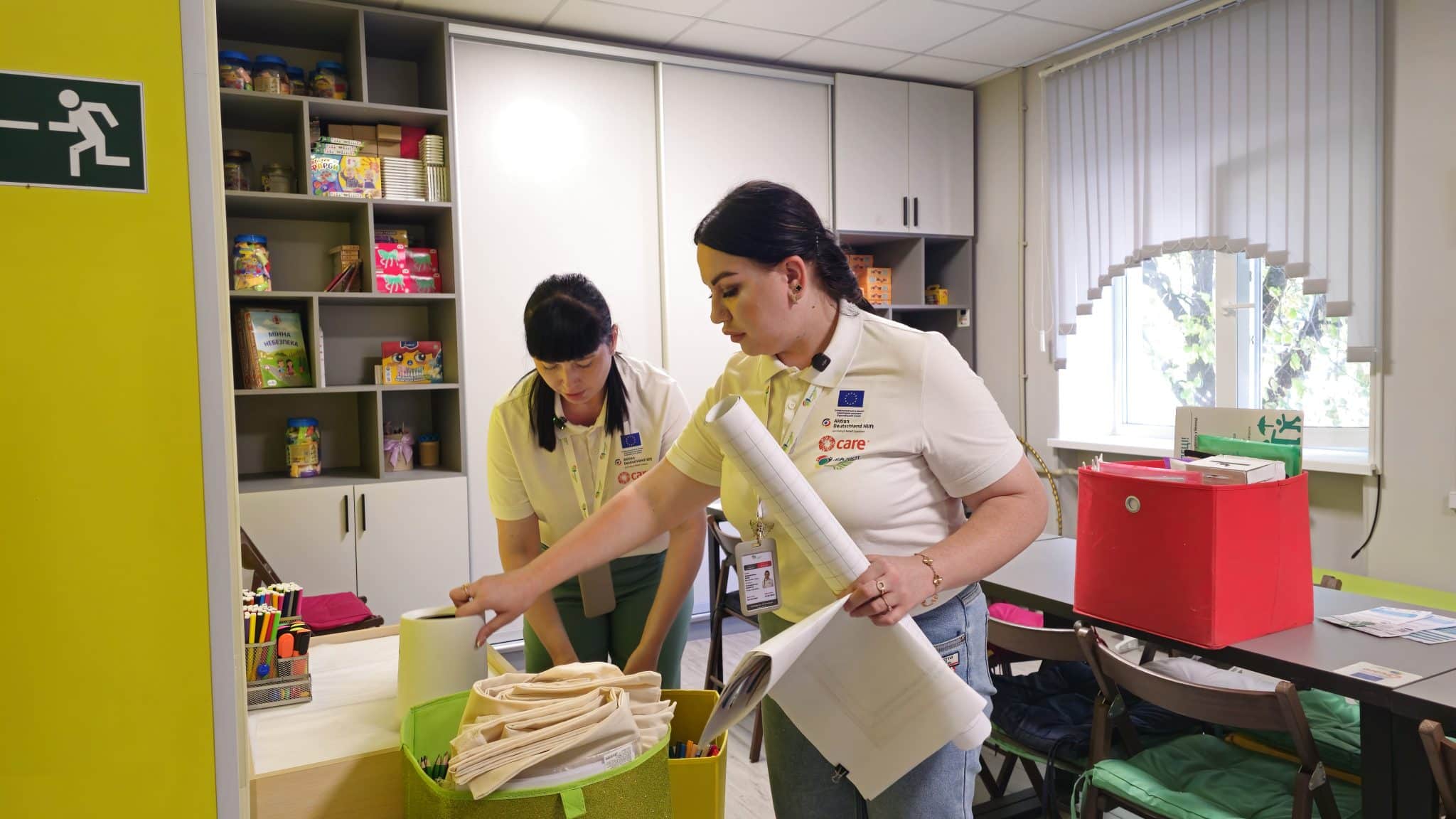
The freshly painted yellow walls she loved were scarred and burned. The main square was attacked several times during 2024, as the frontline creeped closer. Tall silver poplars lined the main road leading to the small building where Pokrovsk’s residents turned to when they needed support. Where children came to draw and felt safe enough to be a child again. The big room was full of colors. Butterflies on the walls. A bench with green, blue and yellow cushions rested against a wall decorated with painted cacti. Two small palm trees stood on the windowsill beside three bright green plastic plants. Yulia loved working with the children.
Before she started with Avalist as a humanitarian, she was a kindergarten teacher. When the war forced kindergartens to close, she only saw the children through screens.
I was tired of working online. With Avalist I could work with the children directly again and I loved it.
When she talks about those days, she forms a heart with her hands. When she describes her job she says, “my job is to just love the kids all day.”
Fix what is broken
After the missile hit their center, the team repaired everything in a single day. After a strike, they pick up the pieces and start again. Fix what is broken. Sweep away what has burned. Lift the tables. Dust off the debris. And then open the door again to continue working.
We worked together and fixed it, but we all felt heavy, because we knew after this that the time will soon come when we will need to leave.
When asked why she still stayed after this, she says, “because we still could!”
The call from management came in September 2024. The day had come where they needed to leave. The risk had become too high. Staff safety came first. They had stayed as long as they could.
I was heartbroken and leaving was very hard. I really loved our community center, and we put so much work into it to make it feel like a home. It had become a part of my heart. Even today I can still see in my mind where each and every folder was.
Her colleague Natalia, 46, thought the same. Originally from Pokrovsk, Natalia joined Avalist in August 2024 as a psychologist. One month later, she had to evacuate her own home and pack up the community center together with Yulia and the team. Together it took them a week. Three large vehicles carried desks, furniture, plants, and paperwork.
I remember that day very clearly. We cried a lot together as a team,” Natalia says. We did not know how we will continue or if we will see each other again after we fled.
The palm trees left Pokrovsk with Yulia. They stood for a while in Slovyansk, where she continued working for Avalist after leaving Pokrovsk. The plastic plants went to Dnipro, where Yulia works today. The real trees on the square in Pokrovsk were later shot down, their silver trunks lying on black soil.
Before the war, 82,000 people lived in Pokrovsk. Now rusty burned-out Ladas sit along damaged streets. Soviet-era buildings are pierced with bullet holes. Entrances of those buildings that are still standing are stacked with sandbags. Windows boarded with wood. Rubble marks where homes once stood. Yulia saw a video online: the community center building still stands today, but the territory is now occupied.
There is always a new day
When Avalist asked if she would continue in Slovyansk, then about 30 kilometers from the frontline, she did not hesitate.
It was obvious for me to go. I was used to working under these conditions and the risk. I knew I can do it.
When asked if she ever thought about working somewhere safer, she takes a moment to think about it, then shakes her head, “it is my home region. My team. My work. I felt like this was what I needed to do. These are my people and they need me.”
The frontline kept shifting. Areas they once accessed became too dangerous. Each month drew the line closer. Each week narrowed the space where they could still operate. Three weeks ago, she evacuated again. This time from Slovyansk to Dnipro. This time it was her own decision.
The last months in Slovyansk were hard. I could not sleep. When I went to bed there, I did not know if I would wake up the next day.” She saw a vacancy for the same position in Dnipro and applied. “I was emotionally exhausted in Slovyansk. I needed to leave.
Part of her team remained in Slovyansk and continue to work in the limited capacity that is still possible as of now.
I really admire them. After every sleepless night, with being bombed, they get up and go to help others, even though they themselves are emotionally dry.
Three weeks earlier, she had still been one of them. Her own nights were spent in the corridor of her apartment, waiting for explosions to pass. Work was where she recharged. Listening to others. Helping them breathe through panic. Helping children draw again. Helping adults find structure in days that had lost all shape.
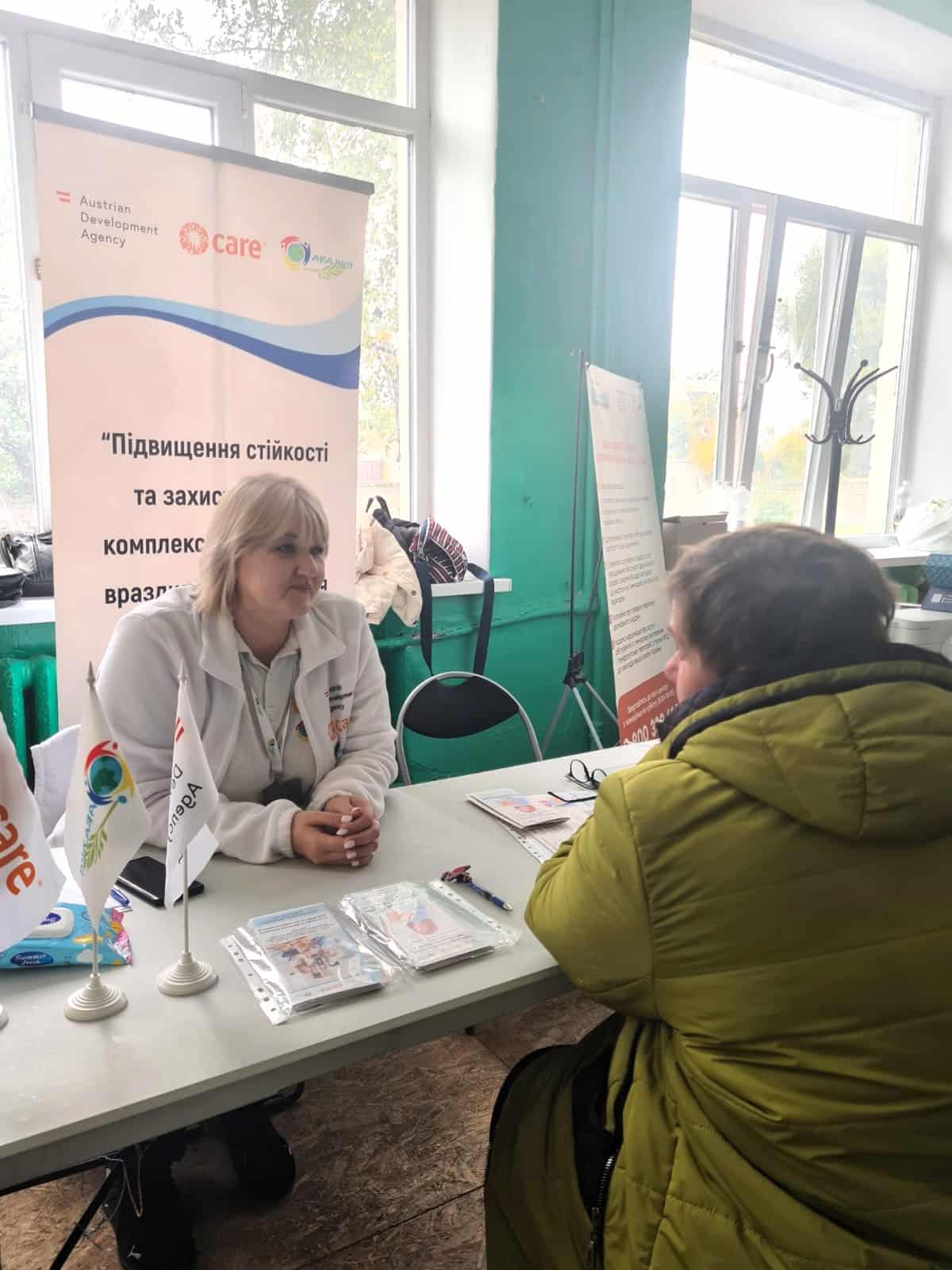
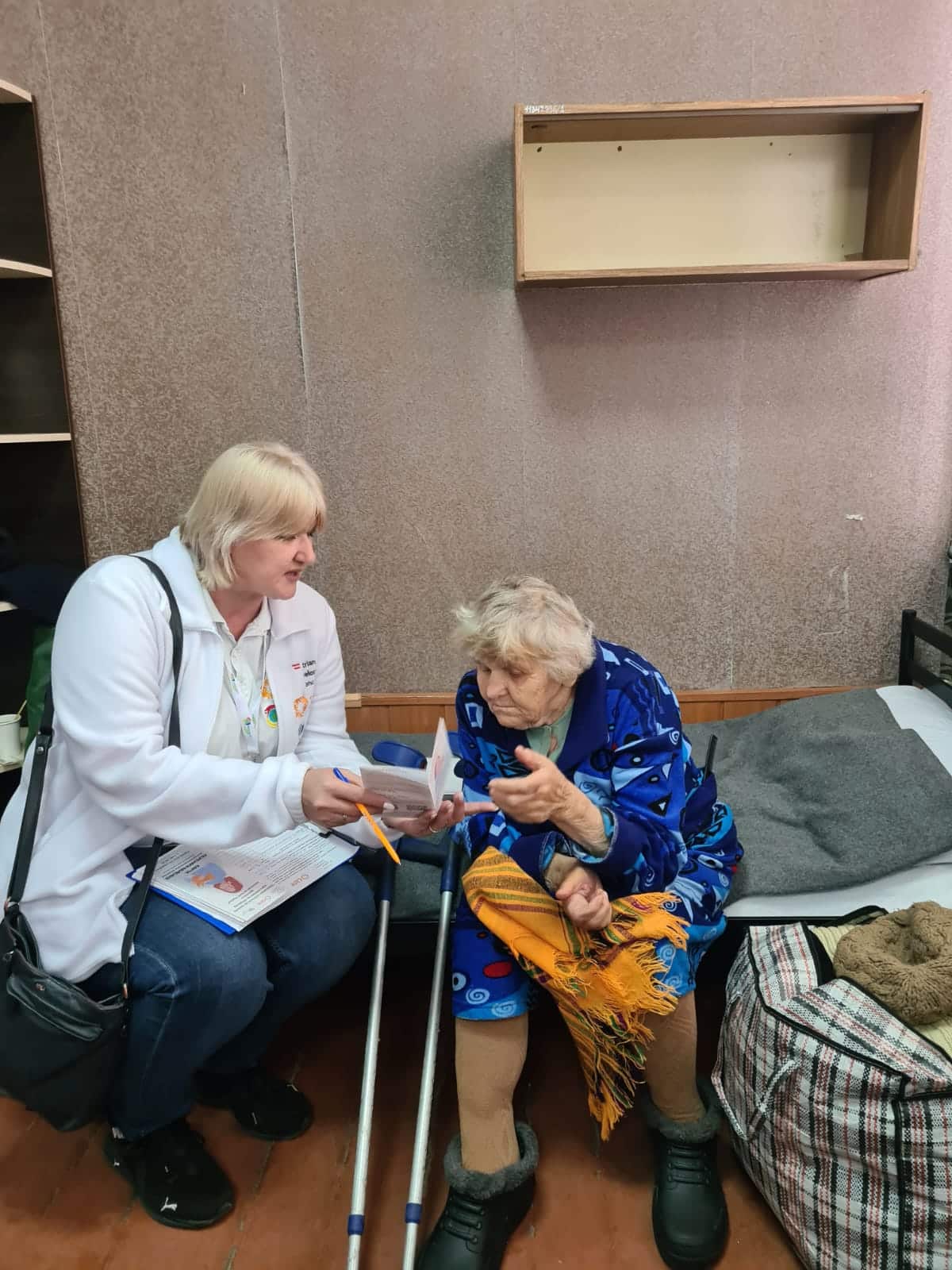
Both Yulia and Natalia now work from Dnipro. Natalia is part of a mobile team serving communities in and around the region. She connects with participants through shared loss.
They are sad and depressed at the beginning and cannot see how to move forward. But then they hear that I am also from the same place they fled from, and they see that this is not the end for them. There is more. We are alive. We are here. There is always a new day.
As a psychologist, she knows the techniques that she teaches her participants every single day. She knows how trauma works. “As a psychologist I can help people. My personal experience helps me. But I think if I would stop working, it would be harder for me to deal with my own trauma,” Natalia says.
She uses the same exercises she teaches for herself to deal with her own trauma and anxiety.
“Where I live there is still a lot of shelling, so I use some breathing techniques and try to find a pleasant place in my mind,” she says, as an air raid siren wails in the background and her phone lights up with warnings. Now, her apartment in Pokrovsk is gone. “It was completely destroyed and I realized that the feeling of safety is just an illusion. I felt safe in my home. My flat was my fortress, and I thought those four walls would protect me. But they cannot, the missiles can find you everywhere,” she says.
Start again somewhere else
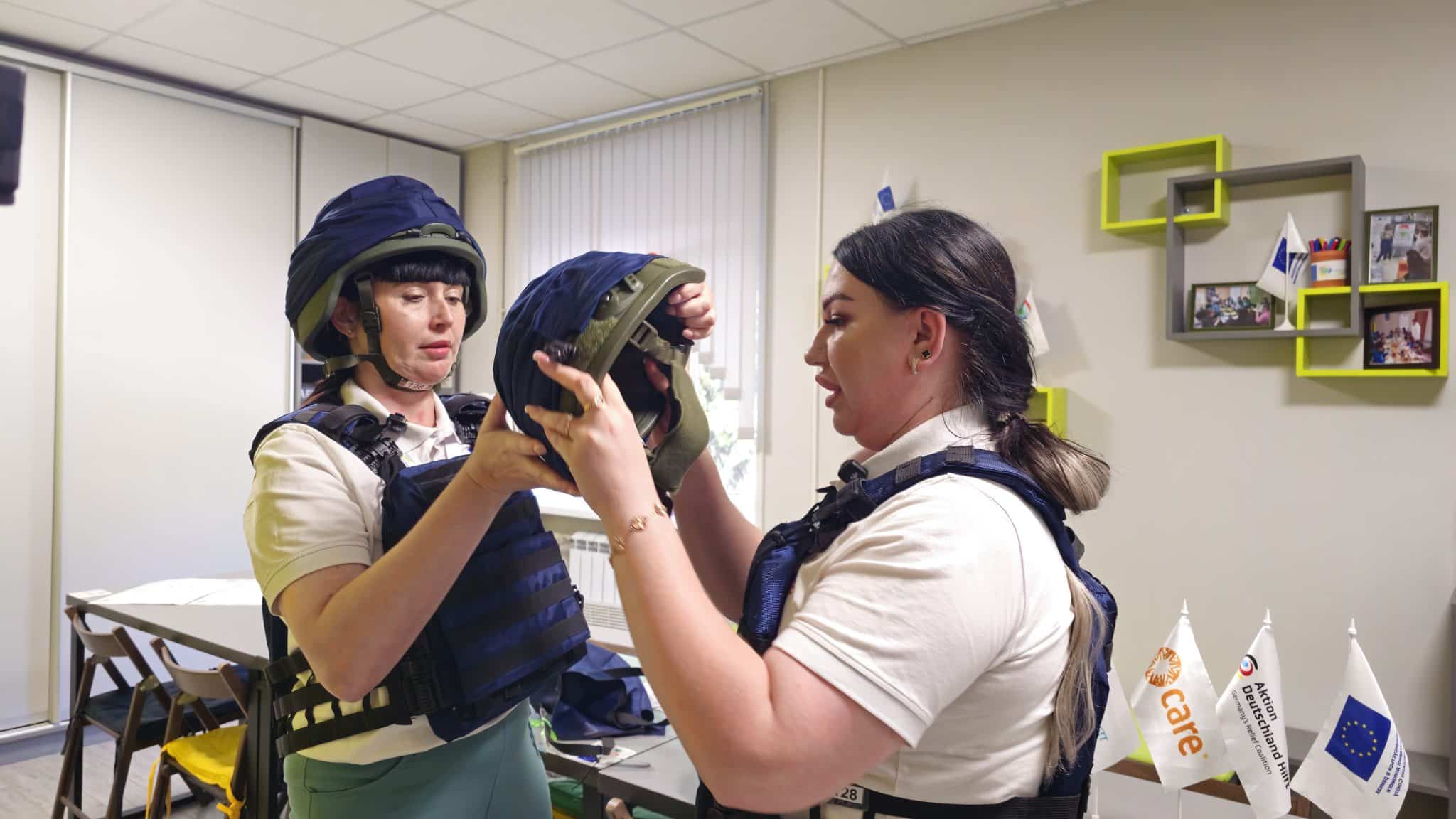
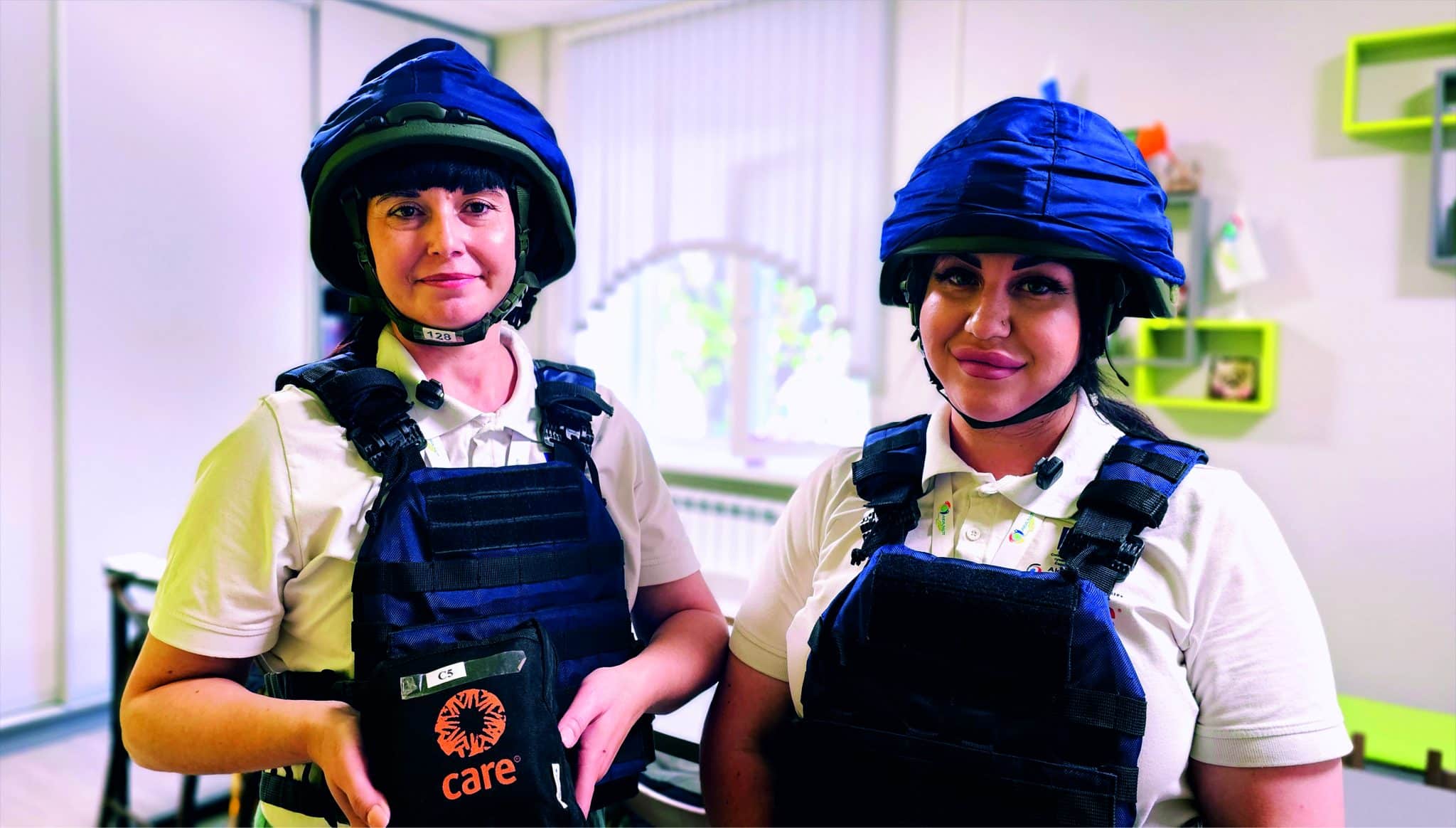
Both women recently attended a CARE training on psychosocial support and crisis intervention.
For Natalia, it was professional and personal. “It is very relevant to my work but also for me personally on how to take care of myself,” Natalia says.
In Dnipro, Yulia sleeps again. She went to the cinema twice. She smiles when she says it, as if naming something fragile.
I have been evacuated so many times now. I hope this was the last time.
But she does not know if it will be the last time as the frontline continues to move. The war continues to escalate. Places where humanitarian aid organization once worked have become inaccessible. Centers they painted and repaired are left behind. Yulia feels the disappointment of leaving her participants behind, hoping that they have managed to bring themselves to a safer place as well. But it was time for her to leave.
The work, though, does not disappear. It does not end when a center closes. It moves with them. Into new offices with the same bright plastic plants on a windowsill. Into mobile teams driving to communities they can still get to. Into breathing exercises during sirens. Into children who smile again. In adults who are proud of what they have achieved in Natalia’s and Yulia’s sessions. The place can be destroyed. Occupied. Left behind. What matters stays. It lives in the people who carry on the work and in the people who receive it. They stay as long as they can. And when they cannot, they take what matters with them and begin again somewhere else.
This story has been written by Sarah Easter, CARE Emergency Communications Officer