Education is one of the first public services to go missing in a crisis – and one of the last to recover. Every year, conflict, climate disasters and displacement force millions of children out of school. Children who live in developing countries, where education systems are most fragile, are especially vulnerable.
The disruption of education during an emergency heightens children’s exposure to exploitation, early marriage, child labour and future poverty. For children caught up in an emergency, missing school is not a short-term blip in their education. The longer education is disrupted, the more difficult it is for children, especially girls, to return to school.
Education in emergencies is vital for more than the sake of learning. It can help protect children, restore normalcy, and build towards recovery. Without safe and inclusive education, generations of children risk being left behind, threatening long-term stability, economic recovery, and peace. In countries experiencing repeated or prolonged crises, education is a key factor in building resilience and preventing the loss from becoming permanent.
In crisis-affected countries, CARE Australia works with communities to keep learning going in the face of crisis. We create safe learning spaces, support teachers and ensure that girls and marginalised children are not pushed out of education when they need it most.
If you want to protect education in emergencies and help children recover in the long-term, you can give to CARE now and help make sure children can keep learning, even in the most challenging circumstances.
So, what does effective education support in emergencies actually look like? Below we take a look at the key strategies that will help protect education during crises and help build education as a foundation for resilience and long-lasting change.
Table of contents
Why education in crisis situations is a humanitarian priority
What education in emergencies looks like in developing countries
- How conflict, climate shocks, and displacement disrupt learning
- Why girls and marginalised communities are most at risk
Why education in developing countries must be protected during crises
- Education as protection, dignity, and stability
- The long-term cost of education disruption
CARE Australia’s approach to education in crisis situations
Key strategies for supporting education in emergencies
- Rapid education response and safe learning spaces
- Supporting teachers and frontline educators
- Flexible learning models for crisis-affected children
Partnerships that strengthen education in crisis-affected countries
From emergency education to long-term resilience
How you can support education in crisis situations
Why education in crisis situations is a humanitarian priority
It’s easy to assume that during an emergency education is less of a priority than food, shelter, and health care. But for children who have experienced conflict, disaster or displacement, education is a crucial form of protection.
When schools are safe, accessible, and supportive, they offer structure, routine and psychosocial support to children and young people at a time when everything around them may feel unstable. They also provide protection from exploitation, child labour, early marriage and gender-based violence that children face when they are out of school and vulnerable.
Access to education is a human right, even during emergency situations and even in the most unstable contexts. Education can be a lifeline for girls and boys, children with disabilities and those living in displacement, refugee or extreme poverty. When an emergency cuts off children’s access to education for months or even years, they are not just falling behind in their studies; they are facing diminished opportunities that will impact their health, economic security and social stability for the rest of their lives.
Education in emergencies is a humanitarian issue because it is vital for survival, dignity and recovery. It allows children to cope with trauma and loss. It supports community resilience. And it is an investment in the longer-term development priorities that matter for all children, once the most basic needs have been addressed.
Protecting the right to education for children and young people in developing countries is a crucial part of CARE Australia’s response to emergencies.
What education in emergencies looks like in developing countries
In the developing world, it is rare for an emergency to impact education alone. Schools and learning spaces may be damaged or destroyed, but they are more likely to become inaccessible as a result of insecurity, displacement or a loss of teachers and teaching materials.
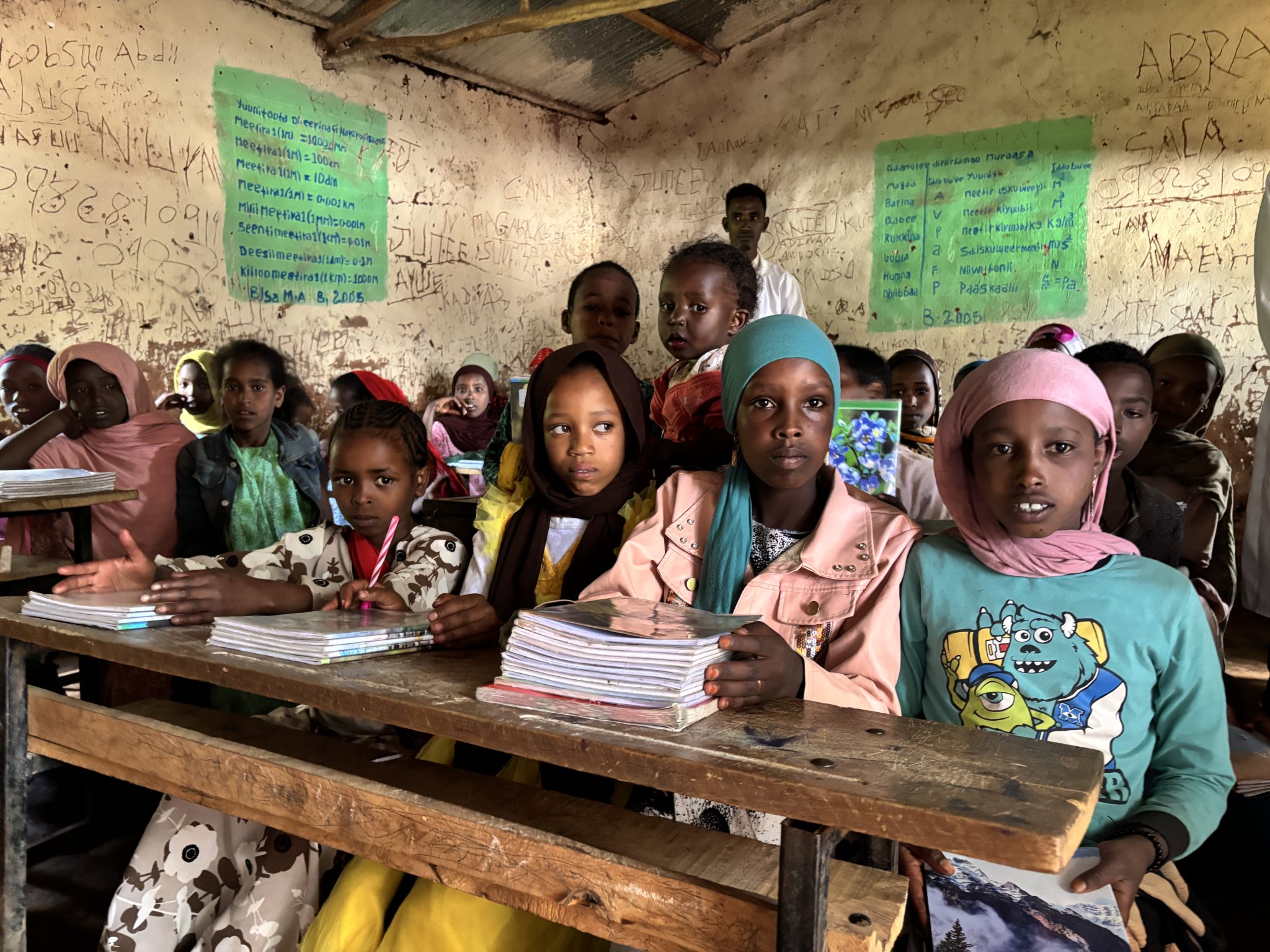
Learning may take place in temporary structures or in the community, in tents or outdoors. Curricula are adjusted, modified or condensed to accommodate shorter school days or gaps in children’s attendance. In protracted emergencies, education is provided in fragments, by default and in response to shifting circumstances.
Education may also be impacted in emergency-affected countries by weak infrastructure and low levels of education funding before the crisis occurred. These gaps will be exacerbated by an emergency, and its response must factor in how to address them without further straining already overstretched systems and overburdened communities.
Crisis education responses should thus strike a balance between providing immediate learning opportunities and supporting longer-term education system strengthening.
- How conflict, climate shocks, and displacement disrupt learning
Armed conflict can lead to the closure of schools, the displacement of teachers and travel to and from learning spaces becoming unsafe. Climate-related emergencies (such as flooding, drought, cyclones and wildfires) often destroy school buildings and equipment, disrupt the school year, and drive families into making decisions about their survival that can push education out of their priorities.
Displacement from conflict and/or climate change adds further complexity to access to learning, with children often forced to move repeatedly, or living in crowded and temporary conditions where formal education is not available or is inconsistent.
These educational interruptions do not always resolve themselves quickly. Children in the developing world often face repeated and compounding crises across months or even years. Education must adapt to this lack of stability by providing continuity of learning where permanence is unattainable.
- Why girls and marginalised communities are most at risk
Emergencies will also often exacerbate inequalities that already exist within education systems. Women and girls are more likely to be pulled out of school to do household labour, care for their siblings or marry early. Children with disabilities will be at a further disadvantage when temporary learning spaces lack accessibility or resources.
Displaced and minority communities are more likely to lack official documentation or have their languages and cultures not recognised within formal education. Social norms and economic factors may also further restrict who is able to continue learning. Without a targeted and inclusive approach, education as part of a response to emergencies will risk deepening patterns of exclusion, rather than trying to overcome them.
To provide equitable access to education in times of crisis, there is a need for particular attention to gender, disability and marginalisation, especially in developing countries where crises are compounded by existing structural inequality.
Why education in developing countries must be protected during crises
By helping children learn and stay safe in the most difficult of circumstances, education also becomes a protective tool. Schools are often where children have a regular meal, clean water, and a safe place to gather with their friends. The curriculum also helps them learn important skills and information that can protect them in an emergency.
As a result, losing access to schools can have a major impact on the health, nutrition, and protection of children and their families. Parents and children must make hard choices between education and other basic needs like food and survival. Vulnerable children are also at risk of being taken advantage of, sexually abused, abandoned, neglected, and more.
Protecting education means protecting many of these safety nets and critical services. If children can continue to learn, they can continue to receive key care and stability, as well. It is a foundation to help communities and societies absorb immediate shocks and build towards a longer-term recovery.
- Education as protection, dignity, and stability
Education is important during an emergency, not just for what children and youth learn in the classroom, but for the dignity and stability it also provides. For children, learning and continuing to go to school during a crisis is an important reminder of their rights and worth. When children have lost so much in an emergency, this simple fact can be a powerful antidote to grief, helplessness, and disruption. For parents and caregivers, knowing that their children are being cared for at school, kept safe, and having some form of routine can provide relief. This enables families to be able to concentrate on other challenges and demands of a crisis.
In addition to providing stability to children, education also offers an important structure to households and communities. Schools can help share key information and can support the psychosocial well-being of their students, as well as their caregivers. They can help reinforce protection messages and encourage positive coping strategies for families to adopt in a crisis. In many ways, education becomes part of the humanitarian response itself — supporting communities to cope, adapt, and maintain their social fabric in times of crisis.
- The long-term cost of education disruption
Education, as a foundation for long-term development, can provide multiplier effects when it is protected during a crisis. The longer education is interrupted, the more likely children are to miss years of school. They may never return and, as a result, are much less likely to find a job or earn a decent wage as adults. This can trap children and families in a cycle of poverty that they may never recover from.
It also impacts a family’s ability to access nutritious foods, clean water, and other household services. This is particularly true in developing countries where households are more vulnerable to economic shocks. Education is also deeply connected to nutrition and water security. Lower levels of education are linked to lower access to stable livelihoods and a decreased ability to protect against shocks.
Education also impacts nutrition and hygiene knowledge and awareness, and a family’s ability to adapt to environmental stress. When education is disrupted for an extended period of time, communities have less capacity to manage water scarcity, mitigate the impacts of climate variability, and maintain food production. The impacts can be deep, lasting, and continue to affect future generations.
CARE Australia’s approach to education in crisis situations
CARE Australia adopts a community-led approach to education in emergencies. We design and implement locally led, context-specific responses by working in partnership with communities to identify and respond to their needs. A key focus of our work is on gender equality and inclusive education to ensure that girls, children with disabilities and marginalised groups have access to learning opportunities, even in times of crisis.
We also understand that education is interconnected with other sectors, so our programming is integrated with health, nutrition, and protection programming to provide children with safe and supportive learning environments that address their immediate and long-term needs.
Through a combination of community leadership, a focus on inclusion and cross-sectoral support, CARE works to ensure that education in emergencies is not only a response to crisis but also an opportunity for building resilience and long-term opportunity.
Key strategies for supporting education in emergencies
When emergencies and disasters occur, one of the first aspects of a child’s life that is affected is their access to education. Practical, tangible solutions can have a big impact, including providing emergency education programmes that focus on rapid restoration of safe spaces for learning, supporting teachers, and adapting learning for difficult situations.
These solutions keep children in school, and help keep them safe, build resilience and offer long-term opportunities to recover.
- Rapid education response and safe learning spaces
In times of crisis, one of the most important actions to take in education is a quick response. Quick setup of safe learning spaces and environments for children to return to school can provide not only education but protection, routine, and stability for children and families who have experienced disruption and displacement.
It is critical to not overlook girls when designing education programs during times of emergency, as investing in girls’ education is a key solution to breaking cycles of poverty and helps girls gain the skills, confidence, and opportunity needed to thrive even in the most fragile environments.
- Supporting teachers and frontline educators
Teachers and frontline educators play a crucial role in continuing learning during times of crisis. They often work under enormous pressure to maintain stability for children, and with the right tools, they can be some of the most valuable parts of a quick response education program. By providing training, psychosocial support, and teaching resources, teachers can be empowered to continue to provide effective instruction, while also serving as trusted figures to anchor children in a time of disruption.
It is critical to support teachers so that learning can continue to be a safe, consistent, and effective presence in children’s lives, even during times of crisis.
- Flexible learning models for crisis-affected children
Flexibility in design is an important part of creating continuity in education for children and families facing crisis and disruption. Mobile classrooms, community-based learning initiatives, remote or digital learning can all allow children to continue their education even when facing displacement, damaged infrastructure, or irregular schedules.
It is especially important to make women and girls an integral part of these types of education systems, as a flexible model for women’s education can help women in crisis situations continue to access the opportunity to learn, grow, and lead even when formal schooling is not available.
Partnerships that strengthen education in crisis-affected countries
Partnerships are key to making sure responses are well-informed and contextually appropriate, sustainable and inclusive. CARE Australia partners with local organisations and governments to ensure we understand the distinct education needs of local communities and to design programs that are owned by people who are able to address local cultures, challenges and opportunities.
CARE Australia also supports local actors to take the lead in all aspects of its work so we can effectively reach the girls and other marginalised children we work with and help increase their voice and presence in decision-making.
CARE also coordinates with humanitarian and development partners (from international NGOs to multilateral agencies) to strengthen our education work. This maximises impact and reduces duplication, while also helping to connect education interventions with related programming around health, protection, livelihoods and other key sectors. Collaborations also allow for rapid response during an emergency while at the same time being able to support communities with longer-term needs for years after a crisis has passed.
We are active advocates for women humanitarian leaders within our partnerships. CARE Australia also ensures women’s leadership is prioritised at all levels as we know this strengthens program design, builds trust in the community, and makes sure education programming is relevant and sensitive to the needs of girls and women during a crisis.
From emergency education to long-term resilience
When children are able to keep learning throughout a crisis, they are building more than their own futures. They are helping their communities stay strong, stabilise and recover. CARE Australia looks at education through a development lens. We know that an emergency response can and should be used as an opportunity to support and invest in a longer-term, more resilient education system. This includes building teachers’ capacity, educational infrastructure and teaching children a more relevant and inclusive curriculum.
Community recovery is directly linked to preparing for future shocks. CARE Australia has a focus on supporting communities to implement measures that consider ongoing or repeated crises (whether due to conflict, climate events or large-scale displacement) so that children and their families can continue to access education even in the most challenging and unpredictable contexts. This approach provides resilience at the individual, school and systems level, creating opportunities for development and economic growth.
You can help. There are so many ways you can make a donation to CARE Australia, whether as a monthly contribution, a one-off gift or a corporate partnership, you can make sure that the benefits of education reach children today and are built on to help entire communities thrive in the future. Your support enables learning, protection and opportunity for children and families affected by crisis.
How you can support education in crisis situations
Education should never stop, even in emergencies. Help protect children, empower communities, and provide stability in the face of crisis by supporting education in emergencies. Donate now to help ensure safe spaces to learn, teacher support, and flexible programming continues in countries impacted by crisis. Make a difference to children affected by emergencies by providing them with the chance to learn, and the hope, opportunity, and tools to build a better future.
If you are interested in learning more about how you can help or would like to partner with CARE Australia, please get in touch with us today to discover how you can support and strengthen education to protect children and build resilience in crisis-affected communities.
Every step matters, and together we can keep education going even when the world is most in need.