It’s easy to take for granted how simple access to water is. For millions of families around the world, this simple act of turning on a faucet to access clean, safe water is not so simple at all.
Women and children trek for hours a day searching for water, walk miles to collect it from polluted and unsecured water sources, and are forced to make difficult decisions every day on who in their household is able to drink it, attend school, or earn a living. At CARE Australia, we don’t have to look far to see and hear the stories of women and children in rural communities who are dealing with these very issues every day.
As part of our work, CARE Australia staff are on the ground with local communities and leaders every day to implement sustainable water, sanitation and hygiene (WASH) solutions that put the dignity, safety, and needs of families first. We work with communities to help them rehabilitate water points after periods of damage or drought, implement school programs that provide a hygienic environment for children to learn and play, and train community members on solutions that work best for them.
Through working with partners and experts in WASH, CARE Australia has the opportunity to learn, adapt and work toward solutions that have the power to break cycles of disease and bring back precious time for families and communities.
Want to join us in this life-changing work? You can donate now and help bring clean, safe water to the families who need it most.
So let’s explore the realities of rural communities, the barriers they face in accessing safe and clean water, and the sustainable WASH programs and solutions that are making a difference today.
Table of contents
Why clean water access in rural communities matters
Key challenges facing rural communities
- Geographic isolation and infrastructure gaps
- Water quality issues and contamination risks
- Climate change, drought, and seasonal variability
- Financial and resource constraints
Effective water sanitation and hygiene solutions
- Sustainable water infrastructure options
- Community-led sanitation practices
- Education and behaviour change for long-term impact
The role of WASH programs in driving lasting change
How CARE Australia supports clean water access in rural communities
How you can help
Creating a future where every community has clean water
Why clean water access in rural communities matters
Access to clean water in rural communities is important because water touches every aspect of people’s day-to-day lives: their health, income, education, and overall family security. In the Pacific countries where CARE Australia works, villages are dispersed across remote islands and along inaccessible coastlines.
When safe water is in short supply, people are forced to depend on rainwater tanks that empty quickly during the dry season, surface water which is often contaminated after storms and washouts, or shared community water taps that break down or dry up. Each of these challenges erodes time, well-being and opportunity, which is why access to water in rural communities is at the core of food and water security.
These pressures are only increasing on the women of the Pacific as the effects of climate change accelerate, which is why interventions that improve access to water are about so much more than water and sanitation infrastructure. It’s about health and well-being, resilience, and giving every community the chance to build a safer, more secure future.
Key challenges facing rural communities
There are a variety of factors that work together and create such challenging circumstances for clean water access in rural areas. They range from a lack of proper infrastructure and damaged or unreliable water sources to storm damage and variability in climate.
But before we understand their impact and work on the solution, let’s have a look at these factors individually and see how easy it is to address each one of them.
- Geographic isolation and infrastructure gaps
Location is one of the primary challenges in supplying clean water in rural communities. Villages may be located on remote islands or nestled in rocky coastlines far away from any reliable infrastructure or water systems. Pipes, pumps, and storage tanks may be limited, in disrepair or unavailable. In these areas, it is extremely challenging for households to get consistent access to safe water.
Women disproportionately bear the brunt of the climate load gap. As they are traditionally the ones who collect water and manage household needs, these geographical distances and shortages mean that women face hours a day of navigating these gaps, juggling the physical and emotional toll of their family’s demands with the challenge of finding water.
- Water quality issues and contamination risks
Even when water is available, it isn’t always safe. In many rural communities, wells, rivers, and rainwater tanks can become contaminated with bacteria, chemicals, or debris, especially after heavy rains, flooding, or storms. We hear time and time again from communities about children falling sick with water-borne diseases after a cyclone, or families struggling to stay well when repeated illnesses strike during the wet season and runoff contaminates local water sources.
When households can’t rely on safe drinking water, they’re left with impossible choices: use water that might not be safe, ration precious supplies, or go without when it comes to essential daily activities like washing and cooking.
- Climate change, drought, and seasonal variability
Changing seasons and erratic rainfall demand constant adaptation. What worked last year may not work this year, and families are left scrambling to find enough water to drink, cook and grow crops. Without reliable, sustainable solutions these weather surprises can push communities to the brink.
Droughts and sudden storms have always been a part of rural life, but now they are destabilising entire communities. Every dry season or washed-out water source can leave families with no safe drinking water for days, or no crops for sale, and it poses serious health risks.
Climate change means communities can’t count on their usual water sources anymore. CARE Australia’s Climate programs help them build resilience against droughts, floods and the uncertainty of the changing seasons.
- Financial and resource constraints
Communities in rural areas are often very clear on the resources they need to improve their water system. But the funds required for tank repairs, new piping and connections, or ongoing maintenance of filtration systems can be unattainable for a household or community budget already stretched by basic needs and irregular income.
Local government bodies and community groups often have limited funds and materials available for upgrades and maintenance, and technical assistance may be out of reach. These monetary and resource constraints mean necessary upgrades may be postponed and implemented in temporary and unsustainable ways.
Not only do financial barriers impede progress in these situations, they also place communities at risk for system failures, which become more costly and difficult to respond to when they do occur, particularly during extreme weather and climate events. Reliable and ongoing investment can help fill these gaps to ensure communities are not left without support.
Effective water sanitation and hygiene solutions
There are realistic and effective solutions for improving rural communities’ access to clean water. On the other side of the Pacific, small-scale improvements, community-run projects, and WASH programs are helping villages to develop and maintain systems that are both safer and more sustainable.
These aren’t just patch-ups. These are long-term solutions that improve communities’ overall well-being, help them to live healthier lives, and give them peace of mind, knowing that safe water will be there when they need it.
Here’s how these approaches work in real communities:
- Sustainable water infrastructure options
Sustainable water infrastructure means providing reliable water access year-round beyond just wet-season availability. In the Pacific, it’s also about durable, resilient infrastructure that can be easily repaired, has been engineered to withstand the region’s cyclones and torrential rain, and has been planned with community needs and capacity at the heart of the design. Rainwater catchment systems with concrete-reinforced storage tanks, gravity-flow pipe systems for communities located on rugged terrain, and solar-powered pumps for remote areas are all examples of practical, low-energy technologies well suited to rural communities.
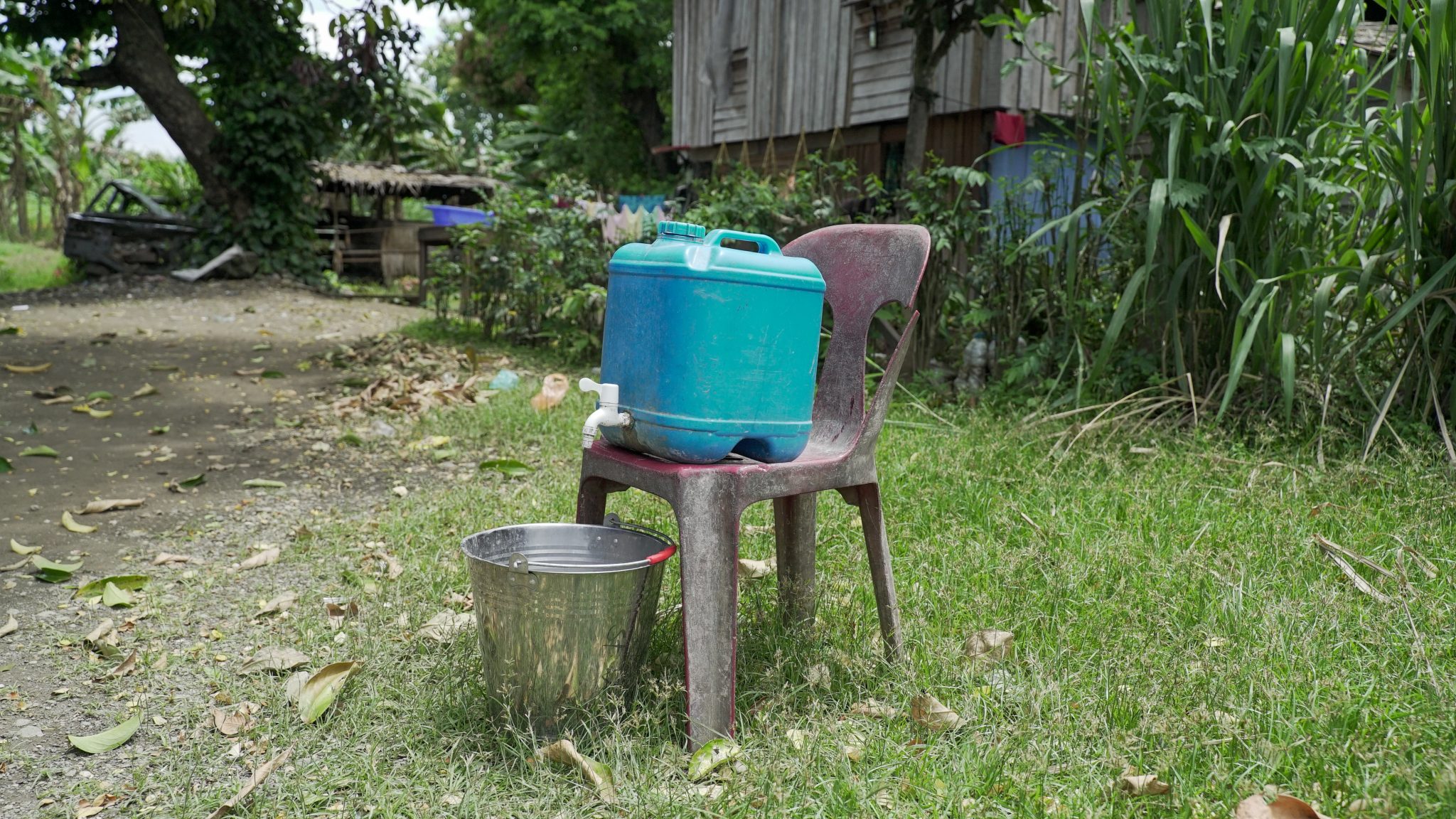
Another important component of sustainable water infrastructure is the tools and supplies needed to keep systems in working order long after they have been installed. Simple hardware (pipe cutters, sealant, additional taps, back-up filters, basic water-testing kits) can help a community keep their water systems working. It can mean the difference between weeks of safe water and weeks without.
Training community leaders to operate and maintain equipment like basic plumbing tools, solar pump controllers, or chlorination kits means that repairs can be made right away, without having to wait for an outside engineer or specialist to arrive by boat or plane. Give people the equipment and training to do the job and water systems can become a reliable part of daily life.
- Community-led sanitation practices
The success of sustainable WASH interventions depends largely on the adoption of sanitation and hygiene practices by the communities. Community-driven solutions are more effective and long-lasting as behavioural changes within communities occur when community members plan, own, and lead interventions.
Community practices and norms at the village level include developing habits for regular cleaning of drinking water sources and for solid and liquid waste management practices in a safe manner as well as availability of handwashing facilities and materials in schools and public spaces.
When community-led total sanitation (CLTS) committees oversee sanitation and hygiene in villages, monitoring and behavioural change are likely to be effective in reducing waterborne diseases in a year-round basis due to frequent maintenance of toilets and management of hygiene, solid and liquid waste, and safe drainage practices.
The increased number of households in rural villages connected to clean water on tap is likely to make sanitation and hygiene practices more critical to ensure improved access to safe water is also accompanied by improved hygiene and sanitation practices and a cleaner environment.
- Education and behaviour change for long-term impact
Education is one of the most effective methods for facilitating sustainable change in the way that communities access and manage their water. It is only when people understand the connection between hygiene and illness, or how and why water should be safely stored, or how daily actions can impact the cleanliness of their water, that they feel truly empowered to take control of their own health and the health of their families.
In the Pacific, CARE Australia delivers key health and hygiene messages through schools, youth groups, and respected community members and leaders. The information we share is simple, practical, and culturally appropriate. It ranges from proper hand-washing techniques to safe storage and cleaning of household water containers.
By ensuring this information comes from trusted sources and that the messages are reinforced through regular activities and community discussions, these behaviour changes will become the new norm, ingraining these improvements in water access and sanitation for the long term.
The role of WASH programs in driving lasting change
WASH programmes are not just about the construction of water and sanitation facilities but achieving the combined power of interventions on water, sanitation and hygiene. These include a range of approaches such as providing practical solutions, combined with community engagement, behaviour change, education and the development of long-term systems and maintenance. In rural Pacific communities, these WASH programmes seek to make safe water, sanitation facilities and hygiene practices accessible, used and maintained consistently over the long term.
By tackling the underlying issues related to waterborne diseases, WASH programmes make a significant difference in people’s lives. Improved water points, sanitation facilities and hygiene practices prevent the transmission of diseases like diarrhoea, skin infections and respiratory illnesses that are common among children.
A WASH programme in a school ensures that children are healthier, attend school regularly and have the energy to learn. The health improvements from WASH can also have other long-term benefits such as increased productivity in communities and individuals who can focus time and energy on livelihoods, education and other long-term priorities.
How CARE Australia supports clean water access in rural communities
CARE Australia’s approach to improving water access in rural communities involves providing locally-appropriate, sustainable solutions. We do not simply parachute in and hand over a project; rather, CARE works in partnership with communities to develop a water system that suits their specific needs, as well as their unique landscape and resources. From providing technical assistance for the development of physical water systems to providing support to ensure water points are properly managed over time, CARE Australia is focused on durable, locally-managed solutions.
Forging strong partnerships with local governments, village committees and other regional stakeholders is an integral part of the process. By partnering with these groups, CARE can coordinate efforts, share expertise and knowledge and increase overall accountability. Pooling resources with key partners also allows CARE Australia to reach more communities, better meet the needs of each community we work with and ensure our programs are culturally appropriate and have wide support.
Maximising the impact of funding and resources is another important component. Investments made by CARE in water infrastructure don’t just include the purchase of pipes or pumps, for example, but also cover the training and knowledge needed to ensure a water system is well-managed over time, as well as hygiene education.
This investment is then combined with an intentional focus on the participation and leadership of women and girls, who are the primary users and managers of household water in many cultures. This has the benefit of helping to shift decision-making power at the community level and improve gender equity in the village, as well as helping ensure that improved water access is beneficial to all community members.
How you can help
You can give to CARE Australia in a range of ways, and every contribution makes a difference. One-time gifts, monthly donations or contributions during an emergency help CARE continue to provide the infrastructure, training and supplies necessary to keep the water flowing. For corporates and organisations, a corporate donation to CARE Australia is a great opportunity to pool resources and impact that change, reach more communities together and speed up the scale of change.
Fundraising and advocating for the work that CARE is doing is also valuable and powerful, through raising awareness, hosting community events or sharing CARE’s work through your personal or professional networks you’re playing a role in highlighting that access to clean water is a basic human right. Each action taken towards advocating for global water equity helps to ensure that rural families in the Pacific and beyond have the means, understanding and resources necessary to take action and thrive.
However you choose to support, your contribution will directly contribute to communities being able to sustainably manage their water, have the tools to improve their health outcomes and work towards a future where clean water is not a luxury but an expectation.
Creating a future where every community has clean water
Safe water is a fundamental building block to health, education and opportunity in every community. Support CARE’s work so families in rural Pacific villages can have safe, reliable water and we’ll work with communities to make sure the infrastructure we build together lasts for generations.
Donate today to make a difference right now and give communities the tools, training and resources they need to succeed.
Our sustainable WASH programs and community-led, locally appropriate solutions are helping villages become more climate resilient, more hygienic, and working to ensure water for all households. Every dollar, every voice, and every partnership helps build strength, resilience and equity. To learn more about how you can get involved or find out how your support can create a lasting impact, contact us today.
Together, we can create a future where every community has access to clean water.