The day Yasmin[1] found out that her husband was dead, she saw his body on a phone screen. A relative showed her a video of a mass grave in Aleppo. It was 13 years ago during the conflict in Syria. “I recognized him by the clothes he was wearing and the shape of his face. I knew it was him. A sniper killed him. From then on, I was a widow,” says the 41-year-old mother of six.
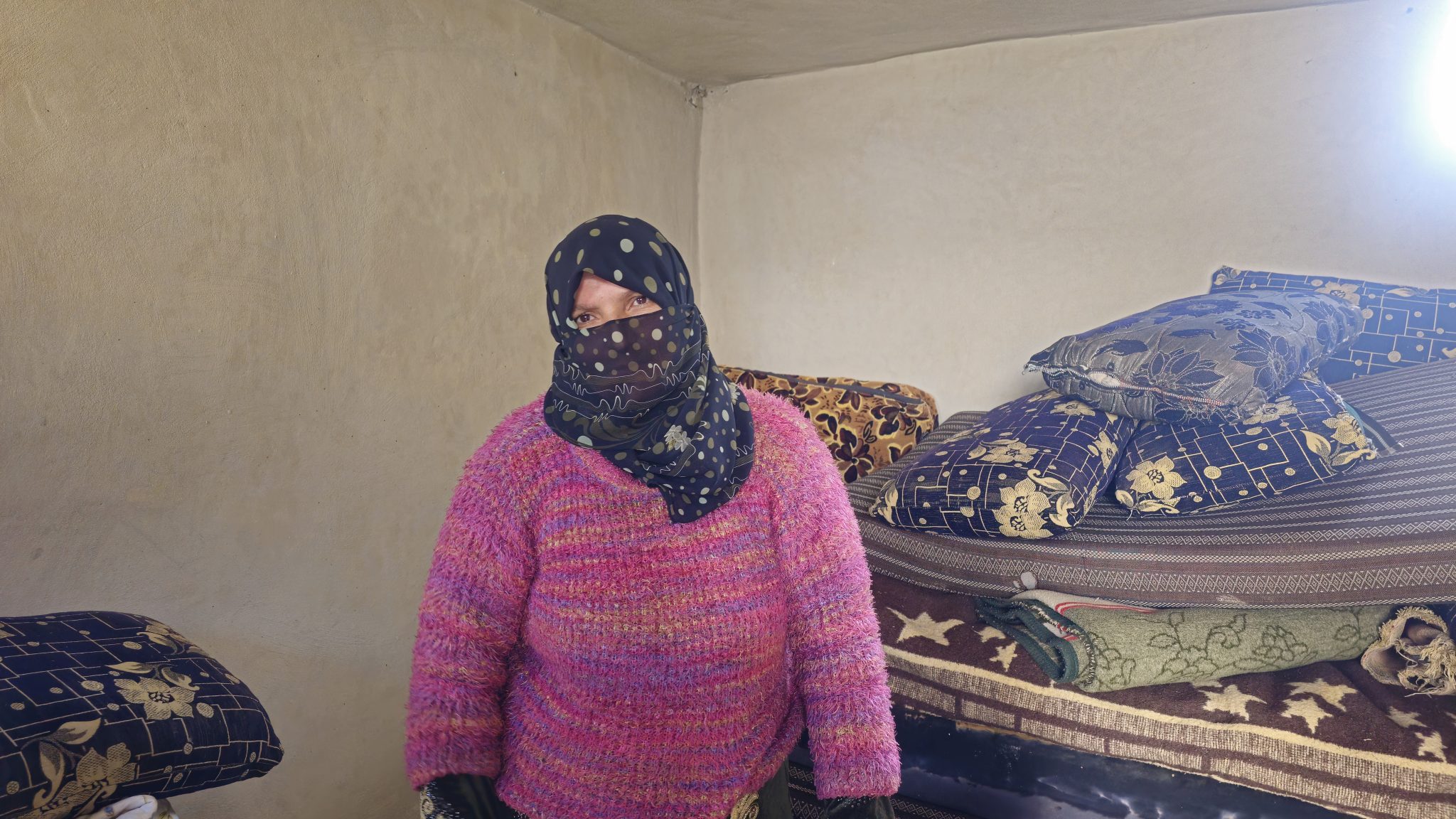
Yasmin lives in a small town in northwest Syria. Her youngest son was three months old when his father left home to look for work and never returned. At the time, there were no jobs or income opportunities in their town. They had no food and were hungry. They were starving. So, her husband went to Aleppo because it was the only place where he thought he might be able to earn money to buy food for his family.
I waited for six days for him to return without hearing anything. We went without eating. We only had some old biscuits that we survived on,” remembers Yasmin. Every day, I was thinking that he was just stuck somewhere, or that he did not have a phone connection to tell he was fine. Maybe tomorrow he would call.
As the days passed without news, she began calling relatives, searching for any information. At the same time, she saw images online. “I was going crazy. On social media, I saw so many dead people being thrown into the river in Aleppo. I was so afraid that he was one of them,” Yasmin says.
After his death, her brother helped when he could. But he did not have the means to support a household of seven. “We only ate bread for weeks and months,” Yasmin says. It became clear to her that this could not continue. If nothing changed, she and her children would not survive.
A woman who works
“I found work for myself. I went to the fields to harvest crops, even though my husband’s family did not allow this. They did not accept a woman going out to work, but they also did nothing to support us or make sure that we would not starve, so I went to work despite them. There was no alternative,” she says, straightening her back and shoulders as she speaks.
Everything I do is for my children. They were hungry all the time. I could not help them, and I could no longer watch them die!
One day, her husband’s family saw her climbing onto the back of a pickup truck that was taking workers to the fields. An argument followed. They told her to stop working immediately and said that what she was doing was shameful for a woman. Again, it was her brother who intervened. He told them that his sister could do whatever she needed to survive and that they should leave her alone. After that, contact with her husband’s family ended completely.
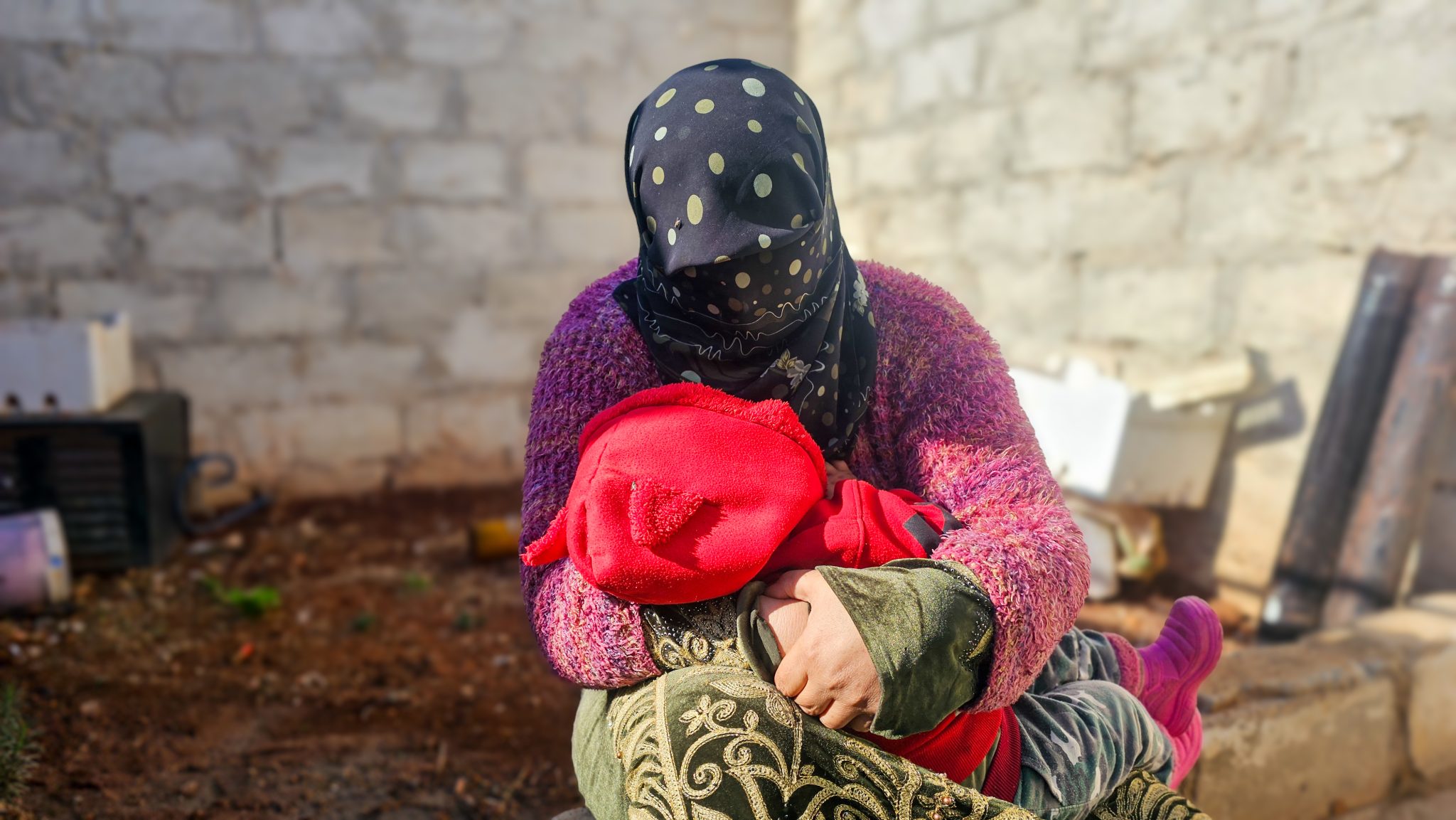
Years later, violence intensified and the entire town was displaced. Yasmin and her children were forced to live in small tents in a camp near the Turkish border.
That was when my husband’s family finally understood. They were displaced themselves and experienced for the first time what it meant to be hungry and to struggle to find food and money. They understood that I had to do whatever was possible. That I had to find work or die.
A minimum for survival
Three years ago, Yasmin made another decision driven by necessity. Life in the camp was no longer sustainable. There was not enough work, not enough income, not enough food.
Two years before the fall of the regime, she returned with her children to their hometown, even though it was dangerous. “I had to hide my children, or they would have been taken from me and conscripted.” Her older sons stayed mostly inside the house. They were not allowed to leave the town to look for work and had to limit their time outside. For two years, her children did not go to school.
It was me who did everything outside. I worked in the fields. I found the food. I took care of them. Being a woman was a benefit this time, as I was able to move freely to go and find work opportunities. It was dangerous, yes, but at least it was our way of survival.
On December 8, 2024, the regime fell. Yasmin heard the news through the loudspeakers of the local mosques at five in the morning.
“I cannot even describe the happiness we felt. At first, I could not believe it when I heard it. It is custom in our town to announce those who have died through the speakers, but then I listened more closely and I was so happy,” the mother says while one of her granddaughters walks into the courtyard wearing pink rain boots that are too big for her.
She sits down on Yasmin’s lap and falls asleep within minutes. Yasmin continues: “We have more opportunities than we had before, as my sons can now go out to work, but we are also facing rising costs. Especially water and electricity prices have increased rapidly over the last year.”
Filling her water tank now costs 10 USD. Before, it cost around 20 cents each time. Food prices have also increased significantly. A bundle of bread used to cost 100 Syrian Pounds, now it costs 5,000. “We need approximately 1.5 USD every day to buy bread for everyone. That is the minimum for our survival,” Yasmin says.
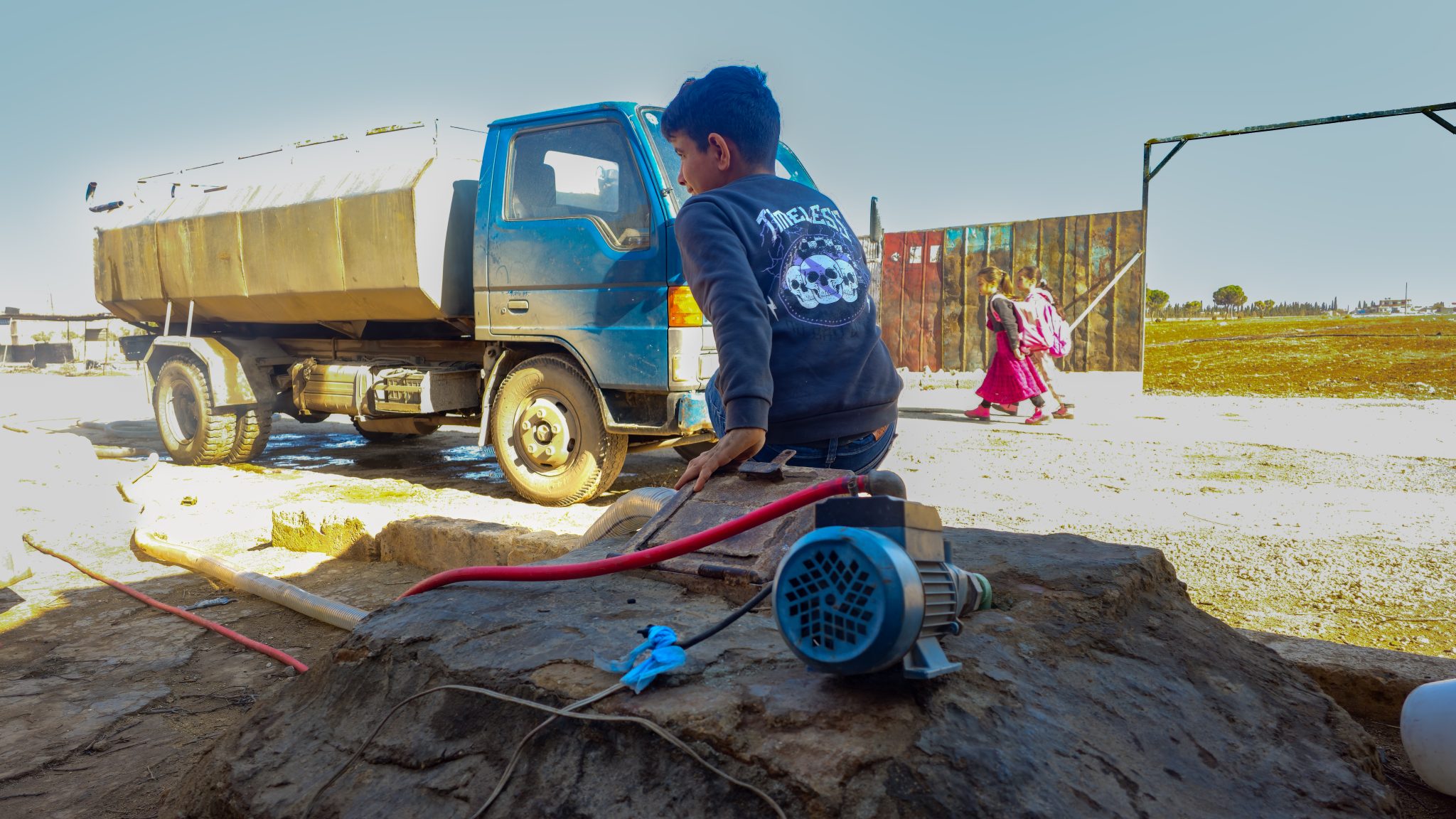
But even that has become a struggle again. This year’s harvest season was poor due to drought, reducing work opportunities in the fields. Yasmin had to borrow money several times just to buy bread.
Rain means water but also darkness
CARE supports Yasmin with a monthly cash assistance of 100 USD, funded by the European Union. “It is not enough to cover all of our needs, especially if I want to send my children to school, but it helps us to survive,” she says relieved.
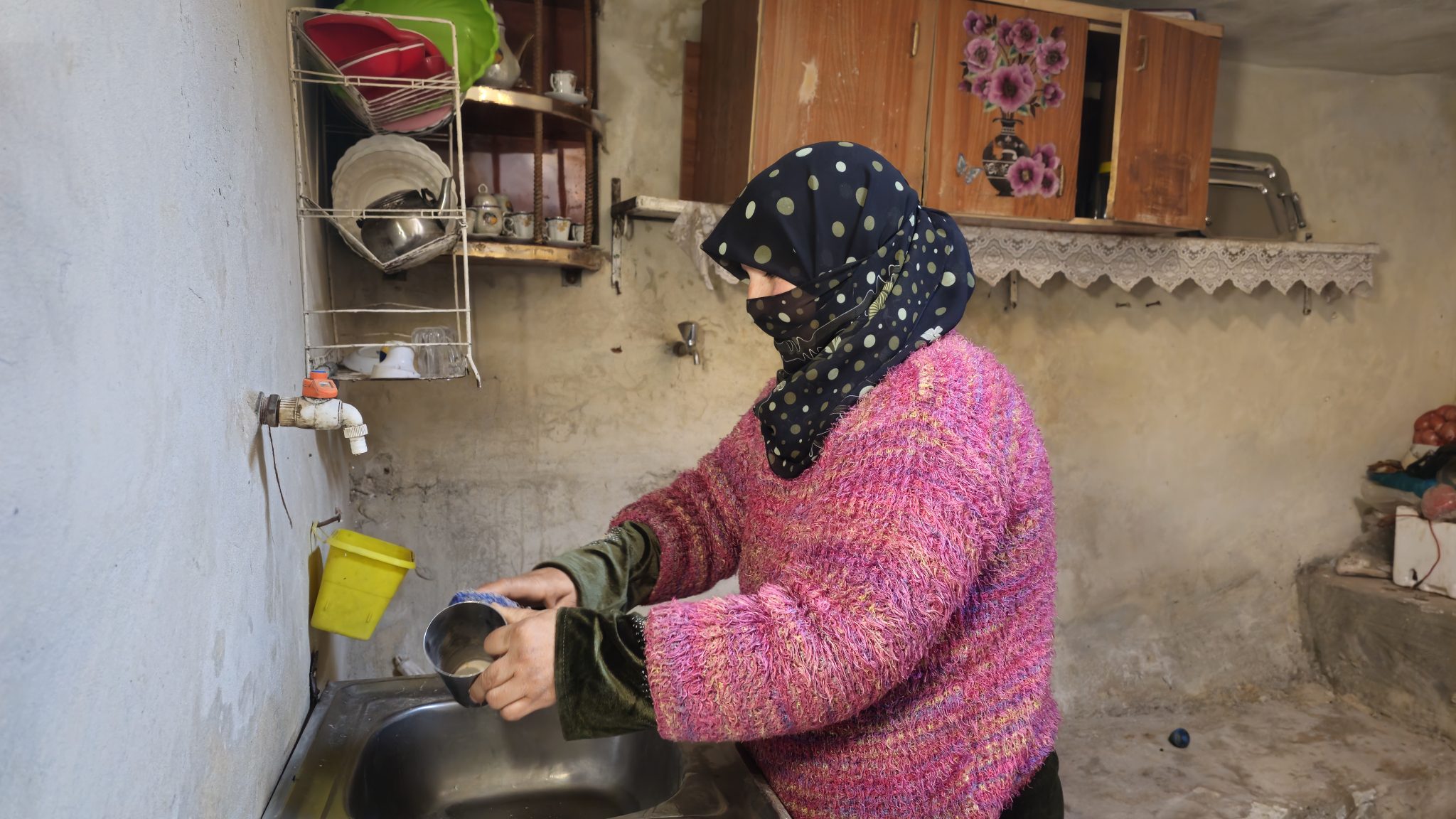
The first payment was used to repay food debts. The second covered the weekly water delivery debt, ensuring the water tank would be full enough for drinking and cooking. The support helps her to cope and take care of her family, but it only covers the bare minimum. She cannot remember the last time her family ate anything other than bread, potatoes, beans, onions, or bulgur – food that is cheap enough to afford.
Even with weekly water deliveries, she looks for alternatives whenever they arise. Yesterday, it rained. “I ran outside, put a barrel under the roof and stuck a tube to collect the rainwater. It was enough for half the barrel. I will use that water to clean and wash clothes,” Yasmin says.
She finds ways to survive. That is what she has had to do for the last 13 years. Yesterday, she collected rainwater, but had to live in darkness, as she has no access to electricity due to the high costs. She relies on small solar panels, but when it rains, they do not charge. So, she mostly cooks over an open fire next to her water tank. Nearby stands a metal container filled with old shoes, waiting to be burned.
I use everything I can find for fuel. Sticks, paper, leaves, or cow manure.
Yasmin worries about the future. Funding for humanitarian assistance in Syria is being cut. For now, she has two more months of support. CARE’s cash assistance currently supports 1,100 families, prioritizing women-headed households, people with disabilities or chronic illnesses, displaced families, elderly people, child-headed households, pregnant women, and orphans. With funding cuts, the program is expected to end once the final cash instalments are made, unless additional support can be secured.
For now, Yasmin knows exactly how much time she has. Two more months of support. Two more months in which the bread can be bought without borrowing, and the water tank filled without having to choose between drinking and washing.
When Yasmin speaks about tomorrow, she does not speak about plans. She speaks about needs. Bread. Water. Safety. School. Enough to get through another day. For now, that is what survival looks like.
[1] Name changed for security reasons
This story has been written by Sarah Easter, CARE Emergency Communications Officer
Want to contribute? Donate to CARE Australia today, or find more ways to give and support our humanitarians worldwide.