Australian women are sounding the alarm. Almost half believe that, globally, women are less safe now than they were five years ago.
This is according to new YouGov research, commissioned by women and girls’ organisation, CARE Australia, ahead of International Women’s Day this Sunday, 8th of March.
“The findings paint a stark picture of Australian’s perceptions of women’s safety globally,” says Dr. Athena Nguyen, Gender Lead at CARE Australia.
Five years ago, we were riding the wave of the ‘Me Too’ movement. However, since then, it seems progress has gone backwards, and it’s not hard to see why. At home here in Australia, rates of domestic violence aren’t going down, and in many countries around the world, we’re also witnessing the rollback of women’s rights. Additionally, last year we saw cuts to aid budgets from major economies, which has left many programs keeping women and girls safe, drastically underfunded.
When asked what factors are impacting women’s safety the most, both men and women surveyed believed these to be gender-based violence in the home or community, and social or cultural attitudes towards women.[ii]
However, the research also shows Australians believe we can, and should be, part of the solution. In fact, three quarters[iii] say women’s safety should be given higher priority than other global issues, and an overwhelming 9 in 10 Australians[iv] agree that countries like Australia have a responsibility to support efforts to improve women’s safety globally.
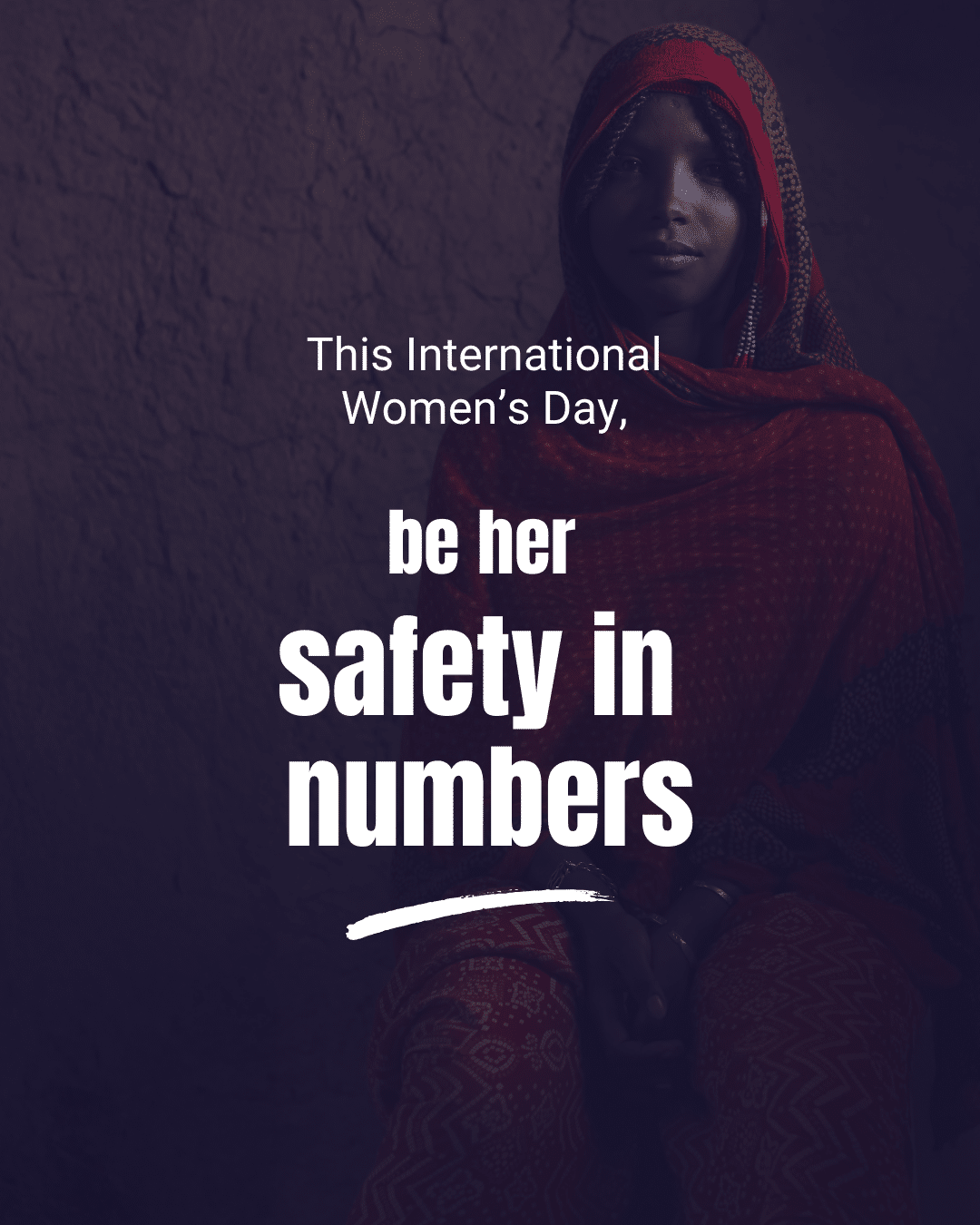
This month, to mark International Women’s Day 2026, CARE Australia launched their ‘Safety in Numbers’ campaign, which is calling on Australians to stand with women around the world whose safety is under threat, and be their ‘safety in numbers’.
Across the world, women and girls are disproportionately affected by conflict, disasters, poverty and hunger. In crisis affected areas, these risks intensify. CARE works alongside women and their communities to improve safety through violence prevention training, safe access to essential services like food, water and shelter, and lifesaving emergency support.
The statistics show the scale of the challenge. Globally:
- One in three women have experienced physical and/or sexual violence, most commonly by an intimate partner.[v]
- One in two women who die during pregnancy is living in a conflict‑affected area.[vi]
- Maternal mortality is over 40 times higher in unstable regions than in more stable developing countries.[vii]
- Women are 14 times more likely to die in an emergency.[viii]
- More than 600 million women and girls are living in conflict zones, a 50% increase over the past decade.[ix]
Behind every statistic is a woman whose daily life has become more dangerous.
CARE Australia CEO Morgana Ryan says:
The research we conducted with the Australian public confirms what we have been witnessing for a while now at CARE. Women’s safety globally is under threat, and more needs to be done. This International Women’s Day, we’re calling for Australians to help women everywhere live free from harm and to support long‑term, community‑driven safety and resilience. The numbers can be hard to confront, but we can come together in our own numbers. Stand up and be counted this IWD and be her Safety in Numbers.
Funds raised from the Safety in Numbers campaign will go towards CARE’s programs, including helping girls stay safe from violence, to provide health care for pregnant women and new mothers, or to help communities build wells and water pumps to ensure safe access to water for women.
To learn more, and to donate, visit give.org.care.au
About the research
CARE Australia commissioned research through YouGov, who surveyed a nationally representative sample of 1,092 Australians aged 18 years and older. The study was conducted online between 12th February and 16th February 2026. All figures, unless otherwise stated, are from YouGov.
Findings
- [i] 1 in 2 Australian women (47%) believe women’s safety globally has worsened compared to five years ago.
- [ii] Nearly all (99%) Australians acknowledge that there are factors affecting women’s safety globally, with gender-based violence in the home or community (64%) and social or cultural attitudes towards women (57%) emerging as the factors mentioned most often.
- [iii] Three quarters (76%) say women’s safety should be given higher priority than other global issues, including two in five (39%) who believe it should be a much higher priority.
- [iv] Nine in ten (89%) Australians agree that countries like Australia have a responsibility to support efforts to improve women’s safety globally, including more than half (55%) who strongly agree.
- Two in five (41%) Australians believe women’s safety globally has worsened compared to five years ago, including 13% who say it has significantly worsened.
- Australians hold mixed views about the future of women’s safety globally: while 42% feel optimistic about progress in the next 5 years, more than one in four (28%) feel pessimistic and another 30% are neutral.
References
[v] https://www.who.int/publications/i/item/9789240022256
[vi] https://careinternationaluk.ams3.cdn.digitaloceanspaces.com/media/documents/WomenInWar_FINAL.pdf
[vii] Georgetown Institute for Women, Peace and Security and Peace Research Institute Oslo. (2023). Women, Peace, and Security Index 2023/24: Tracking sustainable peace through inclusion, justice, and security for women. Washington, DC: GIWPS and PRIO.
[viii] https://www.undp.org/blog/women-are-hit-hardest-disasters-so-why-are-responses-too-often-gender-blind