
by Ed Boydell, CARE Australia’s Climate Change Advisor
Today is World Environment Day. For the 7,000 people living on Nissan Island, a small coral atoll in the north-east of Papua New Guinea (PNG), it is a day of special significance.
World Environment Day is a call to action, a reminder of our shared responsibility for protecting the planet. This year, the day is highlighting the impact that climate change is having on small islands, where the poorest depend on a fragile environment for food and water. Climate change is adding to the challenges for the people who call small islands home.
The people on Nissan Island, part of the Autonomous Bougainville Region of PNG, are no strangers to these challenges. Nissan is surrounded by ocean as far as the eye can see. A five-hour boat trip away from mainland Bougainville Island, it is a beautiful but challenging place to call home. The low-lying island has limited fertile land, and is exposed to fierce storms and drought.
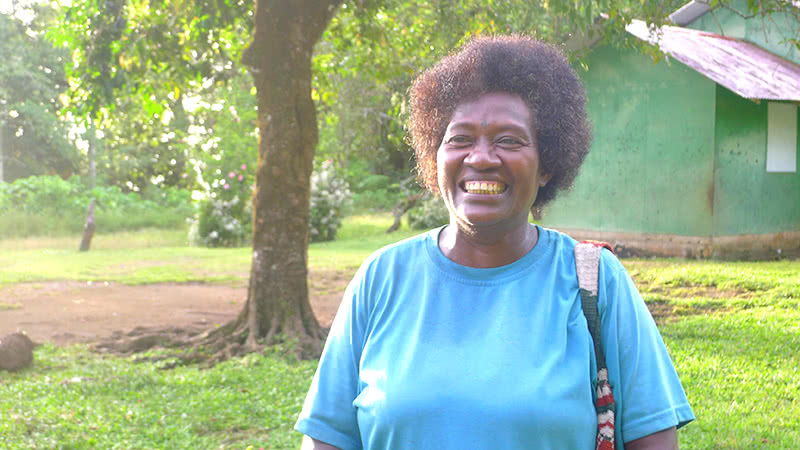
When I recently travelled to Nissan, I met Helen Kemito, a 48-year-old mother-of-five, and grandmother-of-four. She told me of the impact the increasingly unpredictable weather is having on her family’s lives.
With no access to reliable transport on and off the island, the people of Nissan depend almost solely on the island environment itself for food. They fish and grow garden crops such as taro, yam and cassava, along with fruits such as bananas, pawpaw and coconut. In the past decade, however, they have noticed increasing variation in the weather. Heavy rain falls in short periods, rotting vegetables and stripping the blossoms off fruit trees. Conversely, prolonged periods without rain are equally damaging to crops and bush foods. Sea spray is blowing further inland on strong winds, and heavier king tides bring salt further into their gardens than the people of Nissan have ever seen, severely damaging crops.

With support from CARE, Helen has led a small group of Nissan Islanders aiming to address some of the impacts they are already seeing from a changing climate. Part of an Australian Government initiative to ensure families continue to have enough food in the face of a changing climate, men and women on Nissan and neighbouring Pinipel islands are learning new agricultural, water and food storage techniques, and are building their skills to better prepare for disasters. Many families on Nissan have already built nurseries to trial new gardening and agriculture methods and are sharing their knowledge and seedlings among their community.

In the face of an uncertain future, today’s World Environment Day is an opportunity for many hundreds of communities in Australia’s neighbourhood to share their knowledge and experience in tackling a changing climate. With relatively small populations, the women and men of islands like Nissan have done little to contribute to climate change, but the reality of their circumstance means they’re on the front line of dealing with its impact.
Learn more about CARE’s work to support communities affected by climate change

I was very happy to have visited Nissan and Pinipel, a beautiful scenery and people too. I was there in August to September 2016 to do a community-based marine ecosystems assessment for Care International. I would love to return sometime to see how the information from the marine surveys have been integrated into the community-based resource management plan. Given the effects of climate change, I also talked with locals regarding their use of a mangrove species fruit as a staple vegetable during dry seasons. I am very interested to help in anyway, to see how traditional ecological knowledge of this mangrove species can be integrated into modern resource management strategies to secure food security options in the future.
As an Nissan Islander myself, I am very happy with the help Care International is doing for the islanders. The world should know and understand the impact climate change has impinged on small islanders. The Humanetarian Aids must be given in a long -term-benefit form to build human capacities in the islands so people will be able best manage their own resources to best take care of themselves.
Thank you.
EDWARD
Addressing issues relating is Climate Change is everyone’s business. The people of Nissan taking the initiative to address these issues in their island home and with the support of Care International to me is humbling enough to me as a Papua New Guinean. This story is such a life inspiration in itself.