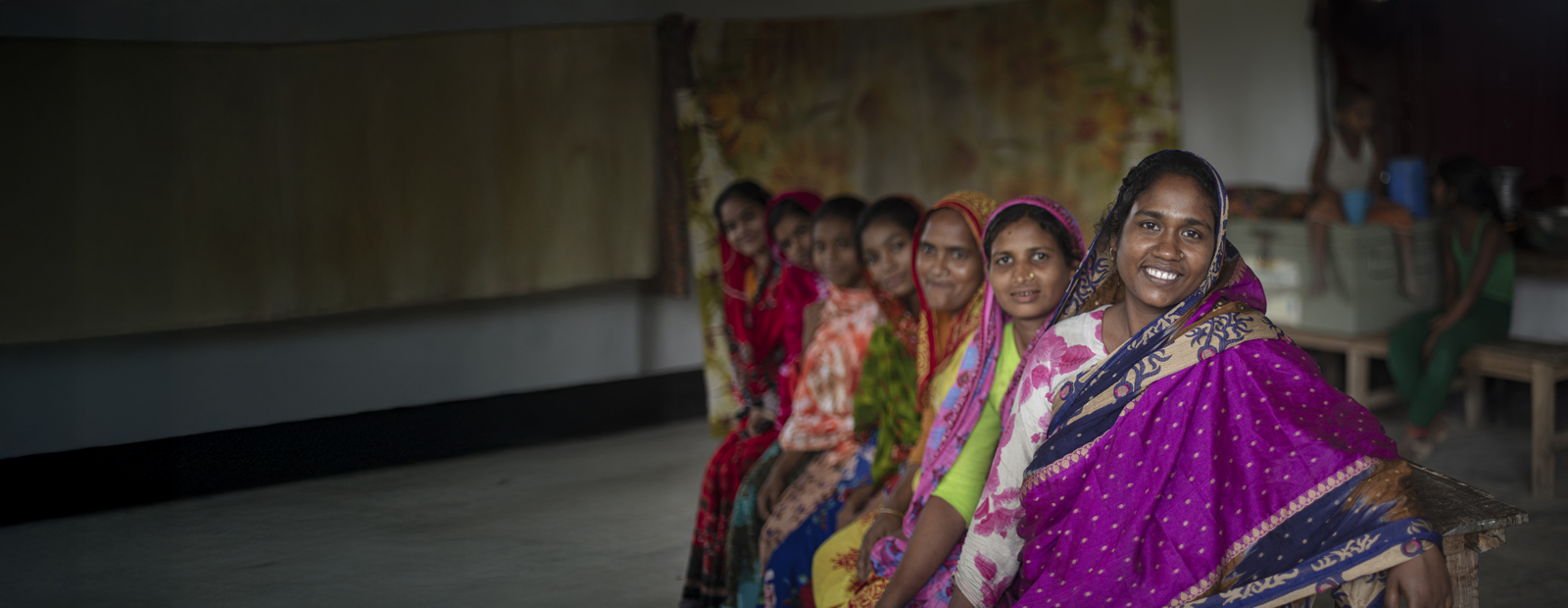
In the Solomon Islands, CARE partners with local organisations Live & Learn, and the National Disability Forum Solomon Islands (NDFSI).
Together, these local partners implement the ANCP-funded Helpim Sista Project.
In six communities around the capital of Honiara, the project supports women with and without disabilities to strengthen their economic resilience through financial management training, and to establish or grow income-generating activities.
In and around Honiara, rapid population growth combined with limited opportunities for formal employment means many women rely on informal economic activities, often without access to training, capital or financial support.
Supporting women’s economic resilience
Helpim Sista participants form savings groups and receive training in family financial management approaches, leadership, mobile banking, and their chosen livelihoods activity. With improved financial independence, women are better equipped to provide for their families’ daily needs, and plan for the future.
By working directly with groups of women with disabilities, the project is not only empowering participants with skills and confidence to be economically independent but is shifting attitudes towards people with disabilities in the wider community.
Changing perceptions through inclusion
In May 2025, NDFSI engaged Joe Lovi to facilitate sewing training for one member of a women with disabilities savings group. It was the first time Joe had been approached to work with people with disabilities.
Joe was nervous about whether he would be able to provide clear and appropriate training, however NDFSI provided a briefing on what to expect and guidance on working respectfully and effectively with people with physical impairments.
After working with NDFSI, I came to realise that people with disabilities are more capable than I thought and can do things in their own unique way. For example, the woman I trained improvised to work out how to do things, even if it wasn’t how we expected her to do it. Sometimes she does it even better than those without disability.
By the end of the training, Joe was able to identify environmental barriers and adapt the learning space to be more inclusive. In his debrief with NDFSI, he noted that he now feels confident working with people with disabilities and better understands that they are capable of doing things independently, and that support should be provided only when requested.
Impact at community level
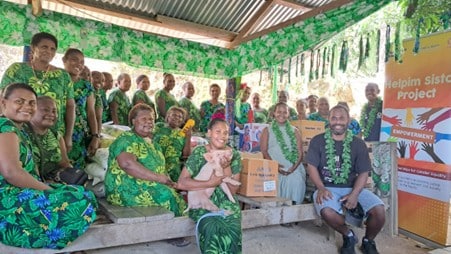
At the handover ceremony in Nine Ridge, one of the six participating communities, community leaders and participants said Helpim Sista was the first project to provide women with opportunities to become economically independent and better able to support their families.
“This is a light from Live & Learn. Nobody has done it,” said Alison, a women’s leader in Nine Ridge.
You are uplifting these women in Nine Ridge to do things for themselves. For so long we’ve been without support. But now we know that Australians still care for the Solomon Islands women, and we won’t forget this support.
The women’s group celebrated the arrival of piglets, ovens, fabric and dyes, and other materials with dancing, singing, and prayer.
Building confidence and hope
Katherine explained why the project has been impactful for her and other women in Nine Ridge:
Women here are struggling. We can do some marketing, selling a few cakes here and there, but money is a big struggle for us. I try my best to help my family by selling donuts to get a bit of money for school fees, and bus fares. But sometimes I run out of money.
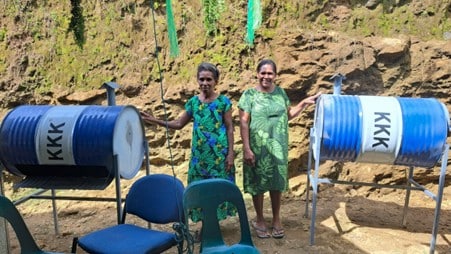
The, Katherine added: “Joining this group gave me a lot of hope, that we will be able to overcome our challenges.”
Since the workshop, I’ve already seen a big difference. I really believe that I’ll achieve my plans for the future, because even if I only have small earnings, now I know how to manage my finances better. So that will help me a lot and it will help my family too.
Program context
This project forms part of CARE’s Pacific Partnerships for Gender Equality program which is supported by the Australian Government through the Australian NGO Cooperation Program (ANCP).
Want to contribute? Donate to CARE Australia today, or find more ways to give and support our humanitarians worldwide.