Humanitarian needs in the Middle East are growing by the day as escalating violence forces families to flee their homes and pushes communities deeper into crisis. Across the region, more than 161 million women and girls live in countries affected by the conflict [1]. Many have already had to flee their homes and now face the risk of violence and exploitation alongside loss of access to essential services. The sound of drones and fear of what might happen next haunts countless communities. Based on UN population estimates, in Iraq, Jordan, Lebanon, the occupied Palestinian territory and Syria, where CARE works, more than 1.6 million pregnant women living under the threat of this alarming conflict [2].
Nour Beydoun, CARE’s Regional Advisor on Women, Girls and Protection in Emergencies, said: “Displaced women are giving birth in schools, cars, and overcrowded shelters with no privacy, no clean water, and no medical support. These conditions not only risk lives, they also strip women of their dignity. The psychological impact on women and families is immense. Across the region, displaced women and girls face escalating risks of gender-based violence, sexual exploitation and abuse, and trafficking.”
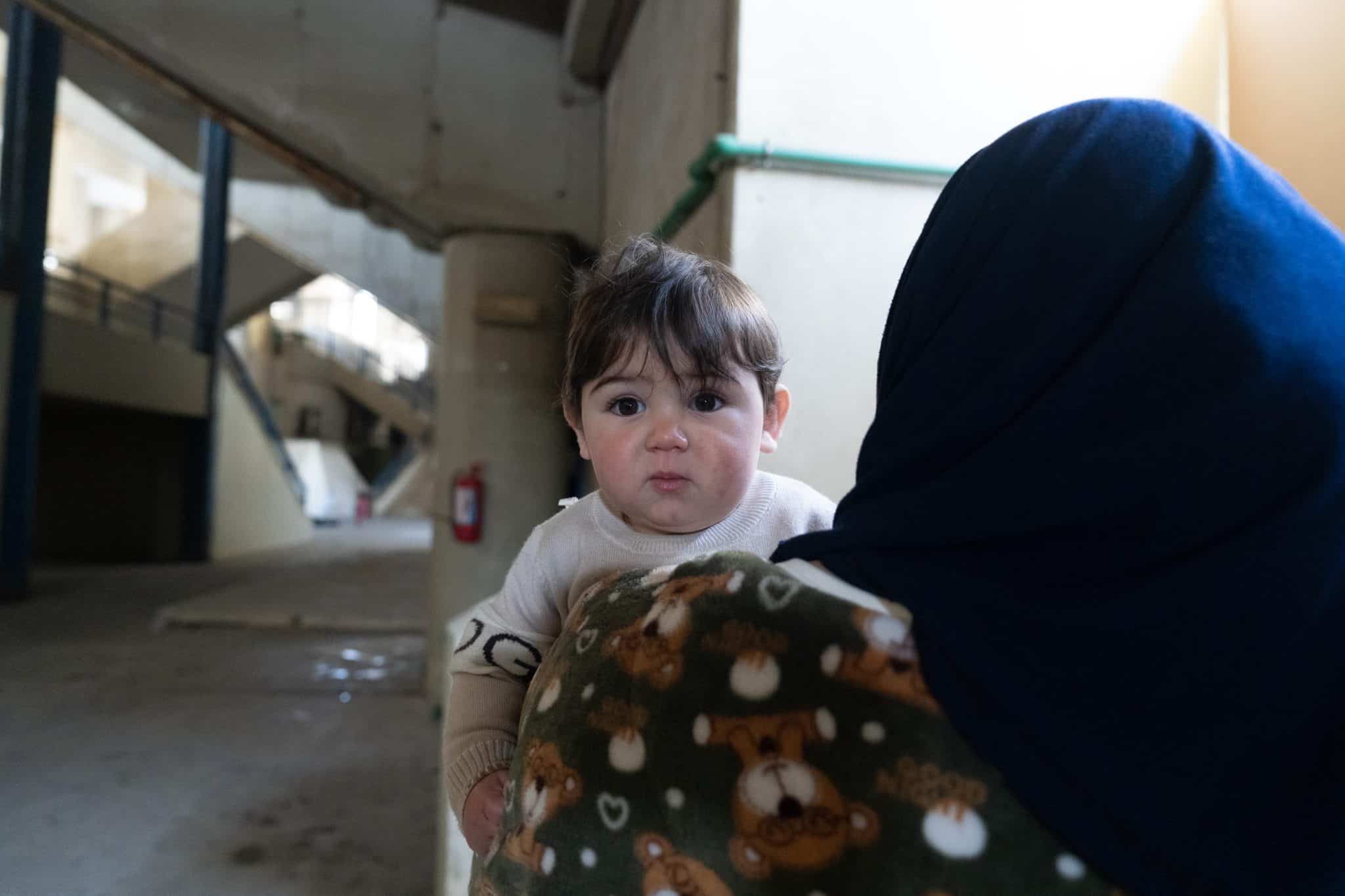
More than 69,900 women are pregnant in Lebanon while displacement and bombardment intensify [3]. More than 800,000 people have fled their homes, sheltering in schools, with relatives, or in streets and cars as shelters reach capacity. Often with little more than the clothes they were wearing, people fleeing are struggling to reach healthcare as roads become unsafe, transport is disrupted, and health facilities face shortages of fuel, medicines and hygiene supplies.
Nour Kassab, Gender and Protection Coordinator at CARE International in Lebanon, said: “I saw a woman who had just given birth by cesarean lying on the sidewalk with her four-day-old baby. She should be resting and recovering in a safe place, but she told us she is still in pain and cannot properly care for her surgical wounds. Seeing a mother trying to protect her newborn while living on the street is heartbreaking.”
“The bombings happen every day, at every hour,” said Michael Adams, Country Director of CARE International in Lebanon. “Each blast deepens fear and exhaustion. Years of repeated bombing and displacement have left deep psychological scars, while needs for mental health support, food, water and shelter continue to grow.”
CARE and the Lebanese organizations that partner with us are scaling up emergency aid, including water, meals, hygiene items and protection support for women and girls in displacement sites.
Tens of thousands of Syrians and Lebanese people have crossed the border from Lebanon into Syria in recent days. In Palestine, obstruction of aid access, movement restrictions and military activity continue to limit access to food, fuel, and medical supplies. In Jordan, falling missile debris has injured civilians and damaged homes, while drone and missile incidents in Iraq have disrupted infrastructure. Authorities and humanitarian organizations in Türkiye, amongst other countries, are preparing for possible refugee arrivals.
“Many of the communities hardest hit have already endured years of conflict and economic crisis,” said Hazem Fahmy, Regional Director for CARE. “Now we see new displacement and rising humanitarian needs in the region. Together with partners, CARE is supporting families with food, water, cash assistance, shelter and protection, with a strong focus on protecting women and girls who face heightened risks during conflict and displacement.”
CARE’s key demands are:
– For parties to conflict, and those with influence, to make every diplomatic effort to secure an immediate cessation of hostilities across the region that leads to sustainable ceasefire and ultimately a just, inclusive, comprehensive conflict resolution. The inclusion and the safe, substantial and meaningful participation of women in these processes is essential.
– People must not be prevented from seeking safety or shelter, including across borders, and for some refugees, in their countries of origin.
– Civilians and civilian infrastructure must be protected in accordance with international law.
– Humanitarian workers must be able to operate safely, and full, rapid and unhindered humanitarian access must be ensured so life-saving assistance can reach communities in urgent need.
Methodology
The estimates are based on population data from the United Nations World Population Prospects. CARE calculated the number of pregnant women in countries currently affected by hostilities in the Middle East by applying standard demographic estimates of pregnancy rates to national population data.
References
[1] Data from UN World Population Prospects. Countries included in the regional estimate are Bahrain, Cyprus, Iran, Iraq, Israel, Jordan, Kuwait, Lebanon, Oman, Qatar, Saudi Arabia, occupied Palestinian territory, Syria, Türkiye, and the United Arab Emirates.
[2] Data from UN World Population Prospects. Affected countries calculated from: Iraq, Jordan, Lebanon, occupied Palestinian territory and Syria.
[3] The estimate of pregnant women in Lebanon is based on UN World Population Prospects and demographic estimates of the share of women currently pregnant within the population.
[ENDS]
For media enquiries contact Marianne Murat on 0413 185 634
About CARE Australia
CARE Australia supports women around the globe to save lives, defeat poverty and achieve social justice. We work in partnership with local communities to provide equal opportunities for women that they have long been denied: the ability to earn an income, gain access to their fair share of resources, to lead and participate in decisions that affect their lives, and to be able to withstand the increasing impacts of climate disasters and other crises. www.care.org.au
Don’t want this email? If we’ve got your interests wrong, hit reply to let us know what you are interested in (e.g. Asia Pacific only, breaking news only). Alernatively, hit ‘unsubcribe’ below and we’ll stop contacting you entirely.