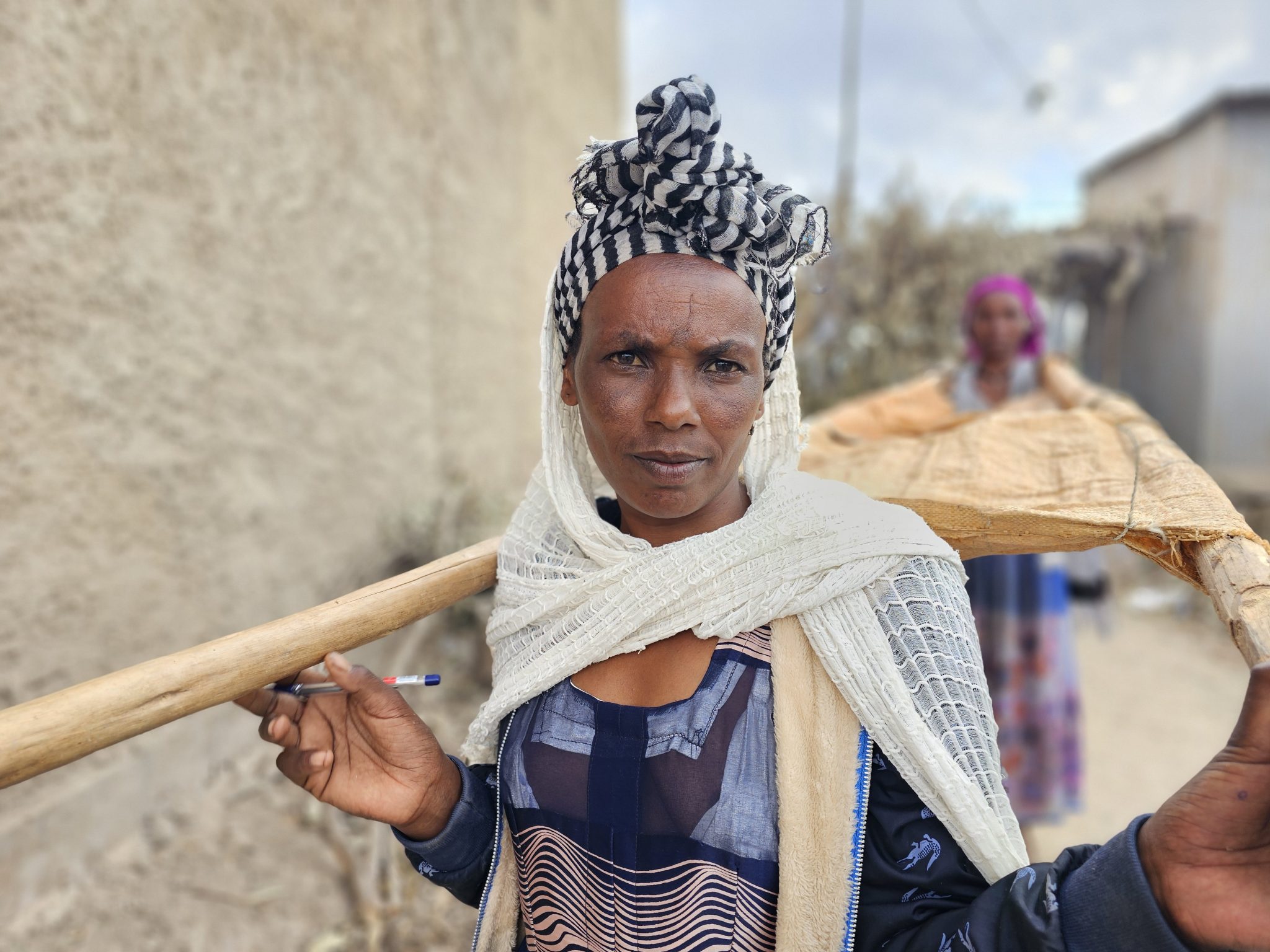
Kahsa grabs two long wooden sticks tied together with two old linen sacks and starts running. One of her neighbours is giving birth. Because of the conflict, this is currently the only way for them to get mothers in labour to a clinic. “We are trying our best to reduce the number of home births, but it is so difficult without an ambulance service,” says the 34-year-old.
Despite the November 2022 peace agreement, the conflict in Ethiopia’s Tigray region continues to have a huge impact on women and girls. Access to maternal healthcare remains limited, putting the lives of pregnant women and new mothers at risk. A study by the Regional Health Bureau1 found that maternal mortality in Tigray rose nearly fivefold during the conflict, reaching 840 deaths per 100,000 live births. Most deaths were linked to preventable causes such as bleeding.
Saving mothers and newborns
Delivering at home can lead to risks for the mother and the newborn in Kahsa’s community; there is a lack of medical transportation if things go wrong. “A woman from our village died from bleeding when she delivered her baby at home during the conflict,” remembers Kahsa.
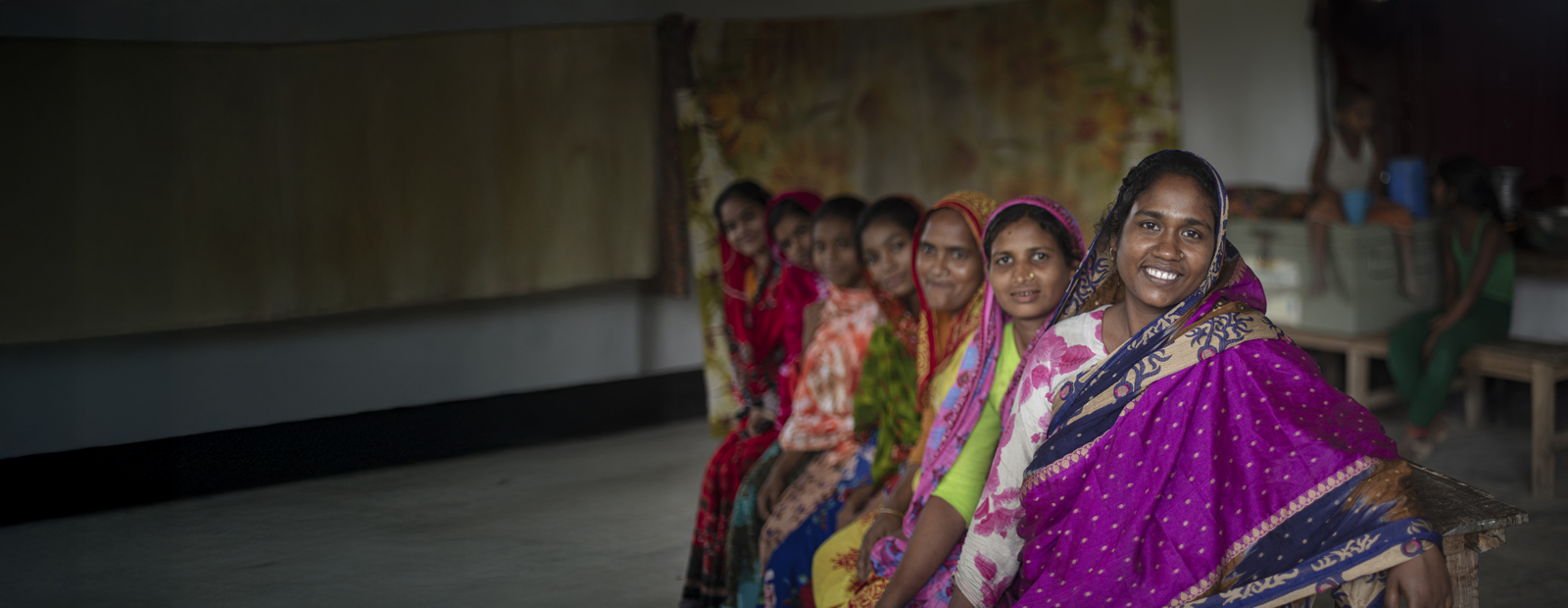
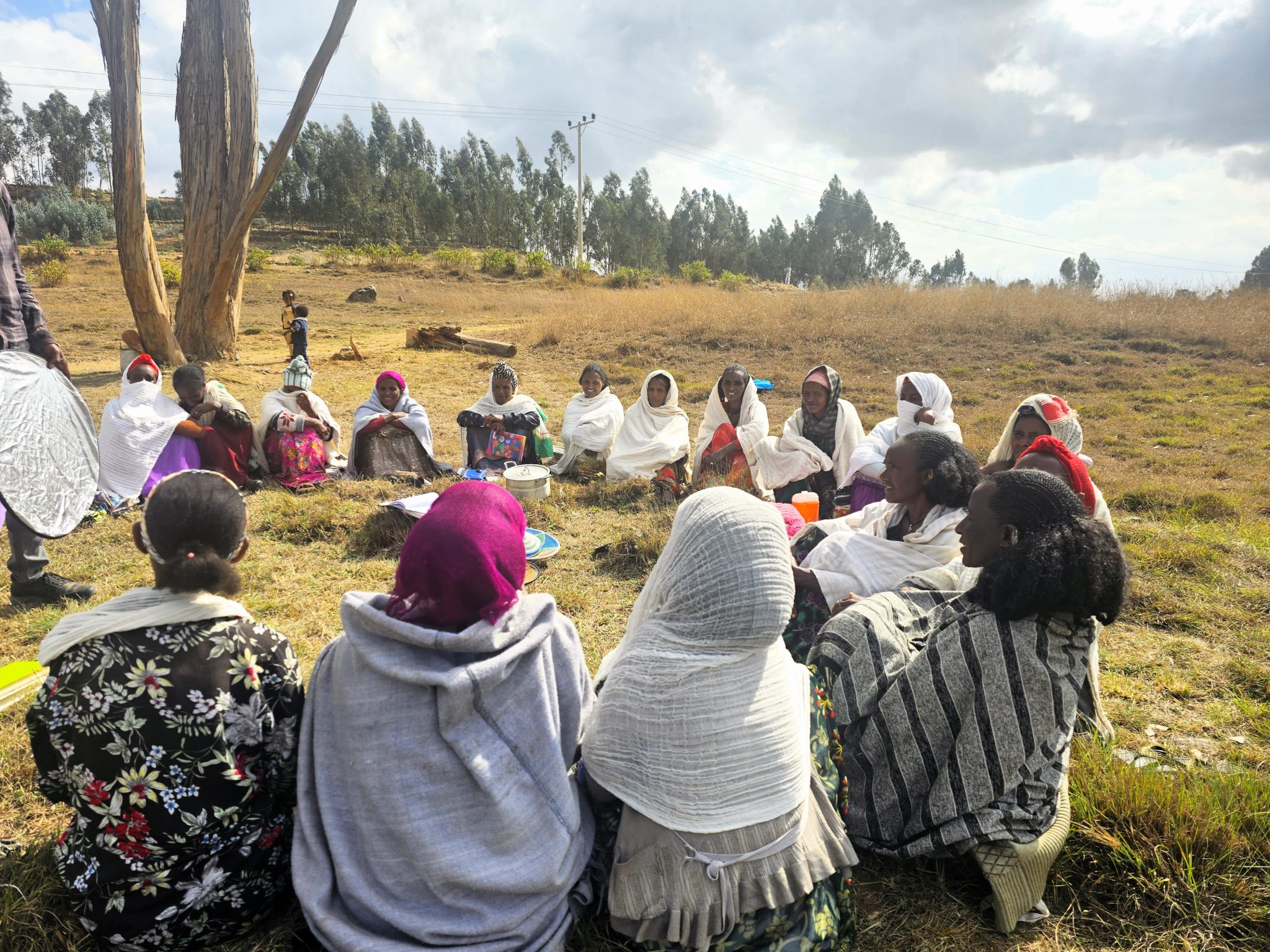
Kahsa is a leader in her community and part of a Women Lead in Emergencies group supported by CARE and our partner in the SELAM project. The group brings together 25 women to discuss gender-related topics such as women in politics, female-led businesses and violence against women, and to strengthen their voices in the community.
“Even after the conflict there still are no medical transportation services. So, in one of our meetings we discussed the high numbers of home deliveries and found a solution together,” explains Kahsa.
They resorted to the old traditional way of transporting patients, with two sticks and a sack for the patient to lie down on and two people to carry it.
The walk to the clinic takes thirty minutes. It’s a working system, but not a replacement for adequate access to health facilities.
“This month a woman lost her baby because it was in a wrong position. I was responsible for getting the stretcher to her, but I was too late to save the baby,” remembers Kahsa.
The mother of three knows first-hand why access to maternal health is so important. “My firstborn was a home delivery. I was bleeding a lot and for three days I could not stand on my own. My family had to carry me everywhere, and it took a lot of time to heal,” she says. Her second child was born in a clinic. “My baby had a wrong position, and I had an emergency operation and stayed in the clinic for three months. It saved my life and that of my child.”
Damaged health facilities
The clinic close to Kahsa’s village is in poor condition. “The clinic was heavily damaged and only open for the last year, but it is lacking supplies. Before the SELAM project it also did not have any access to water, so the women delivering babies had to bring a 5-litre jerrican of water with them for their own treatment,” says Kahsa.
Before the conflict, most women in Tigray had access to maternal healthcare services, including antenatal care and skilled deliveries2. However, the region’s health system has been severely disrupted since the start of the conflict, damaging health facilities and limiting access to essential care. In 2023, almost all accessible health facilities in Tigray were partially or completely damaged, while 93% of referral facilities lacked the supplies needed to provide essential obstetric services for pregnant women and newborns3. The need to restore reproductive health services is urgent4.
Supporting women to stand up for their rights
We need to do more for mothers. The women get pregnant and cannot access care.
Kahsa and the women’s leadership group are trying to change things for women in their community. “I am trying to support women in my community and to encourage the group to stand up for their rights. Before we were not represented in society. Our husbands were the head and represented us. Now we are part of the decision-making. It was a taboo to speak for the community. Now we speak loudly. We finally have a voice and fight for us mothers,” concludes Kahsa.
Your gift could help ensure more women have access to life-saving maternal care. Please give now.
- Maternal mortality during war time in Tigray, Ethiopia: A community‐based study – Legesse – 2024 – BJOG: An International Journal of Obstetrics & Gynaecology – Wiley Online Library ↩︎
- Correction: The impact of war on the health system of the Tigray region in Ethiopia: an assessment – PMC ↩︎
- UNFPA Ethiopia | Reviving Tigray’s Health System to Prevent Maternal Deaths ↩︎
- UNFPA SitRep – January-March 2025.pdf ↩︎