Farah, 30, washes her dishes with dirty water that she has used for the last eight days. Reusing it again and again, as to not waste even one drop of water.
She is a mother of six. Every day, she wakes up struggling with the battle ahead – finding water, finding food, and keeping her children alive.
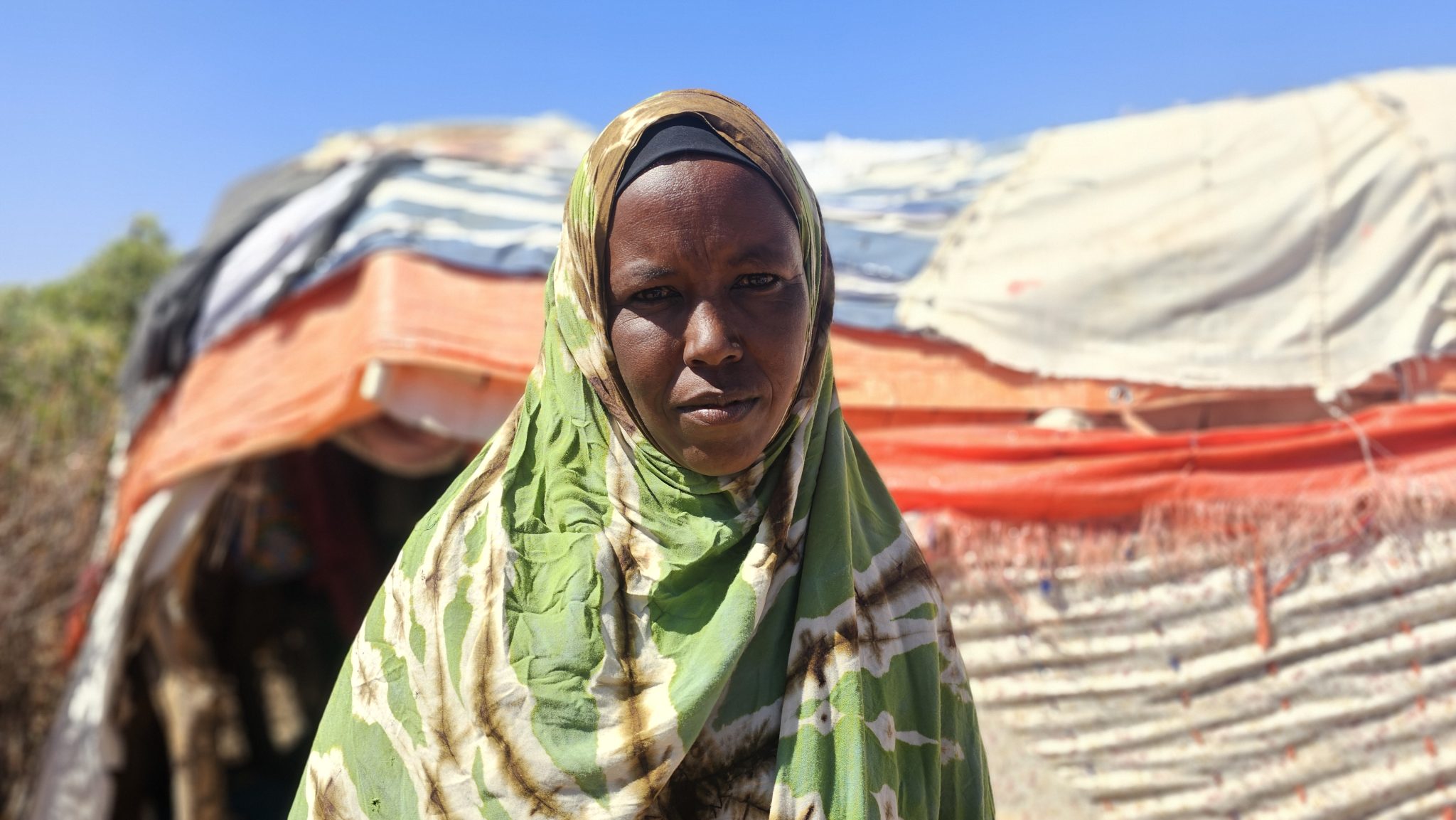
Eight years ago, Farah had a different life, an easier and comfortable one. She was a pastoralist, the proud owner of 50 camels and 200 goats. Her livestock was her source of wealth.
Then came the drought. And one by one, her animals perished. With nothing left, she fled to the camp. In the camp live around 1,700 families, a total of around 8,400 people.
Due to the conflict only 30 kms away, 200 new families arrived in the camp in the first six weeks of 2025. Three to four families arrive every single day, putting stress on the already little resources in the camp. The people arrive with nothing. Women and girls are especially vulnerable in the camp, with the poor conditions of shelter.
At first, survival for Farah and her family was possible in the camp. There was a water tank providing access to free water by CARE, food distributions by another aid organisation, a place for her children to learn in a learning space and a health centre set up, both by CARE. The taps now run dry due to lack of funding.
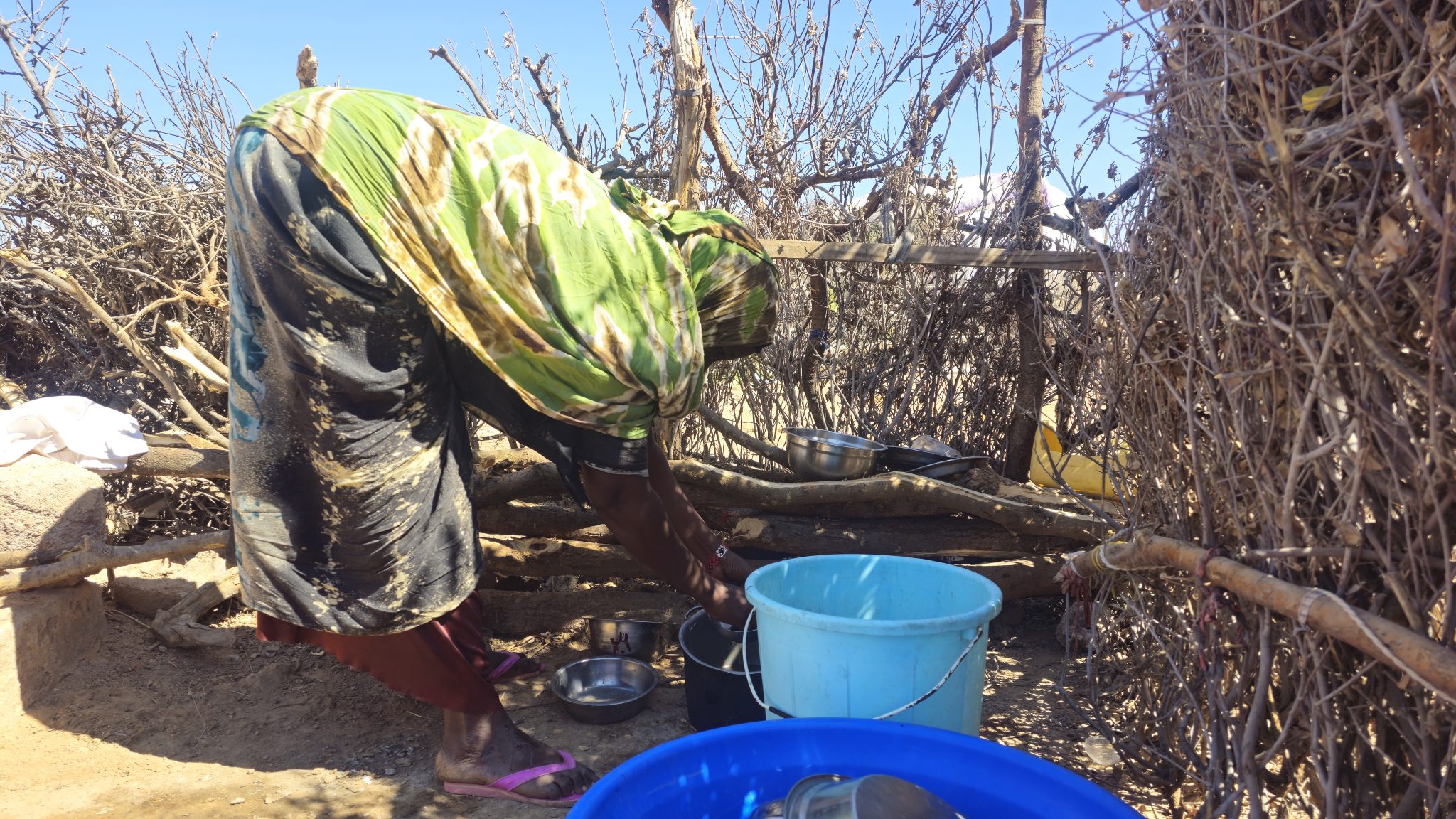
Now, Farah has to buy water – 20 litres for AUD $4.20 from a water truck that sometimes comes. An impossible price.
I cannot afford water at the moment.
She borrows from neighbours, but every week it takes longer to find someone with enough to share. Today, she has found 3 litres for her entire family. The first priority is to give them something to drink. Then, if anything is left, she cooks.
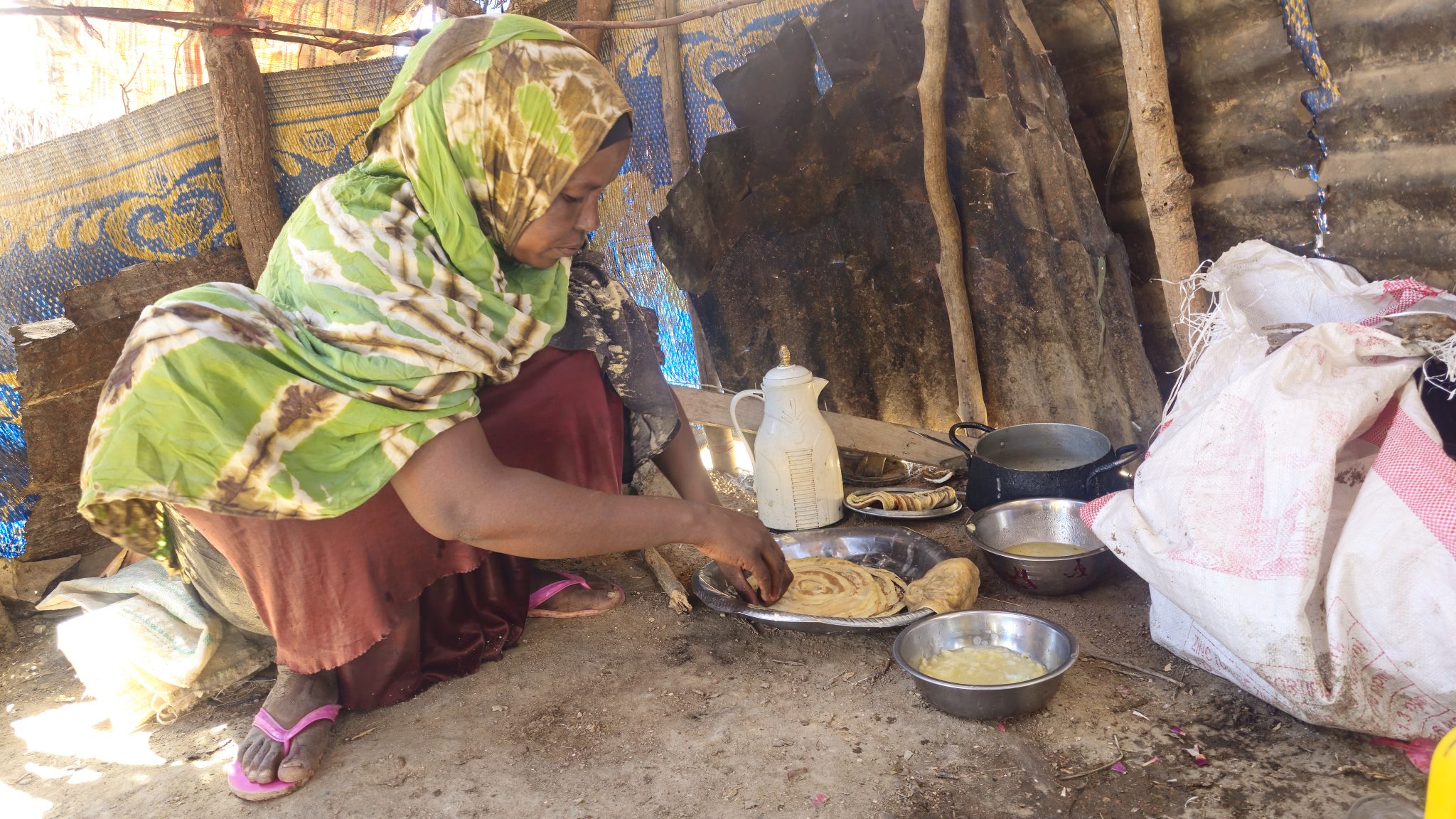
For herself, she places takes two fingers on a glass to measure what she can drink. Her youngest, three-year-old Mus’ab receives just one finger. The older school-aged children, three fingers. She does not allow herself to think about the day when no neighbour can spare a drop.
There is no alternative. If we cannot find water, then we will die. It is a constant worry. And I have no idea what else I can do to find water to survive. Tomorrow could be the last day to find water and stay alive. What then?
What keeps her strong is her children. The temporary learning space set up by CARE in the camp is her only hope.
Grade 1 sits outside on a sheet on the floor as there are not enough classrooms for everyone and the school is growing. But they do not mind. They want to learn. Shoes are placed around the sheet as the children sit down and listen carefully to the teacher who tries to find a spot in the shade for them.
During break time the children run home with their books held close to their small bodies. Farah’s six-year-old son, Mohammed, clutches his schoolbooks tightly.
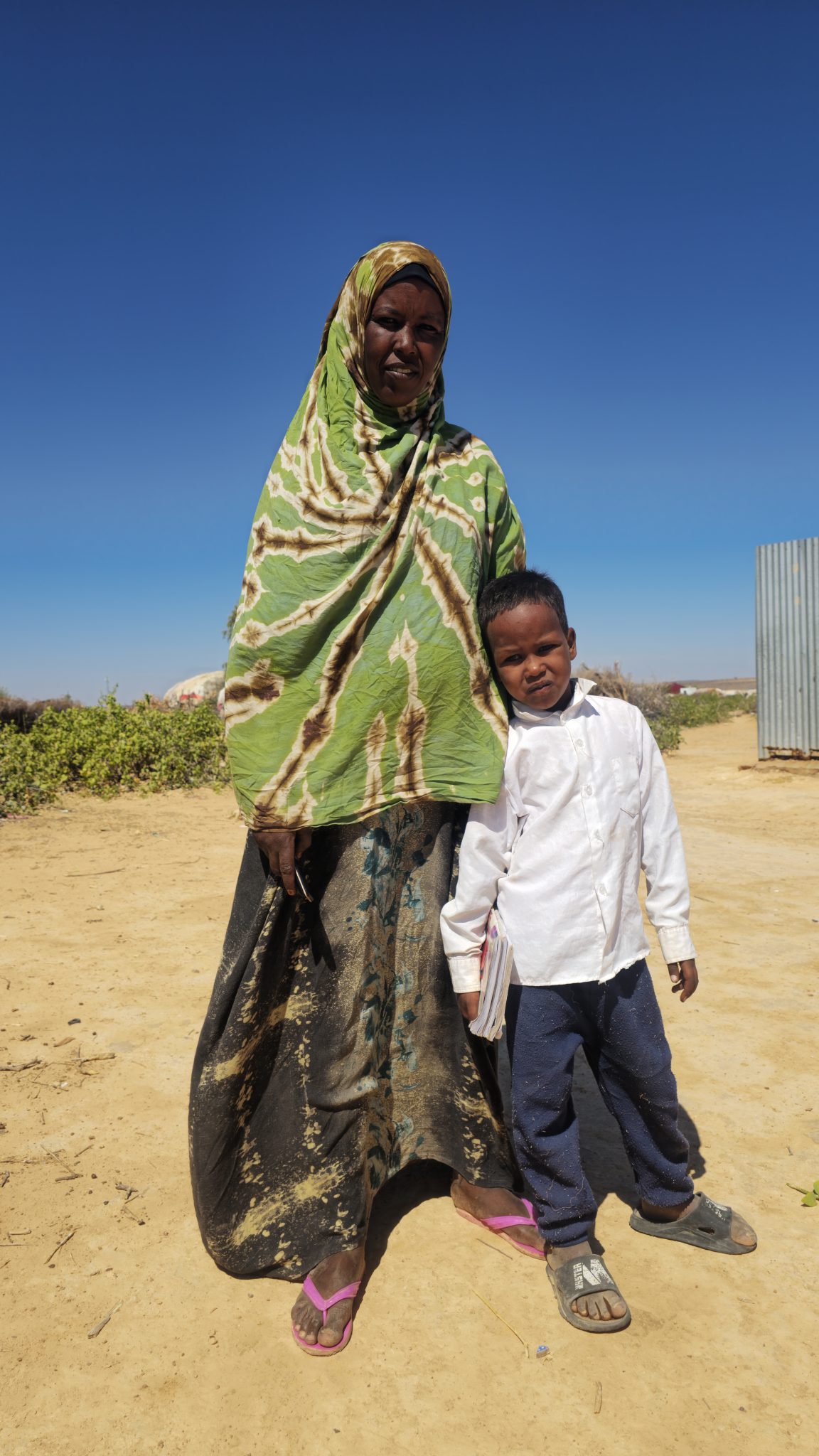
“Today I learnt the first three letters of the Somali alphabet. Ba, Ta, Ja. I am learning to read and write,” he says with pride. Farah smiles.
One day, they will have a better life than me, because they study so hard. They have opportunities. I wake up in the morning and find water for them, so they can go to school and learn. So they survive and can learn something new every single day.
Farah does not wait for a miracle. She does not sit idle. She fights. Every single day.
Without the school and the health centre, there would be nothing left for us. They are the reason why we still find the strength to fight and continue every single day for a better future for us.
She will not let her children die. She will not give up.
Want to contribute? Donate to CARE Australia today, or find more ways to give and support our humanitarians worldwide.