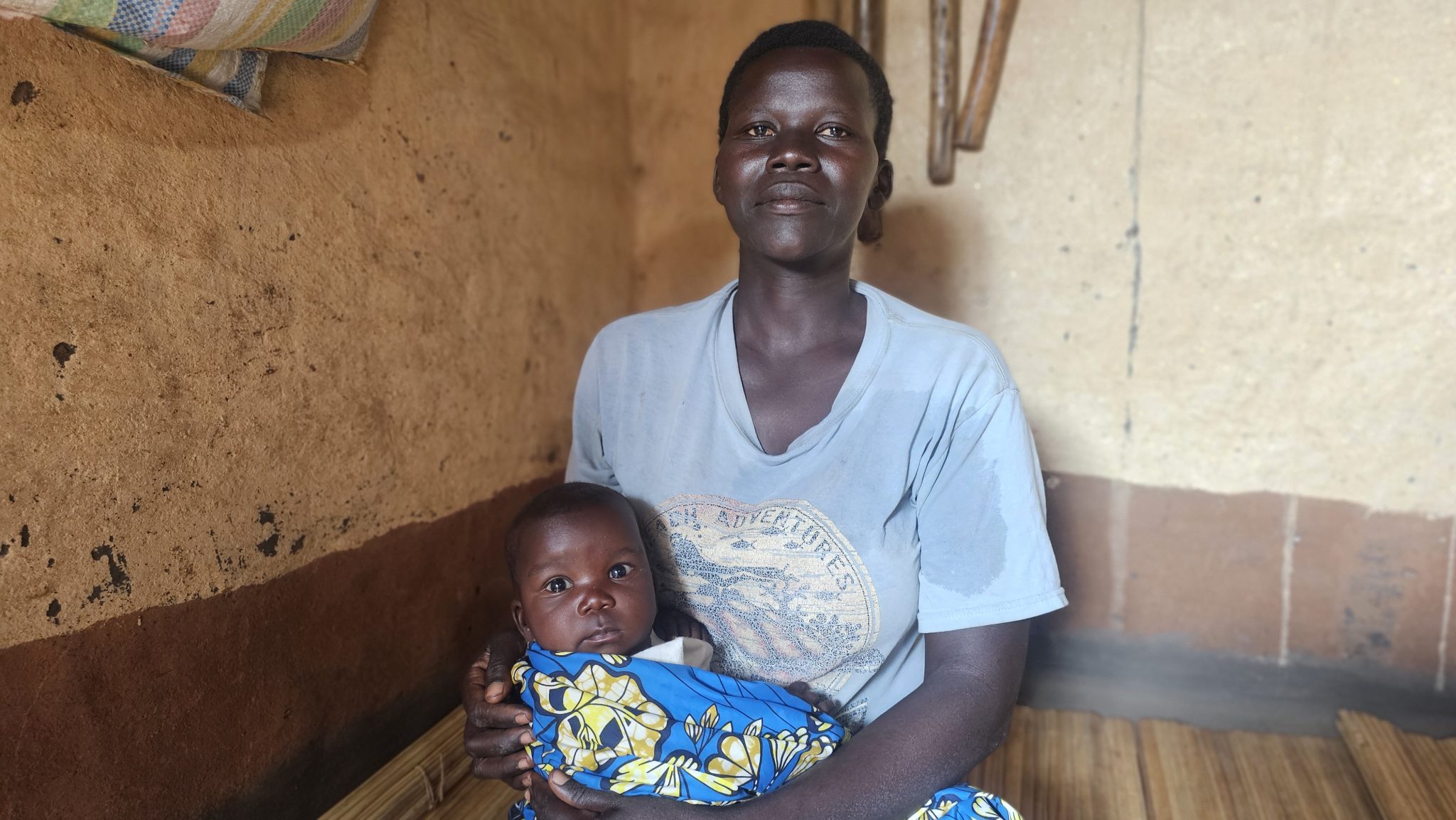
Chantal was alone in her hut when she gave birth to her baby. Sitting on a dirty bamboo mat, with no medical assistance, she delivered her daughter Dorcas with her bare hands.
I first thought I had a normal stomach ache, but when the water broke, I knew that the baby was coming. So, I went inside the hut, put down the bamboo mat on the floor and sat down.
She then broke a piece of the mat to cut the umbilical cord and wiped her newborn’s face with a cloth. Completely exhausted, she fell asleep.
This was not her first time. She has seven children, all born at home.
When healthcare is out of reach
For many expectant mothers like Chantal, giving birth in a healthcare facility is simply not an option. There are too many barriers to accessing maternal healthcare, including high costs.
Deliveries in health centres were too expensive for me. I would have to buy the cloth the baby is wrapped in, a mat to sleep on and then pay 7 USD for the care. I cannot afford that.
Across eastern Democratic Republic of the Congo, families like Chantal’s work hard to save the money before the baby is due. Sometimes that comes at the health risk of food rationing: “Some families starve themselves to save the money,” says Sifa, a midwife in the community.
Distance and insecurity are among the many challenges pregnant women face. Walking the long rural paths to healthcare centres puts them at risk of experiencing sexual violence, and the presence of armed groups around the area makes access unsafe.
Giving birth without medical care
Without much choice, many pregnant women end up facing the risk of delivering their babies at home.
Home deliveries are common in communities around the Democratic Republic of the Congo, but they pose a high risk of neonatal and maternal deaths. The mats where they give birth are the same mats families eat, sleep and live on. Dust, dirt and bacteria pose a high risk of infection.
Maternal mortality in the Democratic Republic of the Congo remains among the highest in the world, with women and babies facing a far greater risk of dying from pregnancy and childbirth than in most other countries.
Every two minutes, somewhere in the world, a mother dies from preventable causes. For newborns the numbers are even more dire. Globally, four newborns die every minute, every day of the year.
A community health clinic is changing this reality
A small health clinic in Chantal’s community is working to change this reality. In the middle of eleven surrounding villages, the clinic serves a population of more than 13,000 people.
Since October 2024, CARE has been supporting the healthcare centre. Once nearly empty, the clinic today is crowded with patients.
Emmanuel, the head physician, steps outside and watches women gathering and seeking shade under the trees. He remembers the days before the project started. “The system was precarious. The number of people coming was low, as people could not afford the treatment, and there was a lack of medicine and equipment. The quality of the medication was bad. And we did not even have antibiotics or beds for deliveries,” he says.
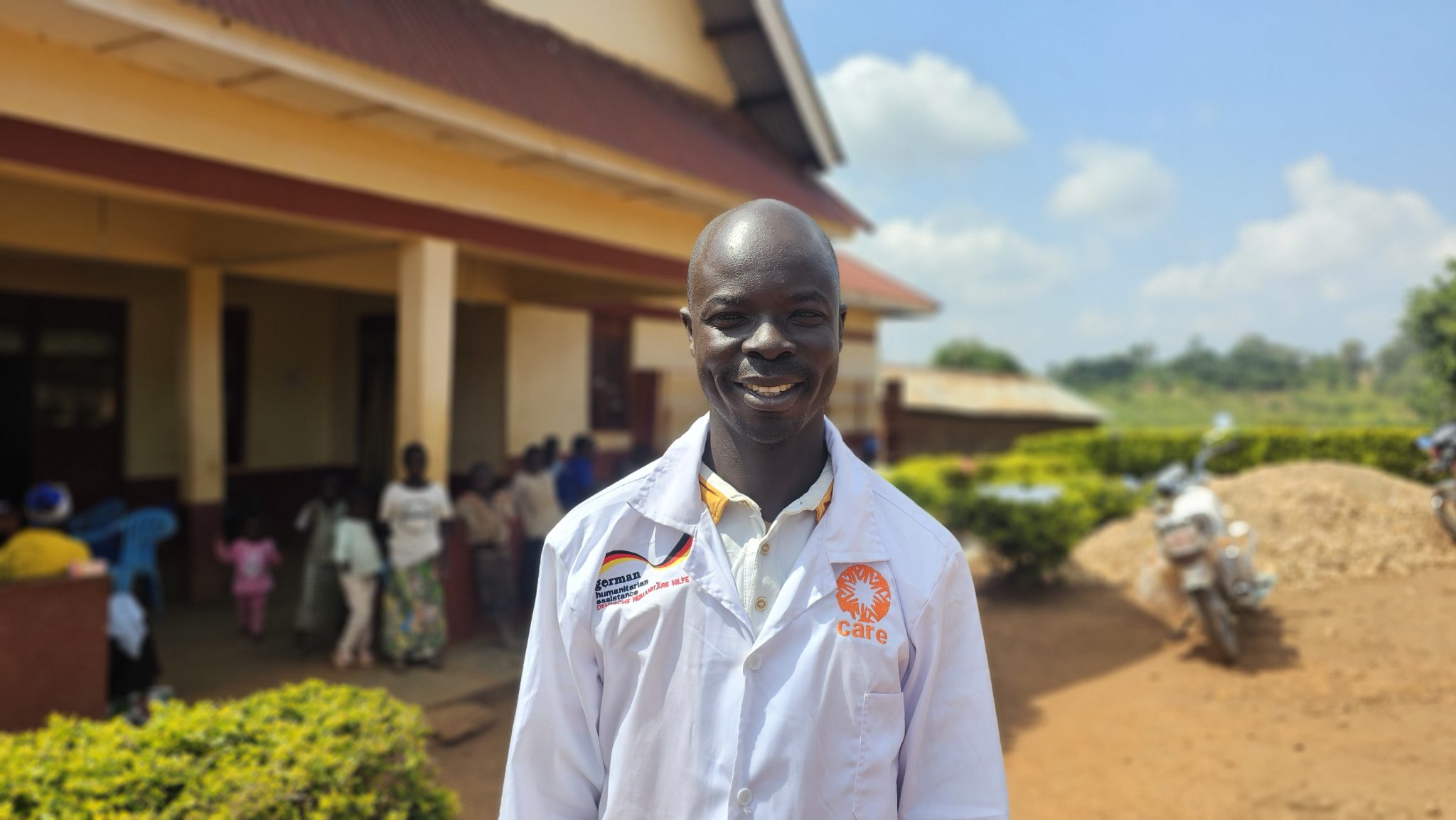
Before CARE started supporting the clinic, Emmanuel recalls a high number of neonatal deaths. “Before, we estimate that half of the babies died during childbirth. Likely even more as the cases with home deliveries were not reported.”
Today, more mothers and babies in the community are surviving childbirth.
In May we had 51 deliveries, 49 survived.
Accessible maternal healthcare
Sifa is one of the clinic’s midwives. She lives in a small hut directly opposite the health facility so she can be there for deliveries, even in the middle of the night. CARE supported her training, and now she helps deliver around 30 to 35 babies each month.
Sifa examines Chantal’s 3-month-old daughter Dorcas. When she was born, Chantal noticed something was wrong with her baby’s breathing, and it was getting worse at night.
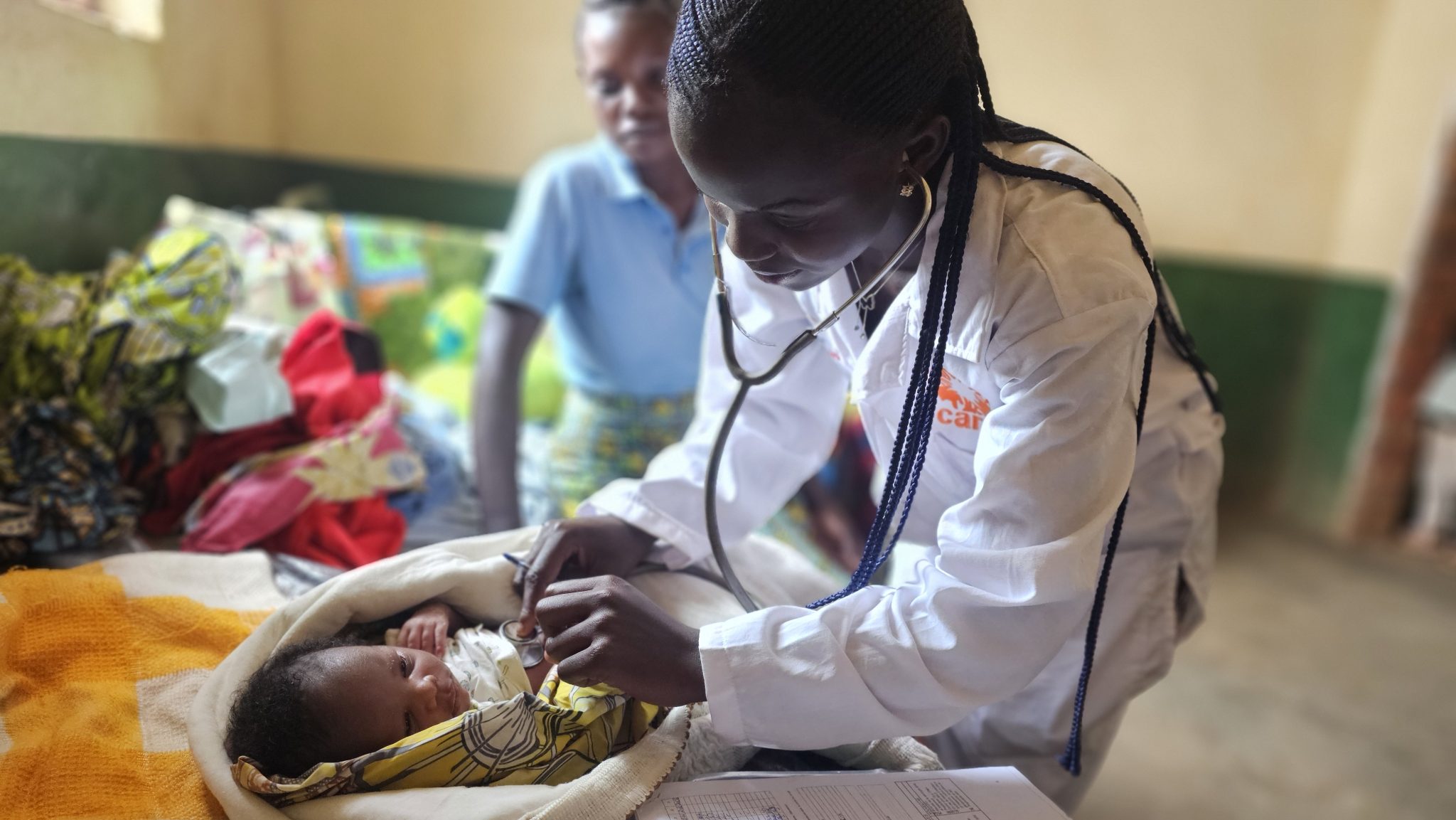
As time passed, Chantal was also struggling with pain around her waist. She did not know she had a life-threatening blood clot because of childbirth.
At first, Chantal hesitated to seek help. She feared being judged for giving birth at home.
I was so scared to go with her to the clinic, because I know that I risked my own and my baby’s life by delivering at home and I was scared that they would ask me where the baby came from.
Eventually, she visited the clinic. The staff welcomed her and provided treatment and medication for both her and Dorcas, free of charge. “I did not know about the program of free maternity care,” says Chantal.
After Chantal leaves, Sifa sighs sadly. “They could have both died. I just had a similar case last week where the baby died. But I am glad that she came now for help and can go home and live.”
Emmanuel and Sifa have a lot of work to do. With CARE’s support, they and the rest of the clinic staff are working to raise awareness in the community, hoping for more pregnant women to seek maternal healthcare and deliver their babies safely at the health centre.
Today, Chantal knows where she will go when her next child is due. For the first time, the health centre is an option she can afford, and one she trusts.
Next time, I will go to the health centre.
Your support could be the difference between life and death for pregnant women. Please give now.