When disaster strikes (whether it’s an earthquake, a war or the creeping destruction caused by climate change), one question dominates: how do people live today? In the immediate aftermath of an emergency, families need food, fresh water, shelter, and safety. These first hours and days can be chaotic and heartbreaking. And for communities already affected by inequality, the impact can be catastrophic.
That’s where CARE Australia comes in. By working closely with local partners and communities, we can quickly mobilise when lives are at risk, providing lifesaving support and listening to the needs of those affected. Understanding what we do in a crisis goes beyond emergency supplies — it’s about acting with compassion, dignity, and respect, even in the most challenging circumstances.
Your support right now can help CARE Australia provide this response when emergencies hit, and continue our work long after the crisis has passed. Right now, you can donate to help us provide urgent relief and work with communities to recover, rebuild, and better withstand future disasters.
Read on to learn how emergency relief connects to our longer-term development work, and why it’s not an either/or situation. Saving lives today and building stronger futures for tomorrow are two parts of the same goal.
Here’s how CARE Australia unites both relief and development to help communities survive disasters and thrive.
Your support right now can help CARE Australia provide this response when emergencies hit, and continue our work long after the crisis has passed. Right now, you can donate to help us provide urgent relief and work with communities to recover, rebuild, and better withstand future disasters.
Table of contents
Understanding emergency relief and long-term development
- What is emergency relief?
- What is long-term development?
Why both emergency relief and long-term development are essential
CARE Australia’s integrated approach
- Responding quickly in emergencies
- Supporting long-term, community-led development
From relief to recovery to resilience
- Linking emergency response with long-term solutions
- How humanitarian aid can lay the groundwork for development
The role of women and girls in long-term change
- Why gender equality is central to CARE’s approach
Why CARE’s approach matters in a changing world
Saving lives today, building stronger futures tomorrow
Understanding emergency relief and long-term development
- What is emergency relief?
Emergency relief is the immediate response to save lives in a time of crisis. These crises can range from armed conflict to natural disasters or climate shocks that cut off a population’s access to food and other basic necessities. Relief is inherently short-term and urgent, acting fast to prevent loss of life and alleviate suffering.
Examples of relief activities include distributing food and clean water, providing temporary shelter, and ensuring emergency healthcare is available. It might also look like reconnecting basic services to an area or supporting displaced people who have left their homes. Relief work aims to stabilise a situation so that people can survive.
- What is long-term development?
Long-term development is all about sustained, lasting change that improves people’s lives. Rather than reacting to a specific event like an emergency response, long-term solutions address the root causes of poverty and help communities to become more resilient. Long-term development can take months or years.
Development is seen in building lasting sources of education and healthcare, creating sustainable livelihoods, empowering local governments, and closing gender equality gaps. It focuses on skills, resources and capacity-building to help communities better weather shocks and quickly recover should another crisis occur.
Why both emergency relief and long-term development are essential
Crises don’t always adhere to neat timelines. While some disasters are sudden and last only a matter of days or weeks, many unfold over years, or even decades. As crises linger, recovery and shock cycles can span generations.
The years of the Syria crisis are a clear example: what began as an urgent humanitarian emergency has become a prolonged struggle for safety, livelihoods, education, and food security. People in Syria need humanitarian assistance because they are fighting for their lives. They need long-term development because they are fighting for their livelihoods, education and food security. You can’t do one without the other.
Acting quickly during a crisis can mean the difference between life and death. Effective humanitarian response is delivered as soon as possible and scaled up or down depending on needs. When homes are destroyed, supplies of food, water, shelter and medicine reach people before it’s too late. And when assistance arrives, it reaches those who need it most: children, women, older people and people with disabilities.
But humanitarian assistance is not enough when people need help year after year. If we don’t address the root causes of a community’s vulnerability, we leave people at risk forever. That’s where long-term development comes in. By helping communities access livelihoods, expand services and strengthen local systems, we can work towards truly sustainable solutions that keep people safe and restore their dignity.
Humanitarian and long-term development work are two sides of the same coin. One focuses on keeping people alive today. The other focuses on keeping people safe tomorrow. Both are needed to not only respond to crises, but to prepare for the future.
CARE Australia’s integrated approach
- Responding quickly in emergencies
Speed is essential during an emergency, but so is being prepared for one. CARE Australia prepares for disasters so when crises hit, we can send out teams and activate local partners to begin responding right away. This includes systems like early warning and pre-positioned supplies, as well as deep relationships with communities and local organisations who know their context best. Being prepared also means we can respond faster, more flexibly and effectively (often in complex and/or dangerous environments).
Local leadership is a critical component of CARE’s emergency response. Instead of responding alone, CARE works with and supports local responders who know their community best. In many cases, local responders are the first on the scene and the last to leave. Local partners help ensure aid reaches those who need it most quickly and with dignity, especially when it can be difficult to access impacted communities.
Local responders are vital in active conflict zones like Gaza, where millions of people require humanitarian assistance and where the need for support continues today. If you’re looking to support Gaza right now, consider making a donation to provide life-saving assistance to those who need it most.
- Supporting long-term, community-led development
Humanitarian crises don’t happen in a vacuum. That’s why CARE Australia’s development programs work alongside communities to support their long-term goals. From education and livelihoods to food security programs, we work with communities to address the root causes of poverty and help families survive future shocks. And because communities best understand their own needs, CARE Australia involves them in the program design process to ensure projects meet local priorities and strengthen long-term resilience.
One famous example started small in Niger in 1991. What began as a small program sparked a revolution in community-led development that now reaches over five million members worldwide. Formalising a practise as old as agriculture itself, small groups of people began pooling savings into what is now known as Village Savings and Loan Associations (VSLAs).
Today, you can find these groups across Africa and beyond, giving millions of people access to financial services. Members of VSLAs use their collective savings to earn income, grow businesses and send their kids to school — all while building resilience from within the community.
Gender equality and women’s leadership are vital to building resilient communities. Women are often responsible for stabilising a household or community, but face financial and other barriers that limit their power. Leading savings groups and managing resources enables women to initiate transformative changes benefiting children and families across multiple generations.
From relief to recovery to resilience
- Linking emergency response with long-term solutions
Emergencies these days aren’t always swift. Wars, climate crises, and displacement can leave families without homes for years. That’s why, at CARE Australia, we implement early recovery and transition programs alongside our emergency responses. Early recovery programs connect humanitarian relief work with long-term development work by stabilising communities and helping them return to some sense of normality as soon as possible.
Through this kind of programming, we aim to “build back better”. Instead of restoring households to how they lived before a crisis, we work with communities to find ways of decreasing risk moving forward. Early recovery programs begin the moment an emergency response is organised, helping ensure humanitarian aid isn’t just a Band-Aid solution.
How humanitarian aid can lay the groundwork for development
Humanitarian aid can have positive lasting impacts, but this relies on careful planning. Skill-based cash programming delivered during an emergency response can continue to bolster economies once the response is over. This could look like skills training, emergency jobs for volunteers, or community-led initiatives that Centre community members are invested in.
Investing in education, infrastructure, and accessible market systems can serve communities in the moment and lay groundwork for improvement moving forward. To prevent communities from becoming reliant on aid, CARE Australia works with local partners and communities to complement existing systems instead of taking over.
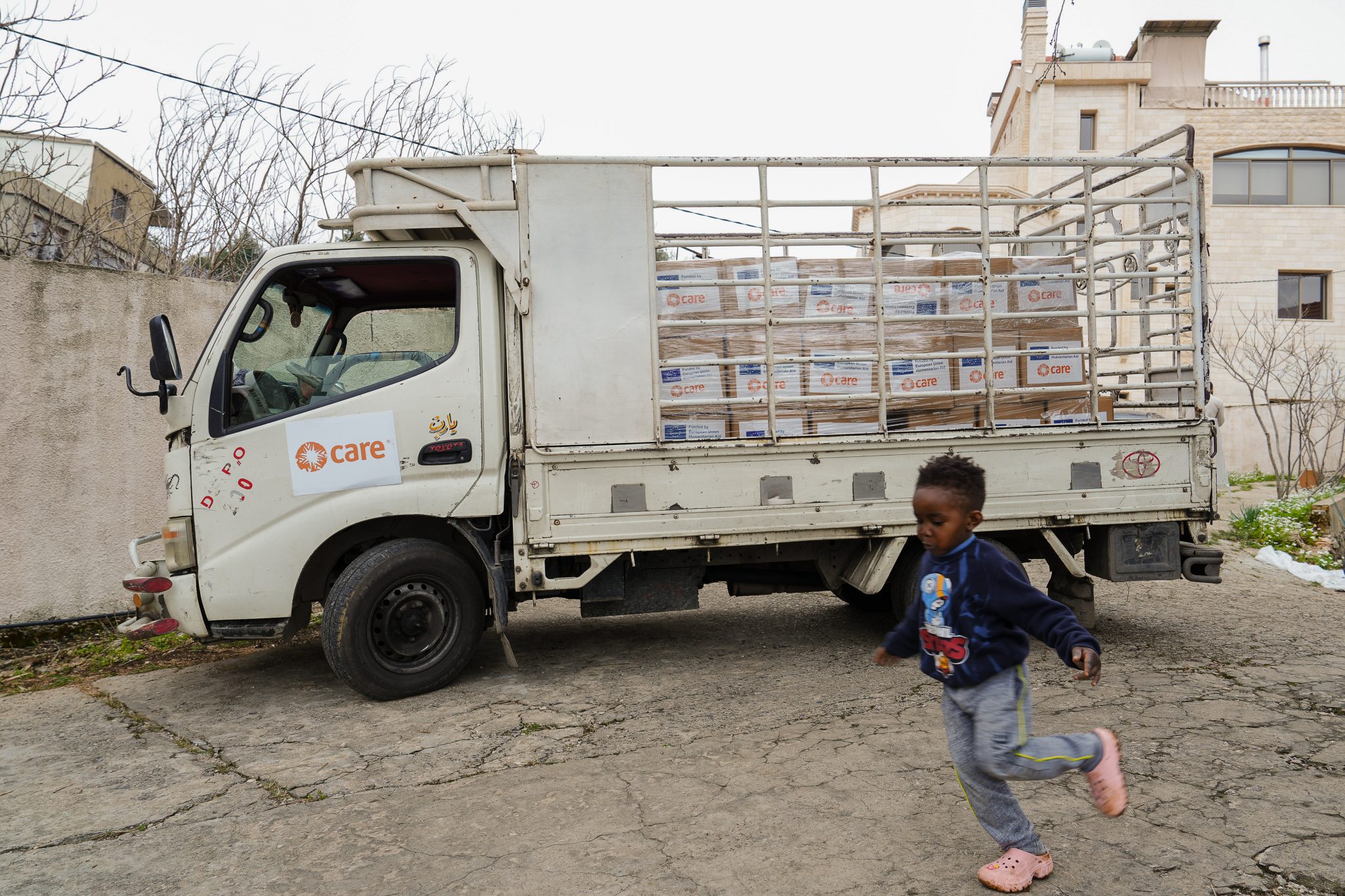
With complex crises like the humanitarian crisis in Gaza currently unfolding, emergency responses will become more critical than ever. While gathering information on how aid trucks are crossing into Gaza and ensuring humanitarian aid can reach those who need it most is absolutely necessary to keeping people alive, we also have to think about how we can build back better in the midst of emergency responses.
The role of women and girls in long-term change
- Why gender equality is central to CARE’s approach
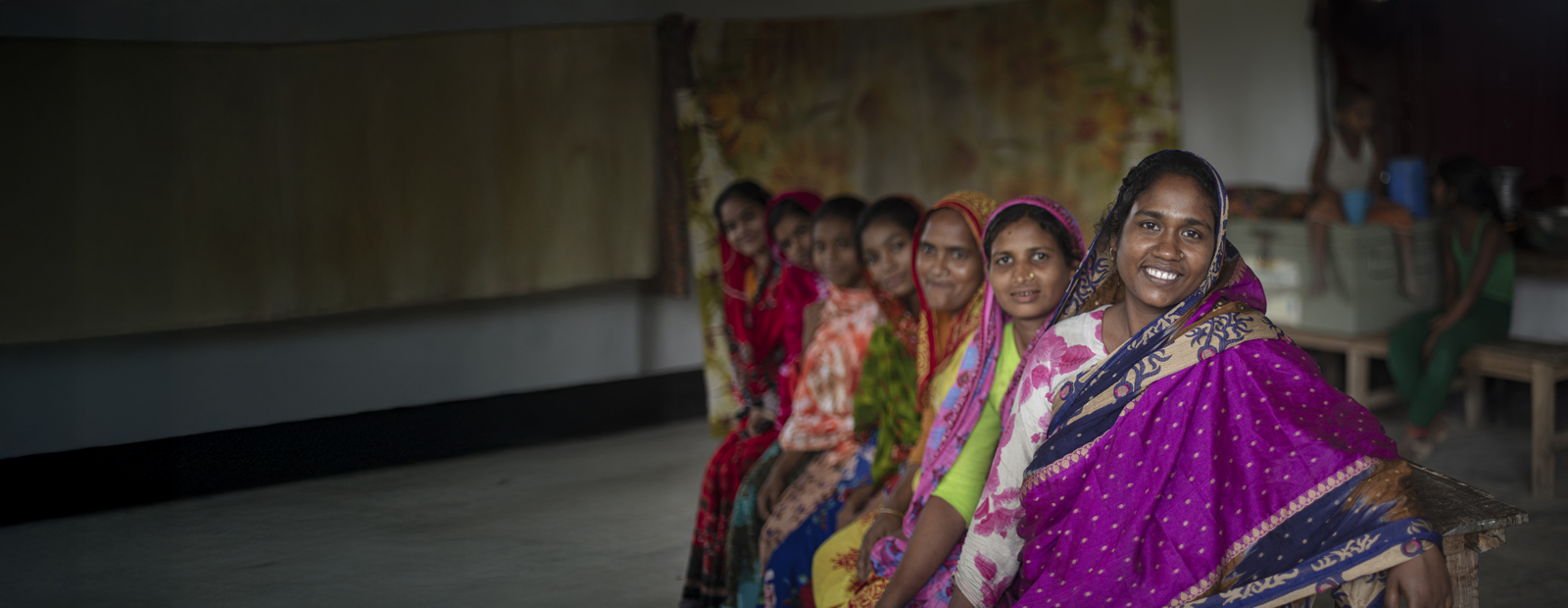
When disaster strikes, women are often among the first responders within their families and communities. As carers, organisers and decision-makers, women step up long before aid organisations can respond. That’s why at CARE Australia, we see women not only as crisis-affected but as solution providers. Working with women as first responders and community leaders means that aid and assistance reaches those who need it most and that support reflects actual priorities on the ground.
Investing in women and girls creates recovery and resilience that will benefit communities for generations to come. Where women have access to education, livelihoods and leadership opportunities, there are proven benefits for entire families. Children are healthier and more likely to stay in school and entire communities are stronger and better able to absorb future shocks. Focusing on the most vulnerable isn’t about short-term gains – it’s about tackling inequality at its core and building resilience for the future.
Humanitarian crises also increase protection risks and threaten the dignity of women and girls. Increased risks of violence, exploitation and inability to access basic services are just some of the challenges women and girls face during times of conflict and disaster. CARE Australia prioritises the protection and safety of women and girls by designing programmes that meet their needs and are accessible to everyone.
Why CARE’s approach matters in a changing world
From climate change-fuelled disasters to protracted conflicts to displacement that lasts for years rather than months, crises are more complex, more frequent, and longer-lasting than ever before. In this new reality, there is no line between emergency and development work – and segmenting them into two separate efforts doesn’t reflect the lived experiences of the people we work with.
That’s why CARE Australia’s approach to emergency programming bridges the gap between immediate crisis response and long-term development. CARE works alongside communities before, during and after crises, helping people not just to survive, but to recover and to build their resilience for the future. Our integrated programming means we can use emergency aid to build future-proof communities and design development programs with future shocks in mind.
It also means donors like you can be clear about how your donation is spent. From life-saving assistance in emergencies, to tackling the root causes of vulnerability through programs that address inequality, food insecurity and lack of access to education and livelihoods. Because CARE Australia works in some of the world’s most complex and fragile contexts, getting to know where we work can help you understand why we take a long-term, flexible approach to creating change.
Saving lives today, building stronger futures tomorrow
Emergency response and long-term development go hand in hand. While donating to emergency aid provides life-saving assistance when it’s needed most, long-term development allows communities to recover from crises and disasters, rebuild their lives and better prepare for future shocks.
Across the globe, CARE works in partnership with communities before, during and after a crisis, providing both immediate aid and long-term solutions that will continue to make a difference years after an emergency phase has passed. From crisis relief to community-led development, CARE is here to help people build a world where everyone can live with dignity and opportunity.
Join us. Learn how you can give or contact us today to find out more about how you can make a difference. Donate now and help CARE Australia continue its life-saving work.