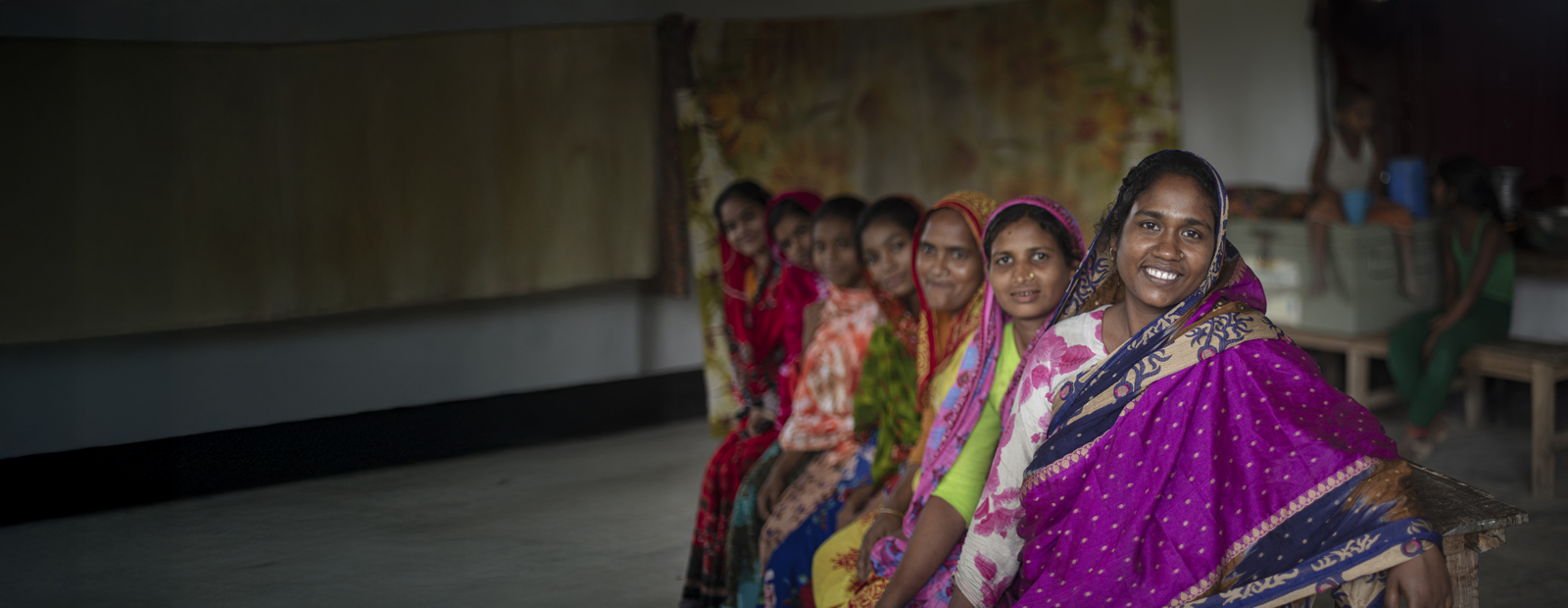
Across Ethiopia‘s Amhara Region, communities are working to strengthen access to safe water, improve livelihoods and build resilience to climate change.
Through the RISE project, thousands of people in Dera and Farta Woredas (districts) are laying the foundations for healthier and more secure futures.
Overcoming challenges
Communities in the Amhara Region have been facing serious challenges due to limited access to clean water and basic sanitation. Without safe drinking water, health and livelihoods are at risk. Waterborne diseases are more likely to be widespread, affecting children, women and people with disabilities most.
With women and girls being largely in charge of collecting water, their access to education and income opportunities becomes limited. Moreover, many households lack access to safe, private latrines — increasing the risk of illness and gender-based violence.
The RISE project
Through the RISE (Resilient, Integrated, Sustainable and Empowering) project, communities in Dera and Farta Woredas are working to improve access to safe and clean water and sanitation, strengthen livelihoods and build climate change resilience.
Supported by the Australian Government’s Australian NGO Cooperation Program (ANCP), the project started in July 2025 to bring safe, sustainable water and sanitation to over 50,000 people in Dera and Farta Woredas, helping to transform lives and futures, particularly for women and girls.
Led by CARE Ethiopia, the project also supports climate-resilient livelihoods and local leadership, with a strong focus on empowering women and ensuring accessibility for people with disabilities.
During its first year, the RISE project in Ethiopia supported thousands of community members across Dera and Farta Woredas.
A local photography team recently visited the region to document how communities are building climate resilience and strengthening their livelihoods.
Access to water
Access to safe water and sanitation is essential to protect communities’ health and nutrition, and to ensure access to equal opportunities for women and girls.
During its first year, more than 8,000 community members gained access to safe drinking water through the RISE project’s climate-resilient and inclusive WASH (water, sanitation and hygiene) services.
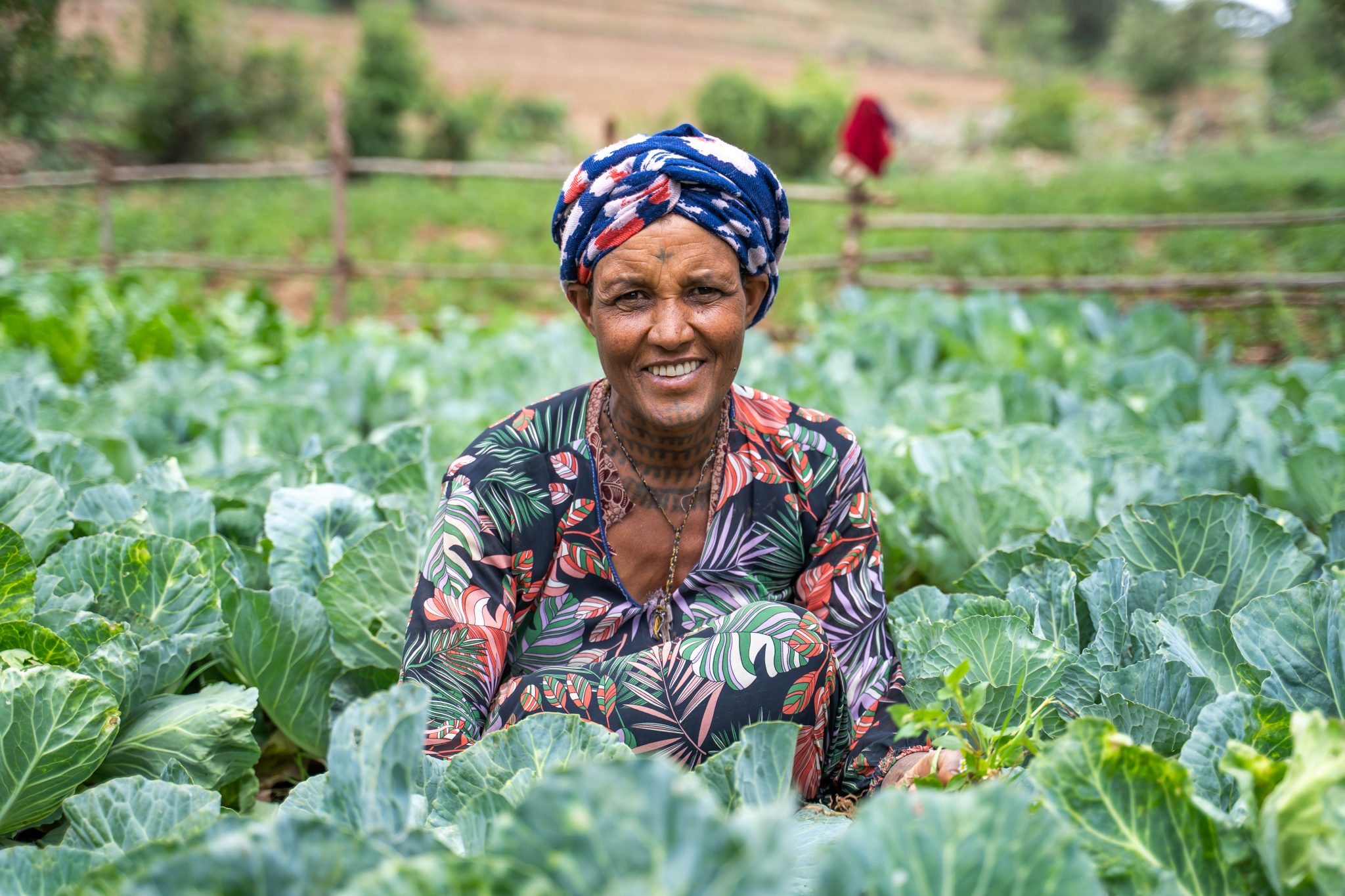
Abeb sits among the cabbages in her vegetable garden. With more reliable access to water, families are able to grow vegetables that improve both their diets and their incomes.
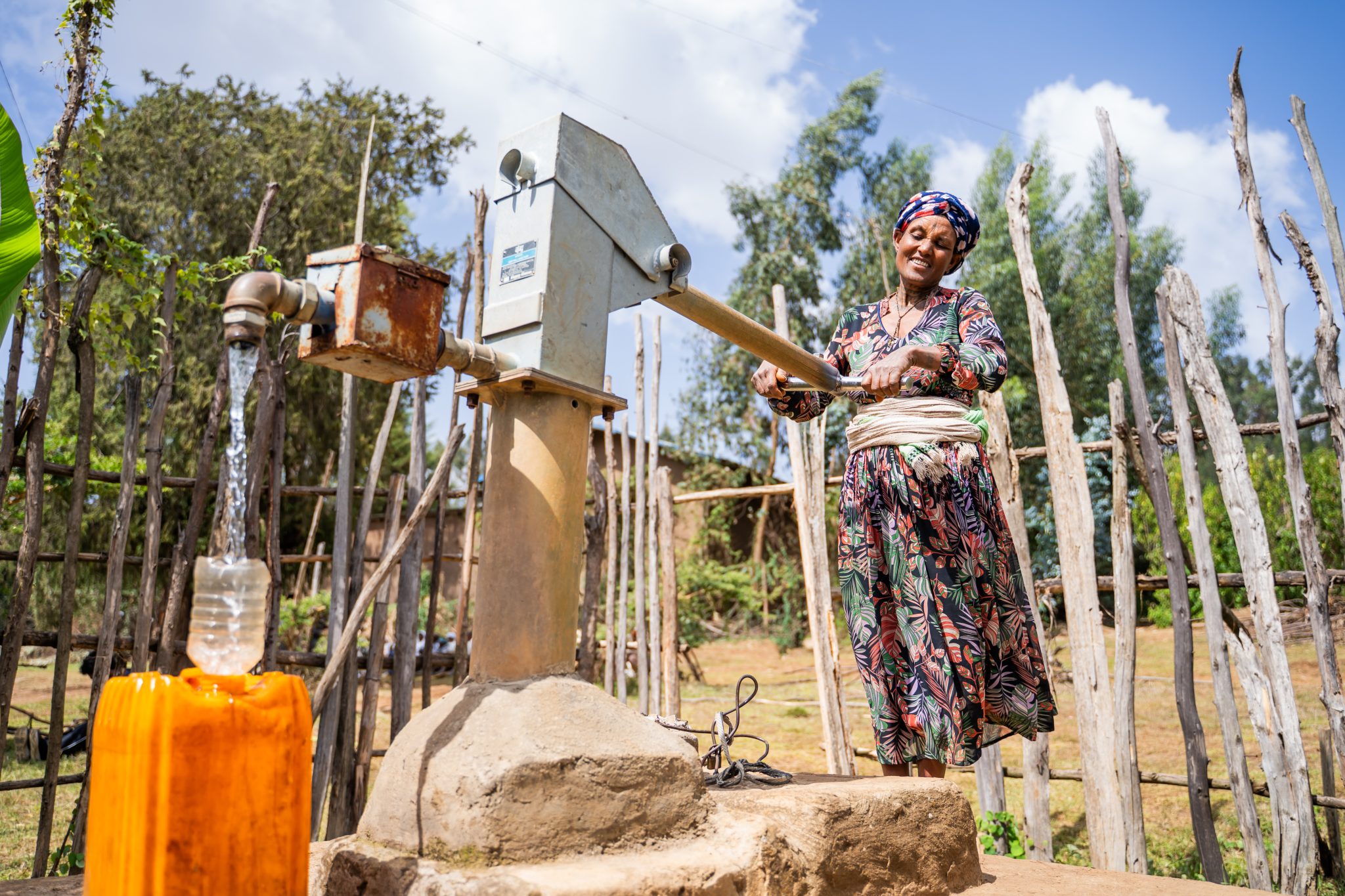
Abeb smiles as she pumps clean water into her jerrycan at a community hand pump. Safe water within easy reach is one of the project’s most direct improvements to everyday life.
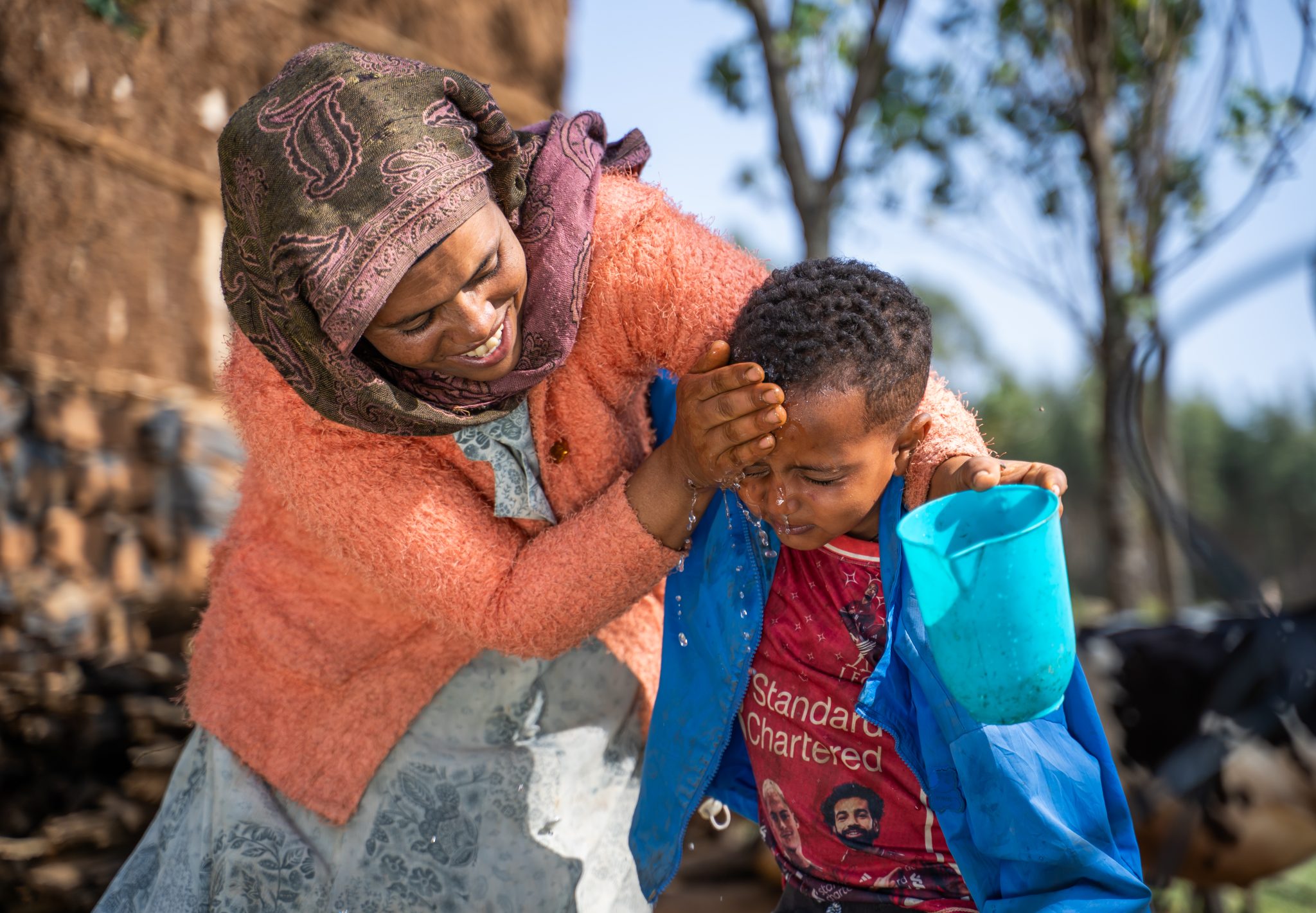
Endaye washes her son’s face with water at their homestead. Reliable water brings better hygiene and small everyday comforts within reach.
Improving livelihoods
Women and vulnerable populations often don’t have a say in economic decision-making. This creates significant barriers to accessing equal opportunities and has a direct impact on livelihoods.
During its first year, the RISE project supported more than 500 vulnerable community members, including 387 women, in strengthening their economic resilience. Communities established 21 village savings and loans groups, with women being active participants and leaders.
The RISE project also supported economic resilience through climate-smart agriculture training, with 130 farmers beginning to adopt practices that will help strengthen crop resilience.
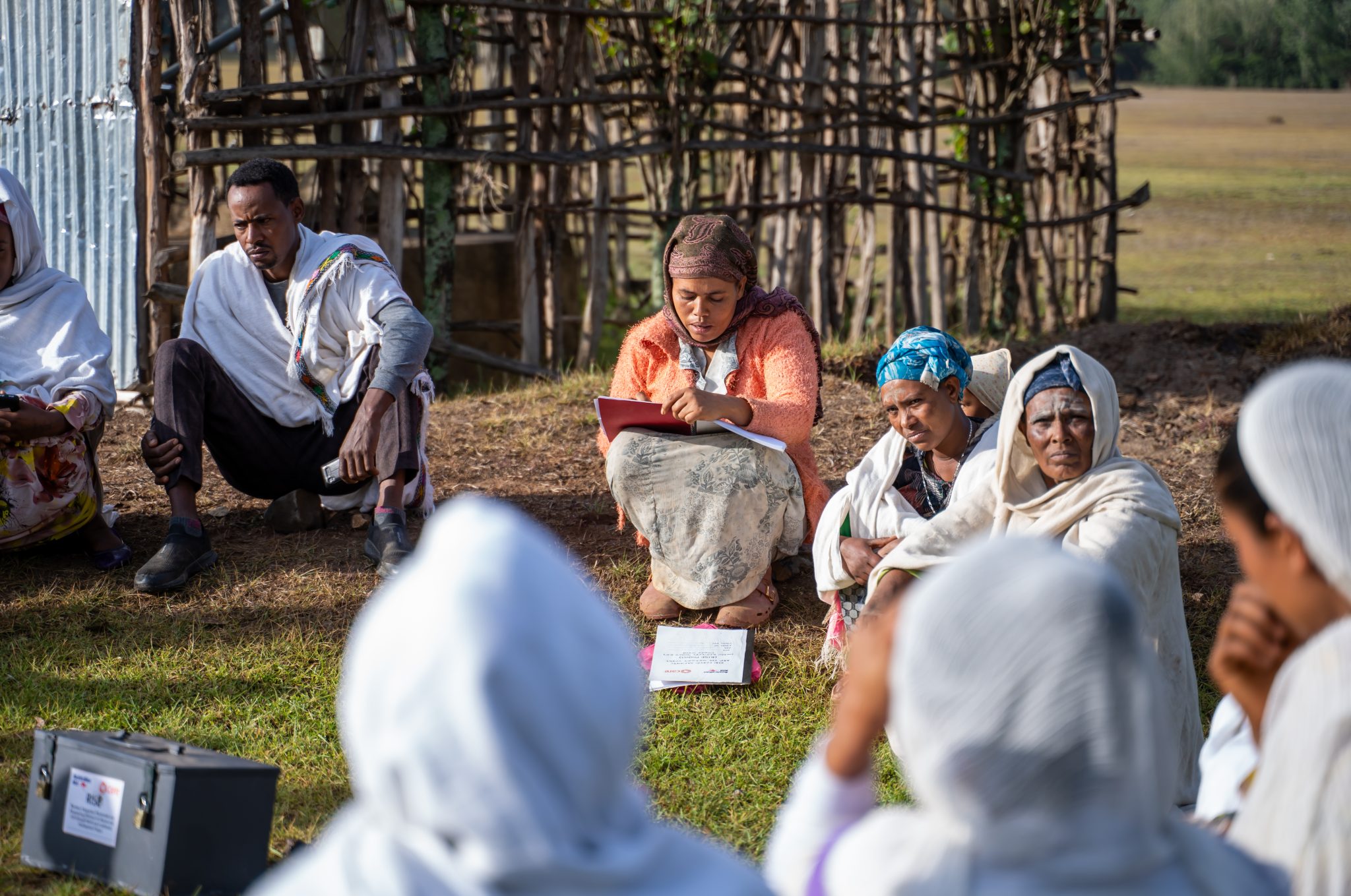
A group facilitator records members’ details during a community savings and learning session, the locked RISE project cash box beside her. Careful record-keeping keeps the group transparent and accountable, strengthening financial resilience and local leadership.
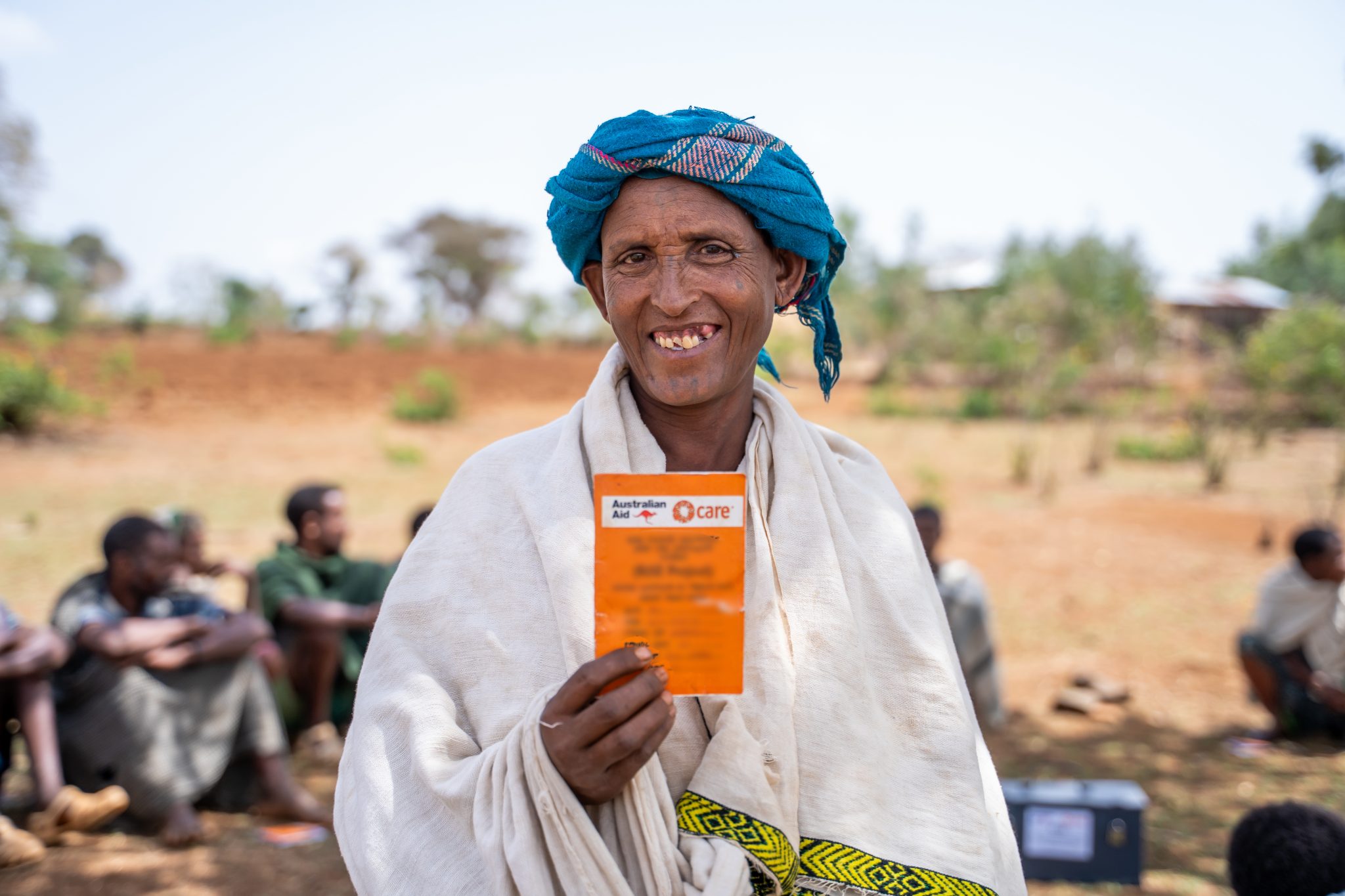
Zewde smiles as she holds her savings passbook at a community meeting. The booklet records the contributions she makes to a savings group that strengthens financial resilience and local leadership.
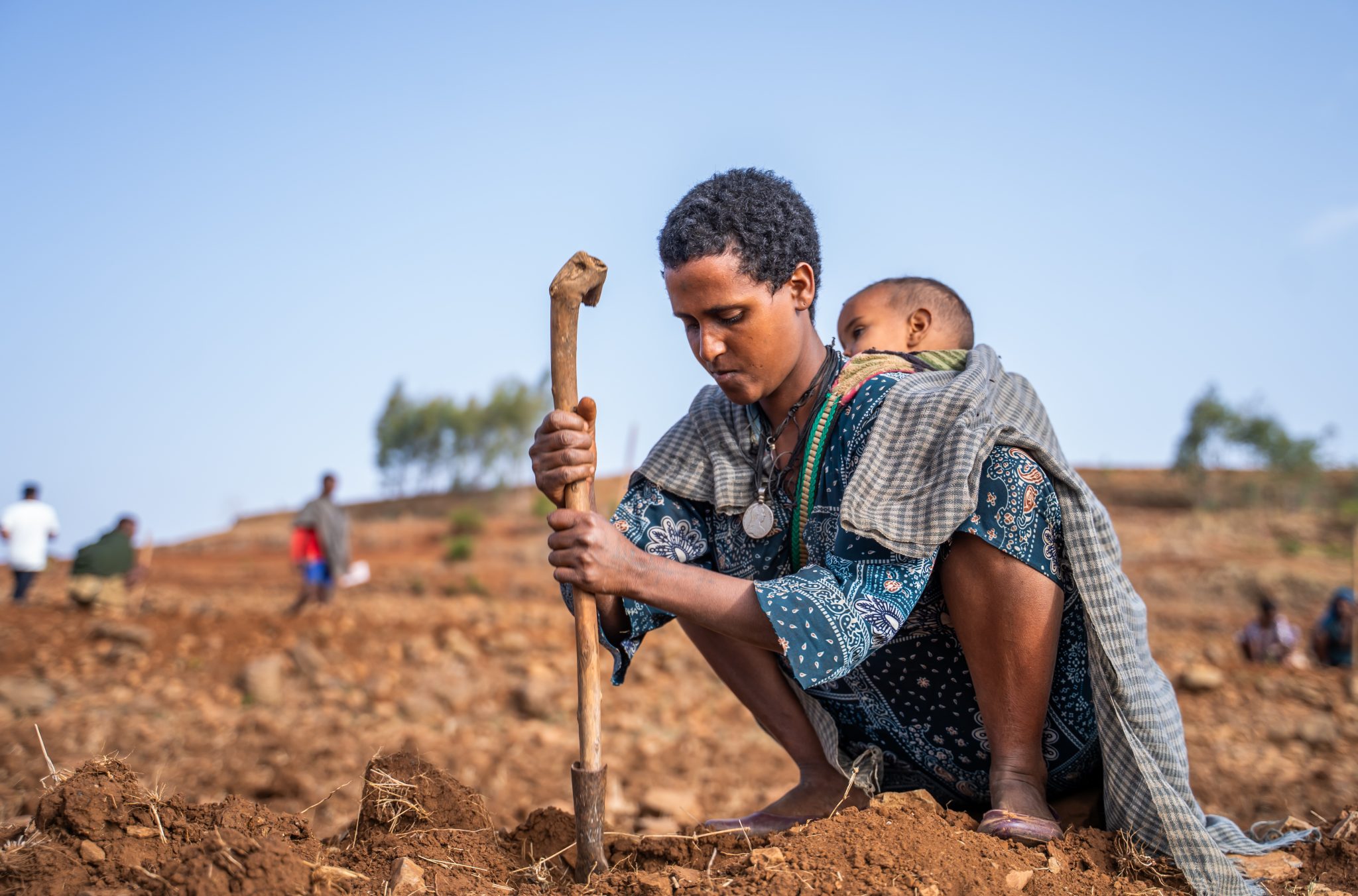
Zewditu Werkneh prepares farmland with a hand tool while carrying her young child on her back. The scene reflects the climate-resilient livelihoods women build under the project.
Climate adaptation
Communities across the Amhara Region continue to experience the impacts of climate change, making climate adaptation crucial. The RISE project supports communities to strengthen their resilience and prepare for future climate challenges.
In its first year, the community achieved remarkable results in terms of climate adaptation. Participants restored over 160 hectares of degraded land, developed adaptation plans, established watershed cooperatives and produced over one million tree seedlings.
Community members significantly improved their knowledge of climate adaptation practices. In one year, participants’ knowledge in this area increased from around 32% to almost 90%, demonstrating a stronger understanding of how to respond to climate-related challenges.
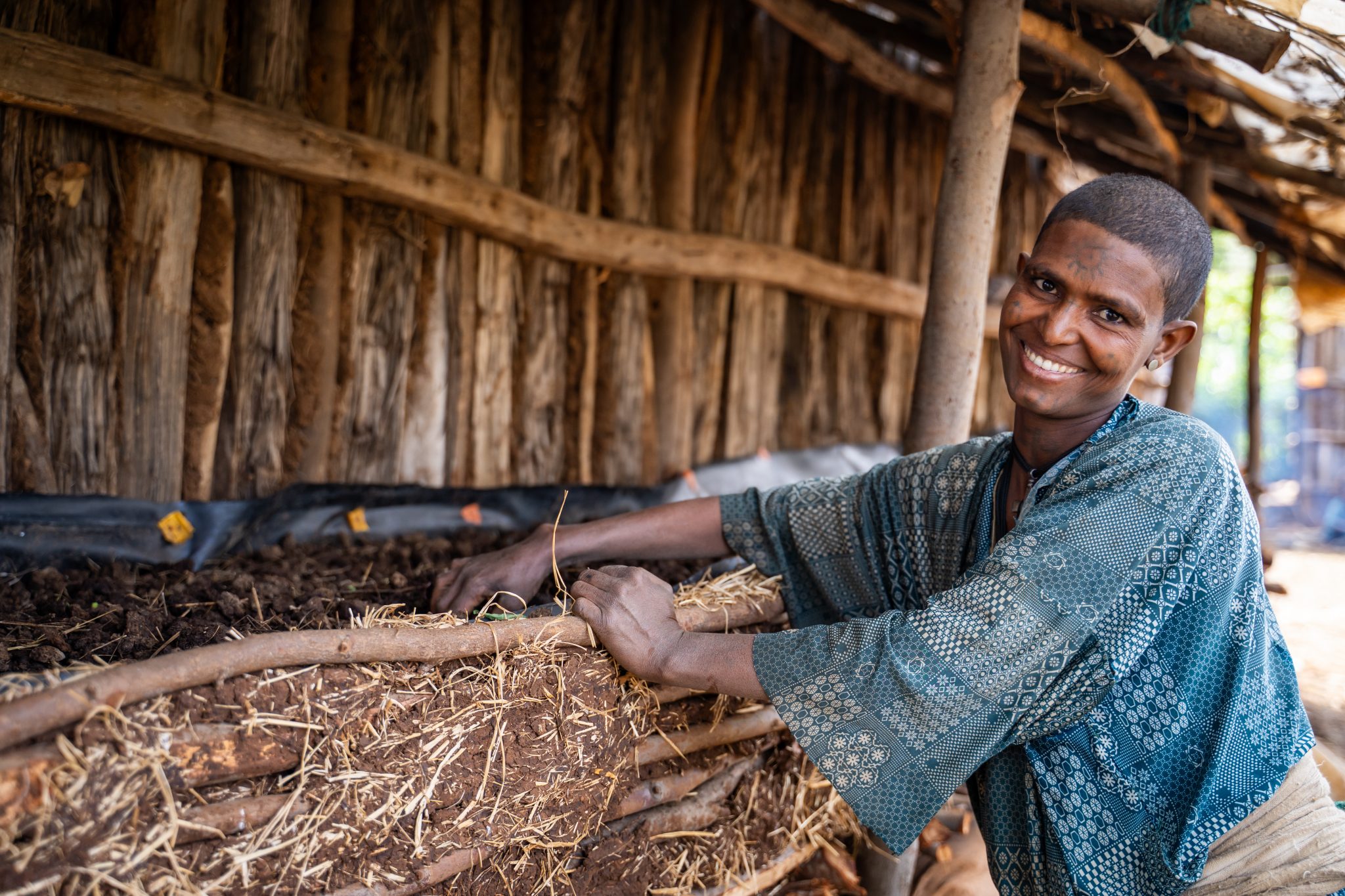
Yeshimebet tends a compost pile of manure and crop residue under a shelter. Making organic fertiliser to enrich the soil is part of the climate-resilient livelihoods women develop under the RISE project.
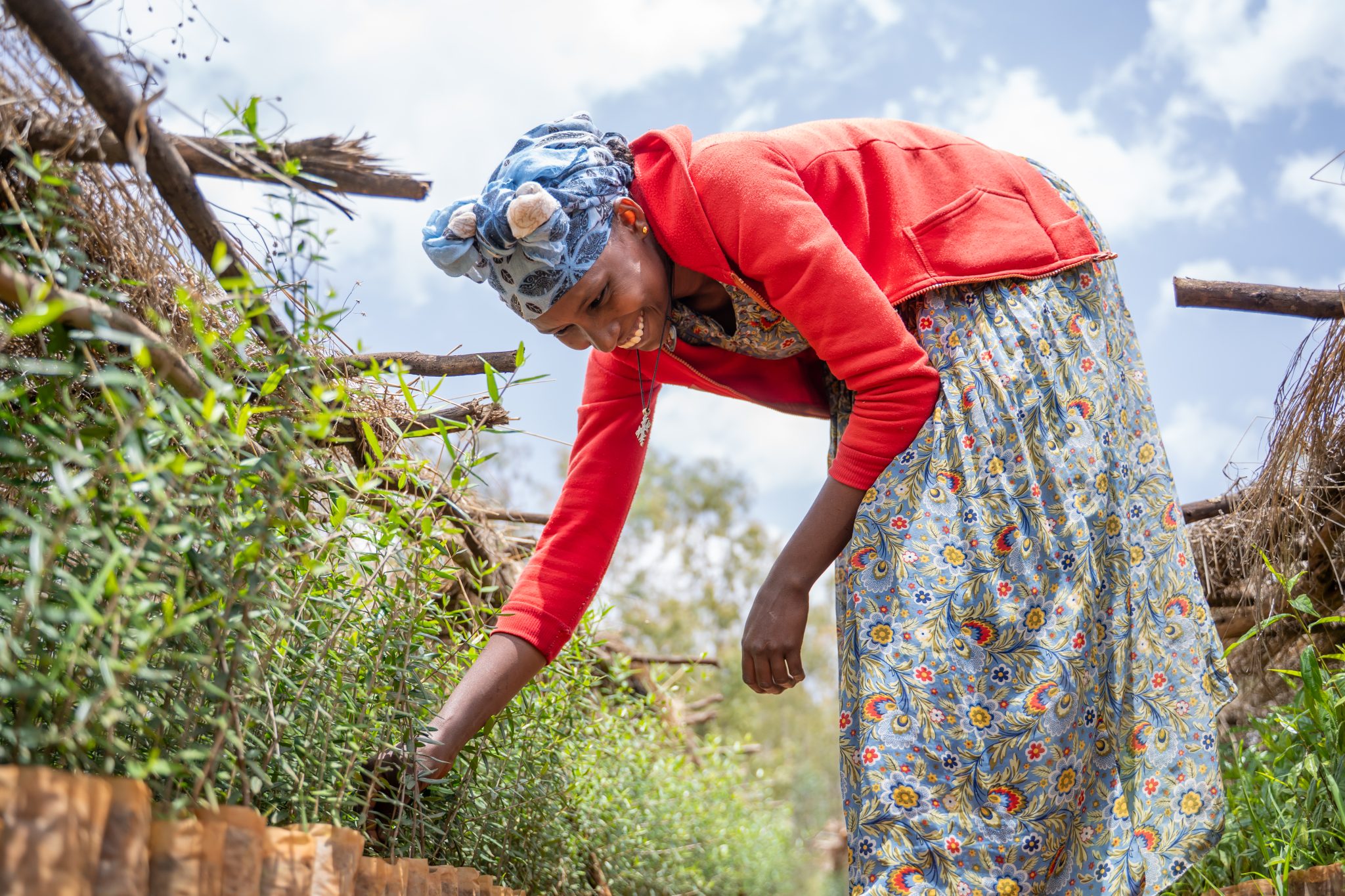
Bekfir tends young tree seedlings at a nursery supporting watershed restoration. Women take a leading role in raising the seedlings that are later planted out to restore degraded land and protect water sources.
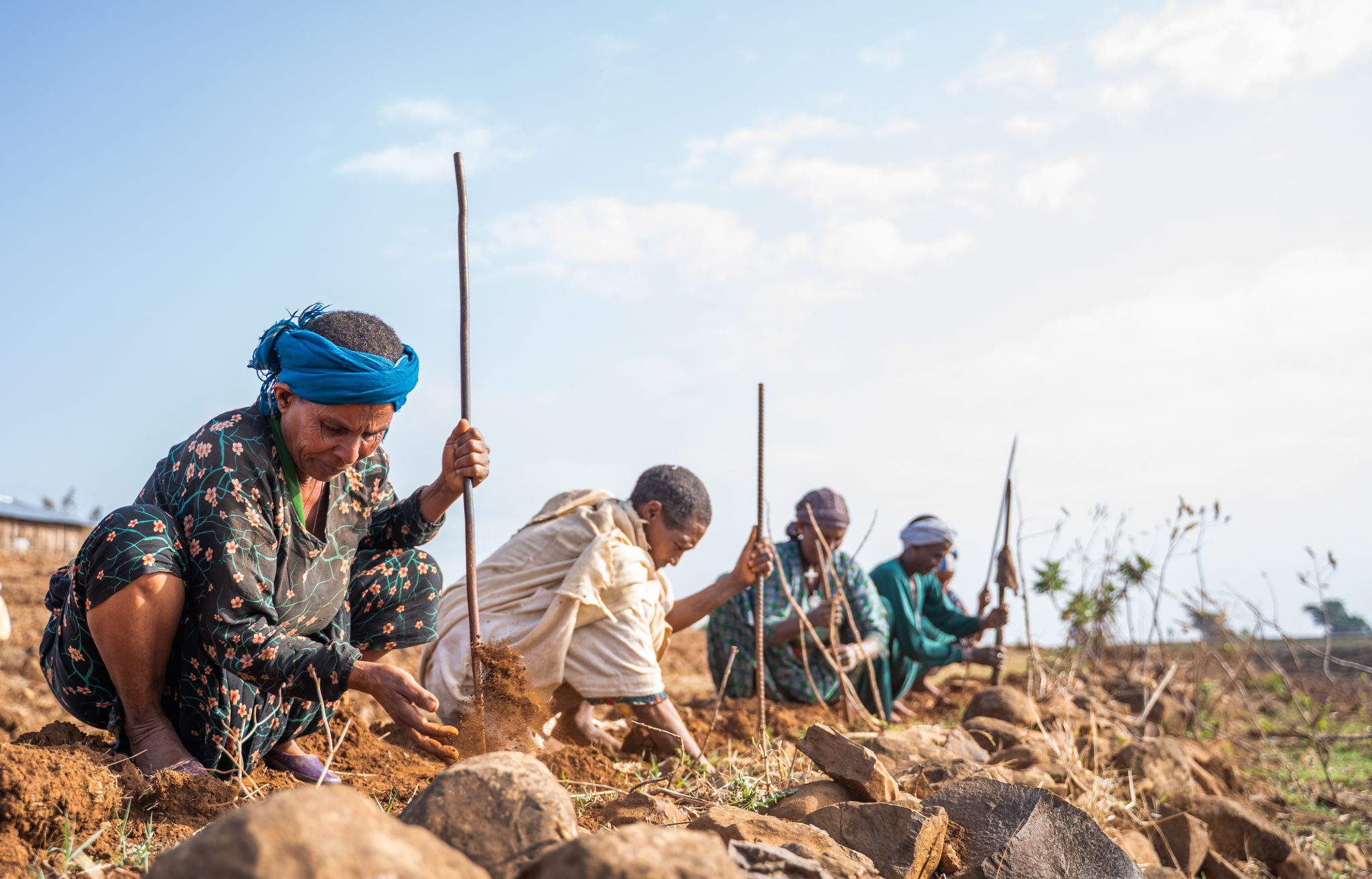
Women plant seedlings along a stony contour on a hillside field in Amhara Region. Establishing trees and ground cover helps hold soil and water on the land, a key climate-resilience measure.
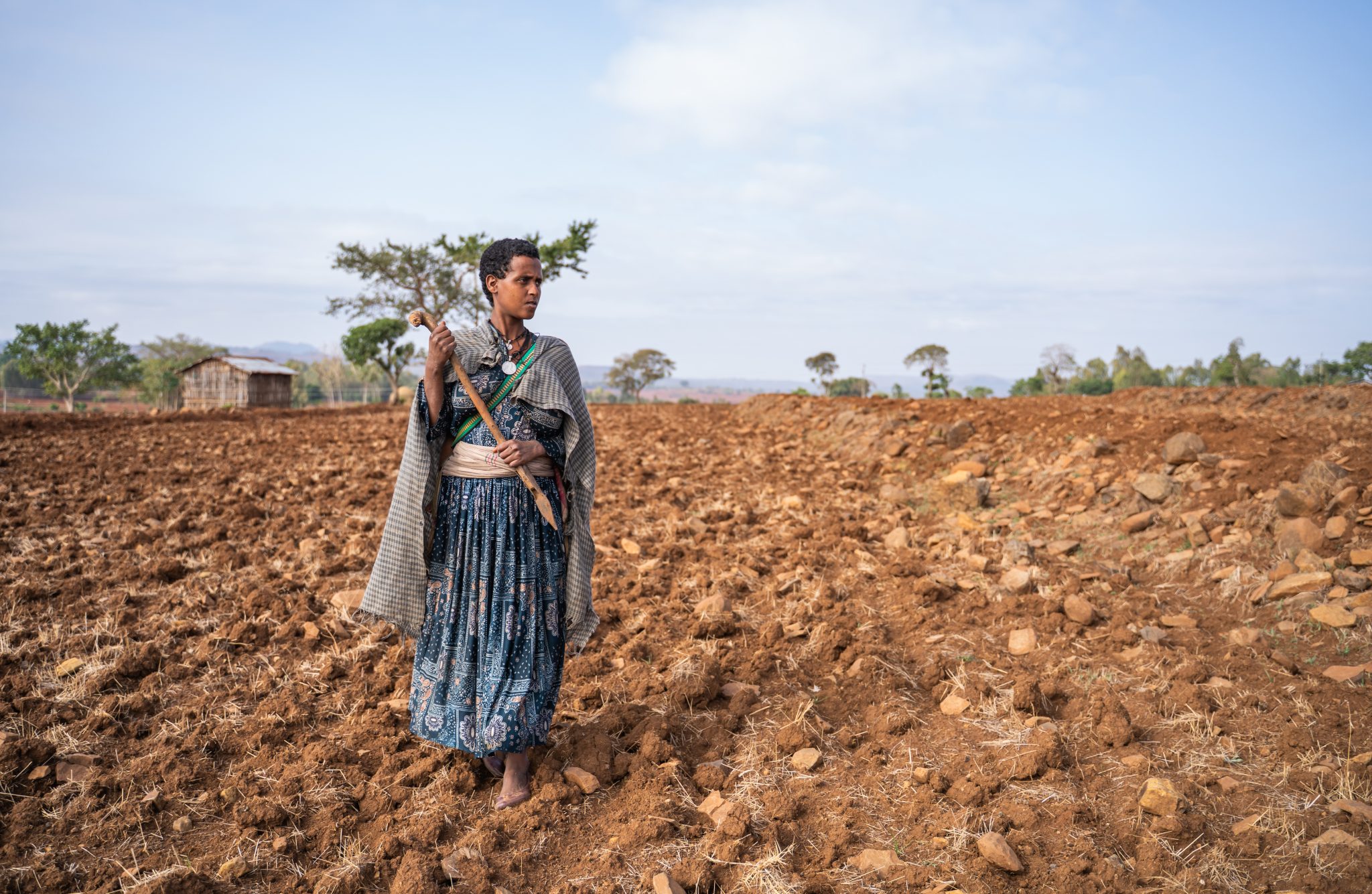
Zewditu pauses while preparing a ploughed field, a hand tool resting against the shoulder. Newly turned farmland like this is the foundation of the climate-resilient livelihoods communities are strengthening under the project.
Women’s leadership and inclusion
In many communities, women and people with disabilities are excluded from leadership roles and decision-making.
Strengthening women and people with disabilities’ participation and leadership within their communities is one of the focus areas of the RISE project. This involves training women and people with disabilities in leadership and advocacy, engaging them through community dialogues and encouraging their participation in decision-making.
By the end of the project’s first year, women held 61% of leadership positions.
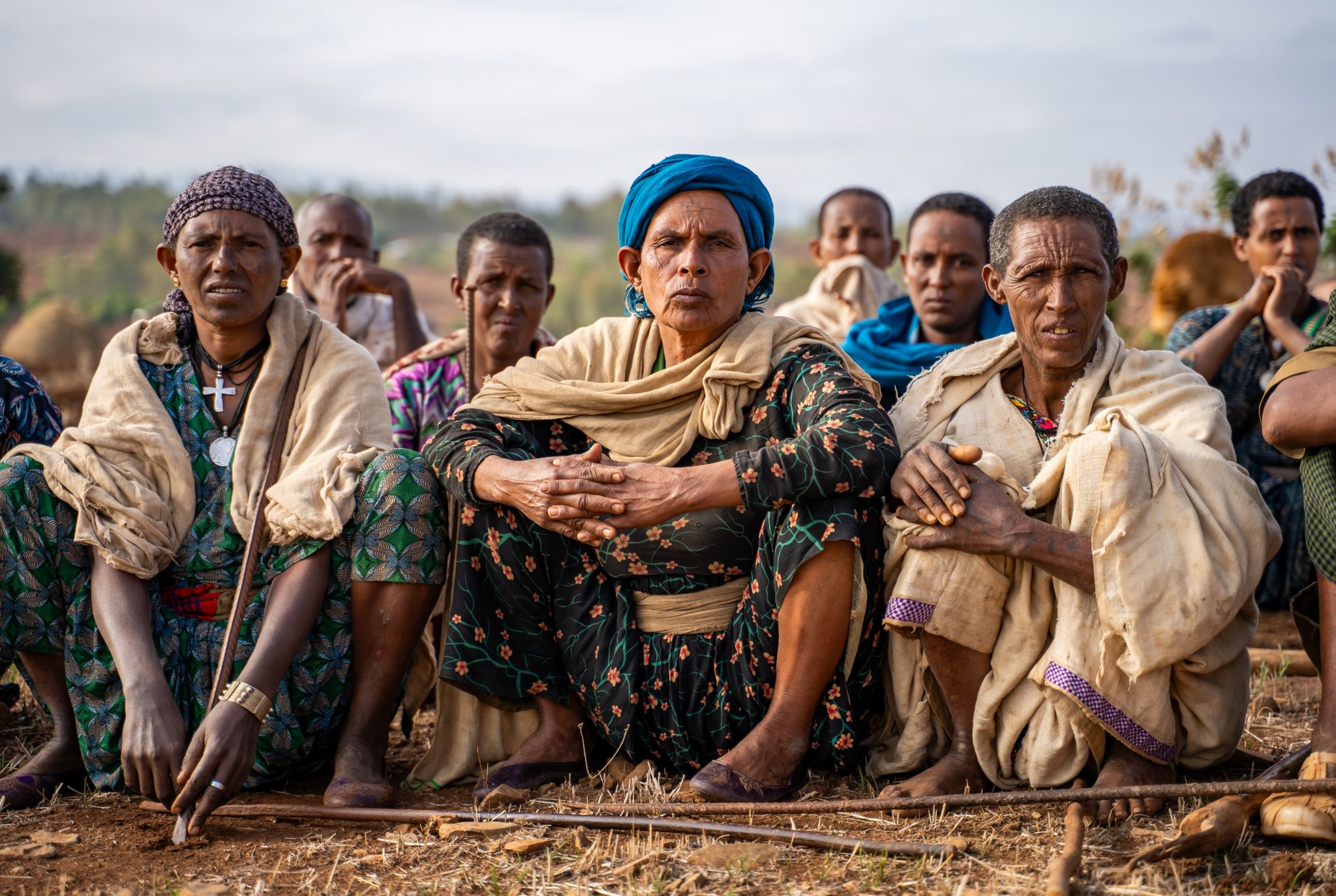
Women listen during a community meeting on a prepared field. Their active participation in planning around farming and resources reflects the stronger role women are taking in local decision-making.
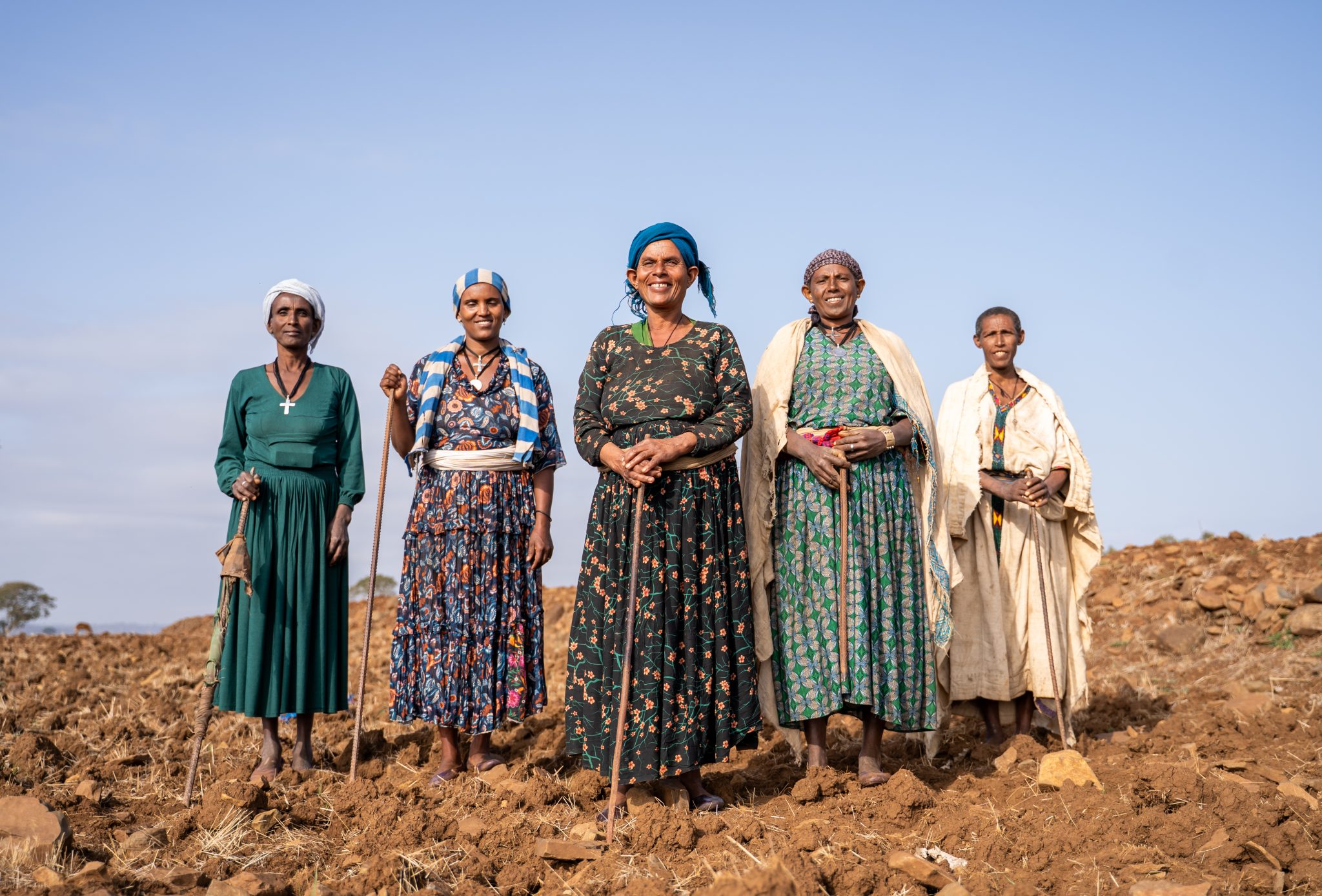
Five women stand together with their tools on a ploughed field in Amhara Region. Working as a group, women are taking a visible role in preparing land and restoring soils for more climate-resilient farming.
The future ahead
One year into RISE, communities are already starting to see the benefits of improved water access, stronger livelihoods and climate-resilient practices. The progress made during the project’s first year demonstrates how communities can thrive when they have access to appropriate resources, knowledge and support.
As the project moves into its second phase over the next three years, we look forward to seeing the positive changes communities continue to create.
The RISE project is led by CARE Ethiopia and supported by the Australian Government through the Australian NGO Cooperation Program (ANCP).